Shelter From Wind
Plant in a site with protection from strong, drying winds or use a temporary windbreak during establishment, as this species has relatively brittle branches that can snap and deform the canopy in exposed positions.

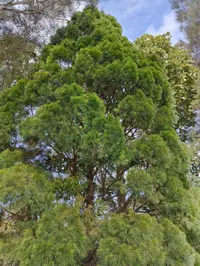
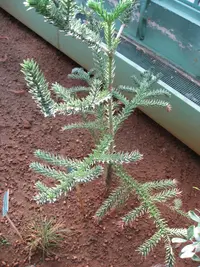
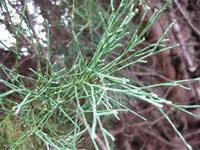
Brush cypress-pine (Callitris macleayana) is an evergreen conifer native to warm, humid forests of eastern Australia. It usually forms a slender, upright tree with fine, scale-like foliage and small woody cones. The foliage has a soft, feathery texture up close, giving the plant a lighter, more delicate look than many other conifers. Growth is steady but not extremely fast, which helps it stay manageable in cultivated settings. This species prefers sunny, open conditions with well-drained, slightly acidic soil and consistent moisture, especially when young. Once established, it becomes more tolerant of short dry periods, which makes it relatively forgiving for those learning how to care for Brush Cypress-pine.

Care Difficulty
Moderate Care

Light Preference
Full Sun

Water Requirements
Moderate Water

Temperature Preference
Warm Climate

Hardiness Zone
10–11

Soil Texture
Sandy, Loamy

Soil pH
Acidic (5.5–6.5)

Soil Drainage
Well-drained

Fertilization
Minimal (feed rarely)
Scan your plant to receive care tips personalized for your specific plant
Available on iOS and Android
This sun-loving Australian conifer prefers bright, direct light for strong, upright growth.
This species prefers evenly moist but free-draining soil, especially during establishment.
This conifer thrives in mild to warm climates with limited frost exposure.
This species tolerates a wide humidity range and rarely needs special humidity management indoors or outdoors.
Callitris macleayana prefers freely draining, slightly acidic to neutral soil that does not stay waterlogged.
This conifer can be grown in containers for several years if the pot is chosen and managed carefully for stability and drainage.
Callitris macleayana in the ground usually needs minimal feeding if soil is moderately fertile.
Pruning Callitris macleayana is mainly corrective, aimed at maintaining a stable, natural form.
Callitris macleayana is usually grown in the ground, so focus on careful transplanting rather than frequent repotting.
Propagation of Callitris macleayana is possible from both seeds and semi-hardwood cuttings but requires patience and stable conditions.
Brush Cypress-pine is moderately frost sensitive and benefits from some winter protection in colder regions.

Plant Health Check
Not sure what's wrong with your plant? Check your plant's health inside the app.
This species is unusual among Australian cypresses because it is native to wet subtropical and tropical rainforests of eastern Queensland and New South Wales, rather than to the drier inland habitats where most other Callitris species occur.
Its small woody cones bear seeds with a broad, papery wing that aids wind dispersal, helping the species colonize canopy gaps and disturbed rainforest edges.
Mature trees develop a characteristically slender, columnar crown with fine, feathery foliage, which allows light penetration to lower branches in the filtered light conditions of mixed rainforest and eucalypt forests.

In its native range, this species can form part of rare rainforest–eucalypt transition communities, acting as a structural link between dense broadleaf rainforest and more open sclerophyll forests and contributing to habitat complexity for specialized birds and invertebrates.
Brown foliage usually results from drought stress, salt or fertilizer burn, compacted or waterlogged soil, or root damage. Check soil moisture, drainage, and recent chemical use, then prune out dead tips to reduce stress and encourage recovery.
Keep your plants happy and healthy with plant identification, disease detection, and easy care guidance.