Early leader selection
In the first 2–3 years, choose a single straight central leader and gently remove or shorten competing upright shoots to build a strong, wind-resistant structure.

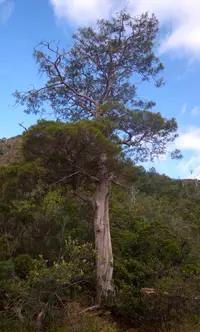
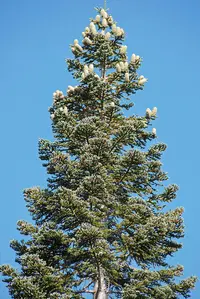
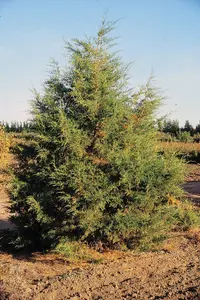
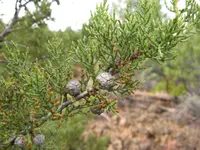
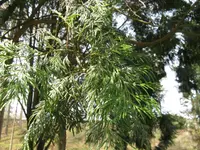
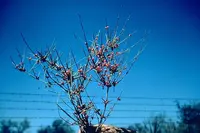
Camboui cypress-pine, Callitris sulcata, is a rare coniferous tree from New Caledonia, valued mainly by collectors and specialist growers. It forms a narrow, upright crown with fine, scale-like foliage and small woody cones, giving a refined, architectural look.
In nature it grows on rocky, nutrient-poor soils, which makes it relatively slow-growing and sensitive to overwatering and root disturbance in cultivation. It prefers bright light, well-drained soil, and steady but modest moisture. For anyone learning how to care for Camboui cypress-pine, its main challenges are avoiding waterlogged roots and providing long-term space for its tree-like form.

Care Difficulty
Hard Care

Light Preference
Full Sun

Water Requirements
Low Water

Temperature Preference
Warm Climate

Hardiness Zone
10–11

Soil Texture
Sandy, Loamy, Rocky

Soil pH
Slightly acidic (6.5–7.0), Neutral (7.0)

Soil Drainage
Well-drained

Fertilization
Minimal (feed rarely)
Scan your plant to receive care tips personalized for your specific plant
Available on iOS and Android
This species prefers bright outdoor exposure with some protection from intense afternoon sun.
This conifer prefers evenly moist but well-drained soil and does not tolerate prolonged saturation.
This species prefers mild to warm climates with cool winters and avoids extreme cold.
This conifer prefers relatively dry, well-ventilated air and usually does not need added humidity.
This species performs best in mineral, free-draining soil that prevents waterlogging around the roots.
This species can be grown in containers for several years if the pot is chosen and managed carefully.
Callitris sulcata is a slow-growing conifer that needs only modest feeding, especially when grown as Camboui cypress-pine in containers.
Callitris sulcata benefits from light, targeted pruning to maintain structure and plant health.
This species is usually field-grown, so focus on careful transplanting and only occasional container repotting.
Callitris sulcata is most often propagated by seed, with cuttings used mainly by specialist growers.
Callitris sulcata is moderately cold tolerant but benefits from simple winter precautions in colder regions.

Plant Health Check
Not sure what's wrong with your plant? Check your plant's health inside the app.
This New Caledonian species is listed as Critically Endangered on the IUCN Red List due to its very small, fragmented populations and ongoing habitat loss from mining and fires.
It naturally grows on ultramafic (nickel- and magnesium-rich, nutrient-poor) substrates in New Caledonia, showing a high tolerance to metal-rich, harsh soils that limit many other tree species.
Its natural distribution is confined to a few mountain areas in southern New Caledonia, making its range extremely localized compared with many other members of the cypress family.

The species forms part of New Caledonia’s uniquely diverse and ancient conifer flora, which includes one of the highest concentrations of endemic conifers in the world, highlighting its importance for global conifer conservation.
This species is evergreen, retaining its scale-like foliage year-round rather than dropping leaves seasonally. Older inner foliage may brown and shed gradually, but overall the plant keeps a persistent green canopy in suitable conditions.
Keep your plants happy and healthy with plant identification, disease detection, and easy care guidance.