Rule araucaria Care (Araucaria rulei)

Rule araucaria

About Rule araucaria

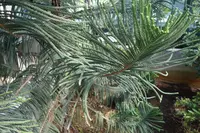
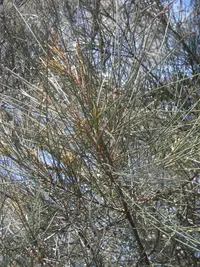
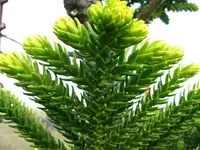
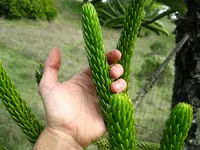
Araucaria rulei, often called Rule araucaria, is a rare coniferous tree from New Caledonia. It forms a tall, narrow silhouette with strongly tiered, horizontal branches. Short, stiff, blue-green needles give the plant a fine, architectural look that suits large indoor spaces and mild outdoor climates.

In nature it grows on exposed, rocky slopes, which makes it relatively tolerant of wind and less-than-ideal soils. However, it dislikes root disturbance and sustained drought, so it suits patient growers more than beginners. Those learning how to care for Rule araucaria should focus on bright light, steady moisture, and sharply drained, slightly acidic soil.

Main Plant Requirements

Care Difficulty

Hard Care

Light Preference

Full Sun

Water Requirements

Moderate Water

Temperature Preference

Warm Climate

Hardiness Zone

10–11

Soil Texture

Sandy, Loamy, Rocky

Soil pH

Acidic (5.5–6.5)

Soil Drainage

Well-drained

Fertilization

Minimal (feed rarely)

Get Personalized Care Plan

Scan your plant to receive care tips personalized for your specific plant

Available on iOS and Android

How to Care for the Rule araucaria

This species prefers bright, soft light similar to open coastal or mountain sites.

  • Provide 4–6 hours of direct morning sun with light shade or filtered light in the afternoon to avoid needle scorch.
  • Tolerates bright partial shade, but dense shade reduces growth and causes sparse, elongated shoots over several seasons.
  • In hot summers, protect from harsh sun between 11 a.m.–3 p.m.; in cooler months, slightly higher sun exposure supports stronger, denser foliage when caring for Rule araucaria.

Watering should keep the root zone evenly moist without staying saturated.

  • Water when the top 3–5 cm of soil feel dry, letting water penetrate deeply into well‑drained, slightly acidic soil.
  • Reduce watering frequency in cool seasons, but do not allow soil to dry out completely, especially around young Araucaria rulei.
  • Watch for overwatering signs such as yellowing, limp needles and sour-smelling soil, and underwatering signs such as browning tips and brittle, shedding foliage.

This conifer prefers mild, frost-free conditions throughout the year.

  • Aim for 60–77°F (16–25°C) for active growth, as prolonged temperatures above or below this range increase stress.
  • It tolerates brief drops to about 40°F (4°C) but is sensitive to frost; repeated freezes can kill young shoots and fine roots.
  • In hot regions, temperatures above 86°F (30°C) should be paired with light shade and good air movement; avoid planting in heat-reflective sites.

This species prefers moderate, steady humidity and tolerates typical indoor levels if watering is consistent.

  • Aim for 40–60% humidity; avoid prolonged air below 30% in heated rooms.
  • Dry tips, browning needles, and increased needle drop signal low humidity stress in Rule araucaria.
  • Increase humidity with a nearby open tray of water and stones or by grouping plants, not by misting heavily.

Soil for this species must be free-draining yet moisture-retentive to support deep, fine roots.

  • Use a mix of roughly 40% pine bark fines, 30% coarse sand, and 30% peat or coco coir for a loose, airy texture.
  • Ensure very sharp drainage; water should exit the pot within seconds, not sit on the surface or in the saucer.
  • Target slightly acidic soil, around pH 5.5–6.5, which suits Araucaria rulei nutrient uptake and root health.
  • Avoid heavy clay, compacted mixes, or high-salt fertilizers that restrict aeration and burn sensitive roots.

This species can be grown in containers, especially when young, if the pot provides stability and fast drainage.

  • Choose a tall, heavy container or add weight at the base to counter the tree’s top-heavy, upright growth.
  • Select a pot just 3–5 cm wider than the root ball to keep the mix from staying wet for too long.
  • Use a pot material with moderate porosity, such as thick-walled terracotta, to reduce waterlogging while adding side-wall stability.

Nutrient needs for Rule araucaria are modest, especially once established in the ground.

  • For container plants, use a balanced slow-release fertilizer (around 10-10-10) at the start of spring.
  • Supplement with a half-strength liquid balanced NPK feed every 4–6 weeks through late summer if growth is pale or weak.
  • Avoid fertilizing in fall and winter, when growth slows, to prevent soft, cold-sensitive tissue.
  • Do not apply fertilizer onto dry soil; water first to reduce root burn risk.

Pruning requirements for Araucaria rulei are minimal and mainly corrective.

  • Best timing is late winter to early spring, before active growth starts.
  • Remove only dead, diseased, or storm-damaged branches, cutting back to the branch collar with clean, sharp loppers or a pruning saw.
  • Avoid cutting the central leader, as this permanently distorts the natural symmetrical form.
  • Limit green branch removal to small sections to reduce stress and maintain dense, balanced growth.

As a long-lived conifer, Araucaria rulei is better transplanted young and then left undisturbed.

  • Transplant in early spring or early fall when temperatures are mild and soil is workable.
  • Look for roots circling the container, water running straight through, or slowed growth as signs a potted plant needs a larger container.
  • Move up only 1–2 pot sizes, loosen circling roots gently, and keep the root ball intact to limit shock.
  • Water thoroughly after planting, then shade and wind-shelter the tree for 1–2 weeks to help roots re-establish.

Propagation of Araucaria rulei is technically possible but slow and usually handled by specialist growers.

  • Most commonly raised from fresh seed, sown in late winter to spring in a free-draining, slightly acidic mix.
  • Maintain 65–75°F, bright indirect light, and steady moisture without waterlogging for several months of germination.
  • Keep seedlings in small containers with minimal root disturbance for several years before planting out.
  • Vegetative methods such as cuttings are unreliable and not usually recommended for home growers.

This species prefers mild, frost-free climates and benefits from thoughtful winter care where freezing occurs.

  • In regions with frost, grow in a large container and move indoors or to a cool greenhouse before temperatures drop below 30°F.
  • For in-ground trees in marginal climates, apply a 5–8 cm mulch layer over the root zone, keeping it off the trunk.
  • Shelter young plants from cold winds with temporary screens or burlap to reduce needle desiccation.

Care Tips

Stake Young Leader

Install a sturdy stake next to the main trunk while the tree is young and tie it loosely with soft, wide ties to keep the central leader straight and prevent wind from deforming its tiered structure.

Wind Exposure Gradation

When moving a container-grown plant outdoors, increase wind exposure gradually over 1–2 weeks so the flexible but brittle branches can adapt without snapping or leaning.

Salt Spray Protection

In coastal areas, plant behind a windbreak or erect a temporary shade cloth barrier on the windward side to reduce salt-laden wind that can scorch needles and weaken new growth.

Long-Term Root Space

If kept in a container for many years, use a deep, heavy pot and shift up in 5–10 cm increments rather than jumping to a very large container, which keeps roots anchored and reduces toppling risk.

Low-Stress Transplanting

Transplant only during mild weather, keep the root ball intact, and water deeply 1–2 days before and immediately after planting to minimize transplant shock when growing Rule araucaria.

Common Pests and Diseases

Scale insects

This pest feeds on sap along stems and needles, causing yellowing, thinning foliage, and sticky honeydew that can lead to sooty mold. Infestations are more frequent on stressed trees grown in containers or sheltered sites with low airflow.

Solution

Physically remove scales by gently scraping or wiping with a cotton pad dipped in 70% isopropyl alcohol, then rinse the foliage with water. For persistent problems, use a horticultural oil spray labeled for conifers, applied thoroughly to stems and needle bases, and repeat at 7–14 day intervals while improving light and air movement around the plant.

Aphids

These insects cluster on tender shoots and branch tips, sucking sap and causing distorted new growth, pale foliage, and honeydew deposits. On young or potted plants, heavy infestations can slow growth and attract ants.

Solution

Dislodge aphids with a firm stream of water, focusing on shoot tips and undersides of foliage. If numbers remain high, apply an insecticidal soap or light horticultural oil in cool parts of the day, repeating as needed, and avoid overfertilizing with nitrogen, which encourages soft, aphid-prone growth.

Spider mites

This pest thrives in hot, dry conditions and can cause dull, grayish or bronzed needles, fine webbing, and premature needle drop. Symptoms include a general loss of vigor, especially on indoor or greenhouse-grown plants with low humidity.

Solution

Increase humidity around the plant and hose down the foliage, making sure to reach inner branches where mites hide. If populations are established, apply a miticide or horticultural oil specifically labeled for spider mites on conifers, repeating according to label directions and avoiding treatments during high heat to prevent needle burn.

Needle blight

This disease causes browning from the needle tips inward, often starting on lower, inner branches where humidity is higher and airflow is poor. Symptoms include scattered dead needles and progressive dieback that can give the tree a thin, sparse appearance.

Solution

Prune out and discard affected shoots during dry weather, cutting back into healthy tissue, and avoid wetting the foliage when watering. Improve spacing and airflow, then apply a suitable fungicide labeled for conifer needle blights at budbreak and repeat as directed if conditions stay wet or humid.

Phytophthora collar rot

This disease affects the lower stem and root collar in poorly drained or chronically wet soils, leading to gradual yellowing, needle drop, and eventual collapse of young trees. Symptoms include dark, sunken, or resinous lesions at the soil line and poor root development.

Solution

Remove and destroy severely affected plants and avoid replanting another Araucaria in the same poorly drained spot without soil improvement. For valuable specimens, improve drainage, raise the planting area, reduce irrigation frequency, and, where allowed, use a phosphonate-based fungicide drench around the root zone as a preventative measure following label directions.

Interesting Facts

Ultraserpetine soil specialist

This species naturally grows on ultramafic, nickel-rich serpentine soils in New Caledonia, a harsh substrate that is toxic to many other plants, making it a specialized metallophyte, or metal-tolerant plant.

Critically narrow range

Araucaria rulei occurs only on a few mountain massifs in southern New Caledonia at mid to high elevations, and its entire global population is confined to a very small geographic area, which is why it is listed as Critically Endangered by the IUCN.

Open-cone seed release

Its female cones mature and then open on the tree to release winged seeds, a dispersal strategy that uses wind to spread seeds away from the parent tree along exposed ridges and slopes.
Botan icon

Did you know?

Araucaria rulei is part of an ancient Gondwanan lineage, and its presence in New Caledonia is considered a living reminder of the once-continuous southern supercontinent, with close relatives now scattered across the Southern Hemisphere in places such as Australia, Norfolk Island, and South America.

FAQs about Rule araucaria

Growth is slow to moderate. Young plants may add 15–30 cm in height per year in suitable climates, then slow as they mature. Container-grown specimens usually grow more slowly due to restricted root space and limited resources.

Grow Healthy Plants with Botan Care

Keep your plants happy and healthy with plant identification, disease detection, and easy care guidance.

Botan plant care app — identify plants on mobile

Explore More Plants