Establish strong leader
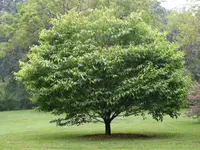
Inspect the central leader annually and gently stake and tie it upright with soft, flexible ties if it starts to lean, because a straight dominant leader sets the long-term structure and wind stability of the tree.

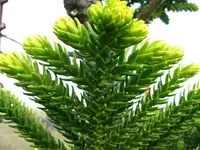
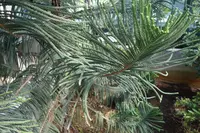
De Laubenfels' araucaria (Araucaria laubenfelsii) is a rare coniferous tree from the Araucariaceae family, native to New Caledonia in the South Pacific. It forms a tall, straight trunk with strong, tiered branches and dense, overlapping needle-like leaves that give it a clean, architectural look. In nature it can become a large canopy tree, but in cultivation it is often grown as a specimen in mild climates or in large containers when young. This species prefers bright light, mild temperatures, and evenly moist but well-drained soil. Its slow growth and need for stable conditions make it moderately challenging to care for De Laubenfels' araucaria, especially indoors or in small spaces.

Care Difficulty
Moderate Care

Light Preference
Full Sun

Water Requirements
Moderate Water

Temperature Preference
Warm Climate

Hardiness Zone
10–11

Soil Texture
Sandy, Loamy, Organic-rich

Soil pH
Acidic (5.5–6.5), Slightly acidic (6.5–7.0)

Soil Drainage
Well-drained

Fertilization
Minimal (feed rarely)
Scan your plant to receive care tips personalized for your specific plant
Available on iOS and Android
This species prefers bright sun in mild climates but benefits from some protection in intense heat.
This conifer prefers steady soil moisture without becoming waterlogged.
This species is adapted to mild, frost-free to very light-frost climates.
This conifer prefers moderate humidity but adapts to typical indoor levels when basic moisture needs are met.
This species needs well-aerated, free-draining, slightly acidic soil to prevent root problems.
This species can be grown in containers for many years if the pot provides stable support and rapid drainage.
This species grows slowly and needs only modest feeding, especially when grown in the ground.
Araucaria laubenfelsii needs minimal pruning and is usually shaped by its natural, symmetrical growth.
This conifer is most often planted in the ground, with transplanting done carefully due to its developing taproot.
Propagation of this species is usually done by seed and is considered specialized rather than routine home practice.
This species prefers mild, frost-free climates and benefits from thoughtful winter preparation in cooler areas.

Plant Health Check
Not sure what's wrong with your plant? Check your plant's health inside the app.
This species occurs naturally only in New Caledonia, where it is confined to specific mountainous areas and does not grow wild anywhere else in the world.
It often grows on ultramafic rocks, which produce metal‑rich, nutrient‑poor soils that many plants cannot tolerate, indicating a high degree of edaphic (soil-related) specialization.
It is listed as Vulnerable on the IUCN Red List due to habitat loss, restricted distribution, and environmental pressures in its native range.
In its native habitat, this species can form part of ancient conifer-dominated forests that include several other narrowly endemic Araucaria species, making these communities some of the most evolutionarily distinctive conifer ecosystems on Earth.
Growth is moderate. Young trees usually add about 20–40 cm per year, slowing as they age. Rate depends on warmth, moisture, and soil fertility. In cooler areas or containers, expect slower extension growth and a smaller final size.
Keep your plants happy and healthy with plant identification, disease detection, and easy care guidance.