bull-oak Care (Allocasuarina luehmannii)

Also known as: Buloke
bull-oak

About bull-oak

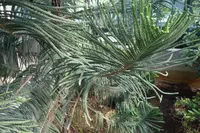
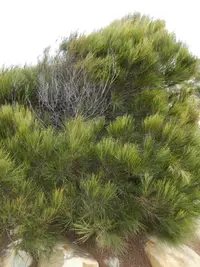
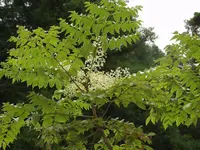
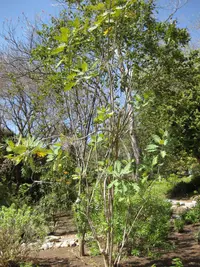
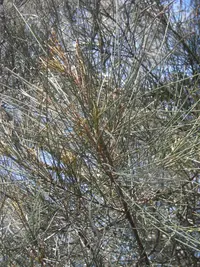
Bull-oak, Allocasuarina luehmannii, is a small to medium Australian tree known for its fine, needle-like branchlets and hard, dense timber. It often forms a narrow, upright crown and can appear almost conifer-like, though it is not a true conifer.

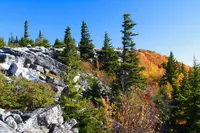
This species naturally occurs in inland eastern Australia, typically on poor, sandy or rocky soils where many other trees struggle. It is drought-tolerant once established but dislikes heavy, waterlogged ground, which influences how to care for bull-oak in cultivation.

Growth is usually slow to moderate, and seedlings can be sensitive to disturbance and root damage. These traits make it a resilient tree in tough sites but slightly more challenging for beginners compared with common ornamental trees.

Main Plant Requirements

Care Difficulty

Moderate Care

Light Preference

Full Sun

Water Requirements

Low Water

Temperature Preference

Warm Climate

Hardiness Zone

9–11

Soil Texture

Sandy, Loamy, Rocky

Soil pH

Acidic (5.5–6.5), Slightly acidic (6.5–7.0)

Soil Drainage

Well-drained

Fertilization

Minimal (feed rarely)

Get Personalized Care Plan

Scan your plant to receive care tips personalized for your specific plant

Available on iOS and Android

How to Care for the bull-oak

Allocasuarina luehmannii performs best in bright, open sites with long daily sun exposure.

  • Provide 6–8 hours of direct sun daily; full sun suits established trees in most temperate and warm regions.
  • Tolerates light or dappled shade for part of the day, but prolonged shade leads to sparse, open growth and weaker branches in bull-oak.
  • In very hot inland summers, protect young plants from harsh late-afternoon sun with light shade, especially on reflected-heat sites.

This species prefers deep, infrequent watering once established, with soil allowed to dry between soakings.

  • Outdoors in the ground, water deeply only when the top 5–8 cm of soil are dry and recent rainfall has been low.
  • Use sharply drained, sandy or loamy soil so water does not pool; persistent wetness or sour smell around roots indicates overwatering risk.
  • Watch foliage: sudden yellowing, soft new growth, or dieback on lower branches often signals excess moisture, while browning tips and very dry soil suggest underwatering.

This tree is adapted to warm temperate to semi-arid climates and handles a fairly broad temperature range.

  • Optimal growth occurs around 65–85°F (18–29°C), with strong performance in mild, sunny conditions and low humidity.
  • Mature trees tolerate short drops near 25°F (-4°C), but young plants are more sensitive and benefit from protection in frosty conditions.
  • Handles dry heat up to about 100°F (38°C) if soil is not waterlogged; extended hard frosts or freezing winds can damage new shoots and fine foliage.

This species is adapted to dry, open habitats, so humidity is rarely a concern indoors or outdoors.

This species prefers lean, well-drained, sandy substrates that never stay waterlogged.

  • Use a gritty mix of 50–70% coarse sand or fine gravel with low to moderate organic matter such as composted bark.
  • Aim for slightly acidic to neutral pH, roughly 6.0–7.0, avoiding highly alkaline or saline conditions.
  • Ensure very rapid drainage; raised beds or mounded planting help keep the root zone aerated in wet climates.
  • Avoid heavy clay, peat-heavy mixes, or compacted ground, which increase root rot risk and inhibit the fine, fibrous roots of Allocasuarina luehmannii.

This species can be grown in containers when given a deep, stable pot that mimics its naturally free-draining conditions.

  • Select a tall, relatively narrow container to allow strong downward root development while limiting excessive surface soil moisture.
  • Use a heavy, stable pot material or add weight at the base because the fine, upright branchlets can make the plant wind-topple in light pots.
  • Elevate the container slightly on feet or blocks so drainage holes clear quickly and no runoff can pool under the base.

Allocasuarina luehmannii usually grows well in poor, sandy soils and needs only modest feeding in cultivation.

  • Use a light application of slow-release, low-phosphorus native-plant fertilizer or well-aged compost in early spring.
  • Apply at most 1–2 times during the growing season, keeping granules away from the trunk flare.
  • Dilute liquid feeds to 1/4–1/2 strength if used, and water beforehand to avoid root burn.
  • Avoid high-phosphorus or heavy NPK products, which can stress this Australian bull-oak.

Allocasuarina luehmannii benefits from light, targeted pruning to maintain structure and plant health.

  • Carry out main pruning in late winter or very early spring before active growth starts.
  • Remove dead, diseased, crossing, or storm-damaged branches with clean, sharp bypass pruners or a pruning saw.
  • Thin congested interior shoots lightly to improve airflow and light penetration without over-opening the canopy.
  • Limit tip trimming to guide shape and height; avoid heavy cutting into large, older wood.

This species is more often planted in the ground than kept in containers, so management focuses on careful transplanting of young trees.

  • Transplant in late winter to early spring when the plant is dormant or just starting growth, reducing shock.
  • Look for roots circling the pot, waterlogging, or stalled growth as signs a container-grown tree needs a larger root space.
  • Shift into a slightly larger container or ground hole with free-draining, sandy soil and avoid breaking the root ball excessively.
  • Water deeply after planting, then keep soil evenly moist (not saturated) for several weeks to help roots re-establish.

Allocasuarina luehmannii is most reliably propagated from seed, while vegetative methods are less common and more demanding.

  • Collect mature cones, dry them, and shake out seeds, discarding obviously damaged or empty ones.
  • Sow seeds in late winter to early spring in a well-drained, sandy mix, barely covering them.
  • Maintain bright light, 65–75°F temperatures, and consistently lightly moist (not wet) substrate for germination.
  • Prick out seedlings carefully once they have several true leaves, handling by the cotyledons to limit root damage.

In suitable climates this tree is reasonably cold hardy and usually needs minimal winter care once established.

  • Tolerates light frosts but young plants benefit from a 5–8 cm mulch layer over the root zone, kept away from the trunk.
  • In regions with harder freezes, wrap small trunks with breathable frost cloth to reduce bark damage.
  • Move container-grown plants to a sheltered, unheated space that remains above about 25–30°F and receives good light.

Care Tips

Early structural pruning

In the first 3–5 years, selectively remove crowded or crossing interior branches in late winter to develop a single strong leader and evenly spaced scaffold branches that better resist wind and reduce storm breakage.

Wind-hardening young trees

For container or nursery-grown plants, gradually expose them to stronger, consistent air movement over 2–3 weeks before planting out so the trunk and branch wood lignify and flex properly in open, windy sites.

Mulch ring management

Maintain a 5–10 cm deep mulch ring that extends at least 30–60 cm beyond the root ball but pull mulch 5–8 cm back from the trunk to stabilize soil moisture while preventing collar rot and rodent damage at the base.

Surface root protection

Avoid frequent shallow cultivation or heavy foot traffic under the dripline, and instead use a stable, non-compacting surface such as coarse gravel or wood chips to protect the fine feeder roots that sit close to the soil surface.

Nitrogen-fixation support

Leave moderate amounts of leaf and cone litter under the canopy, or chip and return pruned branches as mulch, to help maintain the organic matter and microbial activity that support this species’ nitrogen-fixing root nodules when growing bull-oak.

Common Pests and Diseases

Casuarina moth larvae

This pest feeds internally in young branchlets and cones, causing browning, distortion, and premature drop. Symptoms include thinning foliage on affected sections and small entry holes or frass on twigs and cones.

Solution

Prune out and discard infested twigs and cones as soon as damage is noticed, cutting back into healthy wood. Encourage natural predators by maintaining plant diversity nearby, avoid excessive nitrogen fertilization that promotes soft growth, and, for young or high‑value plants, use a targeted Bacillus thuringiensis (Bt) product on actively feeding larvae according to label directions.

Armillaria root rot

This disease is caused by Armillaria fungi in previously wooded or poorly drained sites and leads to progressive decline, sparse yellowing foliage, and dieback. Symptoms include white fungal fans under the bark at the base and, in some climates, clusters of honey‑colored mushrooms near the trunk in wet periods.

Solution

Remove and dispose of severely affected plants and as much infected root material as possible, and avoid replanting Allocasuarina or other susceptible woody species in the same spot. Improve drainage, avoid overwatering, and keep mulch and organic debris away from the trunk base to reduce humidity and fungal activity when planning how to take care of bull-oak.

Heart rot

This disease affects older trees and starts as internal wood decay, often entering through old pruning wounds or storm damage. Symptoms include brittle branches, hollow or softened trunks, and an increased risk of limb failure despite foliage that may initially appear normal.

Solution

Have mature trees inspected periodically by a certified arborist to assess structural stability. Remove severely decayed limbs or trees that pose a hazard, make only clean, properly placed pruning cuts to reduce new entry points, and avoid mechanical injuries to the trunk and main branches.

Scale insects

These insects attach to stems and fine branchlets, sucking sap and causing yellowing, reduced vigor, and sticky honeydew that may support sooty mold. This pest often appears as small, dome‑shaped or flat bumps clustered along twigs and at leafless nodes.

Solution

For light infestations, wipe or gently brush affected branchlets with a soft brush and water or a mild insecticidal soap solution, repeating every 7–10 days as needed. On larger plants, encourage natural predators such as lady beetles, avoid broad‑spectrum insecticides, and, if necessary, use a horticultural oil spray during mild weather to smother overwintering scales.

Interesting Facts

Specialized cone dimorphism

This species shows marked differences between male and female structures: male trees carry slender, spike-like branchlets with pollen-producing flowers, while female trees develop small woody cones with sharply pointed valves that release winged seeds after maturity.

Adapted to poor sands

Bull-oak often grows on deep, nutrient-poor sandy soils in eastern Australia, where its fine, segmented branchlets and reduced true leaves help limit water loss and cope with high light and drought-prone conditions.

Habitat for specialist fauna

In parts of its range, dense stands provide habitat and food sources for specialized insects and birds that use its cones and fine branchlets for shelter, feeding, and nesting, contributing to local biodiversity in otherwise sparse woodland and heath environments.

FAQs about bull-oak

Growth is slow to moderate. Young plants often add about 15–30 cm per year, sometimes less on poor, dry sites. In good conditions it gradually forms a small to medium tree rather than a quick screen.

Grow Healthy Plants with Botan Care

Keep your plants happy and healthy with plant identification, disease detection, and easy care guidance.

Botan plant care app — identify plants on mobile

Explore More Plants