Manage Root Suckers
Inspect the area around the trunk 2–3 times per year and promptly cut off root suckers at or below soil level to prevent unwanted thickets and keep the plant’s energy focused on the main framework.

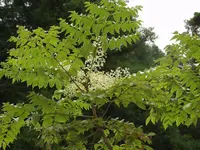
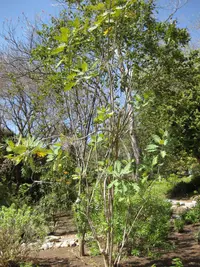
Japanese angelica tree, Aralia elata, is a deciduous shrub or small tree known for its bold, tropical-looking foliage and dramatic, upright stems armed with thorns. It forms an open, multi-stemmed shape with large, divided leaves that create a lush, architectural effect in the landscape.
This species is native to East Asia, including Japan, Korea, and parts of China, where it grows in forest edges and clearings. It produces large clusters of small white flowers followed by dark berries that attract wildlife.
It tends to be hardy and relatively low-maintenance once established, but its suckering habit can make it vigorous and sometimes spreading. Understanding how to care for Japanese angelica tree starts with providing well-drained soil, moderate moisture, and a position with good light but some shelter from extreme conditions.

Care Difficulty
Moderate Care

Light Preference
Partial Shade

Water Requirements
Moderate Water

Temperature Preference
Cold Hardy

Hardiness Zone
4–7

Soil Texture
Loamy, Sandy, Clay

Soil pH
Acidic (5.5–6.5), Slightly acidic (6.5–7.0)

Soil Drainage
Moist but well-drained

Fertilization
Minimal (feed rarely)
Scan your plant to receive care tips personalized for your specific plant
Available on iOS and Android
This deciduous shrub prefers bright conditions with some protection from intense midday sun.
This species favors consistently moist, well-drained soil rather than extremes of wet or dry.
This hardy shrub tolerates cold winters but grows best in moderate temperatures.
This species grows well in typical outdoor humidity but benefits from slightly moist air in very dry regions.
This species prefers deep, moisture-retentive yet free-draining soil to support strong cane and root growth.
This species can be grown in containers for several years, especially in cooler climates or for patio display.
Aralia elata benefits from modest, targeted feeding but grows acceptably in average garden soil.
Pruning Aralia elata focuses on safety, structure, and managing suckering growth.
Japanese angelica tree is usually grown in the ground, so management focuses on careful transplanting rather than frequent repotting.
Aralia elata is commonly propagated by root suckers, seed, or hardwood cuttings in suitable conditions.
This species is cold hardy in much of the US and usually needs only basic winter care once established.

Plant Health Check
Not sure what's wrong with your plant? Check your plant's health inside the app.
In its native East Asia, the young spring shoots of this species are collected as a seasonal vegetable, especially in Japan, where they are eaten after careful peeling and cooking to remove bitterness and spines.
This tree spreads aggressively by suckering roots, forming dense clonal thickets that can outcompete other vegetation, which is why it is considered invasive in several parts of eastern North America.
The trunk and leaf stalks are armed with prominent prickles that provide mechanical defense against herbivores and give mature plants a distinctive, almost architectural winter silhouette.

Large, late-summer flower clusters of this species are highly attractive to pollinating insects, and in regions where it has become invasive, these abundant flowers and ensuing berry-like fruits can significantly alter local food resources for both insects and birds.
Growth is moderate. Young plants often add 30–60 cm per year under good light, moisture, and fertile soil. Growth slows as the framework of branches matures and energy shifts toward flowering and suckering around the base.
Keep your plants happy and healthy with plant identification, disease detection, and easy care guidance.