Florida anisetree Care (Illicium floridanum)

Also known as: Florida Anise
Florida anisetree

About Florida anisetree

Florida anisetree (Illicium floridanum) is an evergreen shrub to small tree valued for its dense foliage and star-shaped, maroon flowers. It has a rounded, bushy habit and aromatic leaves that release a strong anise-like scent when crushed.

This species is native to moist woodlands and stream banks in the southeastern United States, especially Florida and nearby states. It adapts well to shaded gardens where soil stays consistently damp but not waterlogged.

Illicium floridanum is generally considered a durable, low-maintenance landscape shrub when planted in the right conditions. Those learning how to care for Florida anisetree should focus on providing shade, moisture-retentive soil, and protection from drying winds.

Main Plant Requirements

Care Difficulty

Moderate Care

Light Preference

Partial Shade

Water Requirements

Keep Soil Moist

Temperature Preference

Warm Climate

Hardiness Zone

7–10

Soil Texture

Loamy, Silty, Organic-rich

Soil pH

Strongly acidic (4.5–5.5), Acidic (5.5–6.5)

Soil Drainage

Moist but well-drained

Fertilization

Minimal (feed rarely)

Get Personalized Care Plan

Scan your plant to receive care tips personalized for your specific plant

Available on iOS and Android

How to Care for the Florida anisetree

This evergreen shrub prefers bright, indirect light with protection from harsh sun.

  • Provide 3–5 hours of gentle morning sun with dappled or high open shade the rest of the day, similar to woodland understory conditions for Florida anisetree.
  • Avoid strong midday and afternoon sun; leaves can scorch, curl, or bronze when exposed to full sun in hot climates, especially above 85°F (29°C).
  • In deep shade, flowering and density decline; choose a site that receives shifting, filtered light year-round, and adjust by thinning overhead branches if growth becomes sparse.

This species prefers consistently moist but not saturated soil.

  • Water when the top 3–5 cm of soil feels slightly dry, aiming to keep the root zone evenly damp, especially during the first 1–2 growing seasons.
  • Use rich, organic, well-draining soil; puddling on the surface, sour odor, or blackened roots indicate overwatering and poor drainage that must be corrected.
  • In summer heat, check moisture every few days; in cool or rainy seasons, extend the interval and watch for wilting, dull leaves, or curling edges as signs of underwatering in Illicium floridanum.

This shrub performs best in mild, relatively stable temperatures.

  • Ideal growth occurs around 65–80°F (18–27°C), with steady moisture and some shade helping the plant tolerate warm summers without stress.
  • It is generally hardy to about 0–10°F (-18 to -12°C); prolonged drops below this range can damage stems and buds, especially on young plants.
  • Protect from sudden hard frosts and extreme heat above 95°F (35°C) by using organic mulch, maintaining soil moisture, and providing afternoon shade to limit temperature swings at the root zone.

This shrub prefers moderately moist air but usually adapts to typical outdoor humidity in its range.

  • Aim for 40–60% humidity in sheltered plantings, especially in hotter inland areas.
  • Plants tolerate brief drier air but may show leaf edge browning and curl when humidity stays very low.
  • To ease humidity stress, use organic mulch over the root zone and group shrubs near other plantings or beside water features, rather than misting foliage.

Illicium floridanum grows best in consistently moist, organic-rich soil that drains freely but never dries out completely.

  • Use a deep, loamy mix combining native soil with composted bark, leaf mold, and 10–20% coarse sand for structure.
  • Ensure drainage is steady rather than rapid; soil should feel springy and crumbly, not heavy or sticky after rain.
  • Target a slightly acidic to neutral pH of 5.5–7.0, which supports nutrient uptake and healthy root development.
  • In heavy clay, improve aeration and drainage by raising the planting area and blending in coarse bark chunks and sharp sand, avoiding compacted, waterlogged spots.

This species can grow in containers for several years if the pot is chosen and managed for its woody root system.

  • Select a wide, heavy container to counterbalance the shrub’s dense evergreen canopy and reduce tipping in wind.
  • Use a deep pot that allows lateral and downward root spread, preventing circling roots and uneven moisture pockets.
  • Choose thick-walled clay or concrete containers in hot climates to moderate temperature swings and slow surface drying of the mix.

This native shrub grows well in fertile soil and usually needs only light feeding.

  • Apply a balanced slow-release fertilizer (around 10-10-10) once in early spring as new growth begins.
  • Use compost or leaf mold as an annual top-dressing to improve soil structure and steady nutrient supply for Florida anisetree.
  • Dilute any liquid feed to half strength and apply only during the active growing season.
  • Stop fertilizing in late summer so new growth hardens before winter and avoids cold damage.

Illicium floridanum responds well to light structural pruning rather than heavy cutting.

  • Schedule pruning right after flowering in late spring to avoid removing next year’s buds.
  • Remove dead, damaged, crossing, or inward-growing branches to keep the interior open and healthy.
  • Use clean, sharp hand pruners for small stems and a pruning saw only for thicker wood.
  • Shorten overly long shoots to maintain a dense, natural shrub form without shearing into tight shapes.

This shrub is usually grown in the ground, so focus on thoughtful transplanting rather than frequent repotting.

  • Transplant in late fall or early spring when growth is slow and temperatures are mild.
  • Move plants that show poor vigor, are outgrowing their space, or sit in waterlogged soil for long periods.
  • Dig a wide root ball, keep roots shaded and moist, and set the shrub at the same soil depth in the new hole.
  • Water thoroughly after transplanting, then keep the root zone evenly moist and mulched to limit stress and encourage new rooting.

Illicium floridanum is most commonly propagated by semi-hardwood cuttings and sometimes by seeds.

  • Take semi-hardwood stem cuttings in late summer, 8–12 cm long, with 2–3 leaf nodes.
  • Dip the cut base in rooting hormone and insert into a moist, well-draining mix under high humidity and bright shade.
  • Keep temperatures around 70–75°F and avoid waterlogging so forming roots receive enough oxygen.
  • Sow fresh seeds in a shaded, cool frame; germination can be slow and irregular, so label and monitor trays patiently.

This broadleaf evergreen is hardy in mild climates and usually needs only modest winter attention.

  • In USDA zones near its hardiness limits, add a 5–8 cm mulch layer over the root zone in late fall.
  • Avoid winter sites with strong, drying winds that can scorch evergreen foliage.
  • For container plants, move pots into a sheltered, frost-free or slightly sheltered unheated space during hard freezes.

Care Tips

Mulch For Moisture

Apply a 5–8 cm layer of composted bark or pine needles over the root zone, keeping it 5 cm away from the stems, to stabilize soil moisture and reduce heat stress in summer.

Wind And Shade Screening

Use shade cloth or plant taller shrubs or small trees on the west or south side to buffer hot afternoon sun and drying winds, which helps reduce leaf scorch on outer branches.

Root Zone Protection

Avoid digging, edging, or frequent foot traffic within the drip line so the shallow, fibrous roots are not damaged, and use a defined mulch ring instead of lawn right up to the stems.

Selective Thinning Cuts

After flowering, remove only 1–2 of the oldest interior branches at their base to open the shrub for better air movement and light penetration without spoiling its natural form.

Moisture Check Stations

Install 2–3 simple plastic or metal moisture probes or permanent finger-test spots at different distances from the trunk so you can detect dry pockets and adjust irrigation when growing Florida anisetree.

Common Pests and Diseases

Scale insects

This pest attaches to stems and leaf undersides, sucking sap and causing yellowing, leaf drop, and overall decline. Symptoms include small, rounded or oval bumps that do not move when touched.

Solution

Prune out heavily infested twigs, then wipe remaining insects from stems and leaves with a cotton pad dipped in 70% isopropyl alcohol or a mild insecticidal soap solution. For outdoor plants, repeat treatments every 7–10 days until new growth appears clean and improve plant vigor with proper watering and mulch to help the shrub outgrow light infestations.

Leaf spot

This disease causes brown or purplish spots on leaves, sometimes with a yellow halo, which can merge into larger blotches and lead to premature leaf drop. Symptoms include worst damage on older, shaded foliage or in very wet seasons.

Solution

Remove and dispose of affected leaves from the plant and ground to reduce inoculum, and avoid overhead watering to keep foliage dry. Improve air circulation by thinning dense interior branches, and in severe, recurring cases, apply a labeled ornamental shrub fungicide in early spring when new foliage emerges, following local regulations and label directions.

Spider mites

These insects are tiny sap feeders that cause stippled, dull, or bronzed foliage, especially during hot, dry weather. Symptoms include very fine webbing between leaves and along stems when populations are high.

Solution

Rinse foliage thoroughly with a firm stream of water, including the undersides of leaves, 2–3 times per week to knock down populations. Increase humidity around the plant if grown in a sheltered site, avoid drought stress, and use insecticidal soap or horticultural oil labeled for mites if webbing and discoloration continue.

Sooty mold

This disease appears as a black, soot-like coating on leaves and stems that does not penetrate the tissue but can reduce photosynthesis. Symptoms include sticky leaf surfaces from honeydew excreted by sap-sucking insects such as scale or aphids.

Solution

Address the underlying insect problem first by managing scale or other sap feeders, then gently wash affected leaves with lukewarm water and a small amount of mild liquid soap to remove the mold. Improve air flow and light penetration through light pruning so new, clean foliage replaces heavily coated leaves.

Interesting Facts

Crushed leaves odor

When the leaves are crushed, they release a strong scent often described as unpleasant or medicinal, unlike the sweet, edible aroma of true star anise (Illicium verum). This smell likely discourages herbivores from feeding on the plant.

Swamp-shrub specialist

This evergreen shrub is naturally restricted to shaded, acidic wetlands and stream margins in the southeastern United States, especially in Florida and adjacent states. Its thick, leathery leaves and shallow root system are well adapted to consistently moist, low-oxygen soils.

Star-shaped seed pods

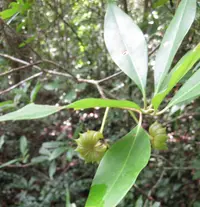
The plant produces distinctive, star-shaped woody fruits that superficially resemble culinary star anise but are not safe to ingest. These long-lasting pods contribute to its ornamental value in shaded gardens and are useful for botanists in field identification of Illicium floridanum plant care contexts.

Botan icon

Did you know?

This species contains toxic compounds that make it unsafe for use as a culinary spice or tea, and its similarity in fruit shape to the edible star anise (Illicium verum) has led to documented poisoning cases when the two have been confused.

FAQs about Florida anisetree

This species is evergreen in mild climates, holding foliage year-round. In unusually cold winters, some leaves may discolor or drop, but healthy plants typically replace them quickly once temperatures and soil conditions improve.

Grow Healthy Plants with Botan Care

Keep your plants happy and healthy with plant identification, disease detection, and easy care guidance.

Botan plant care app — identify plants on mobile

Explore More Plants