Red Spruce Care (Picea rubens)

Also known as: Eastern Spruce, yellow spruce, he balsam
Red Spruce

About Red Spruce

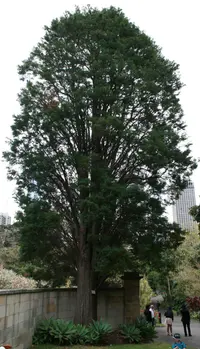
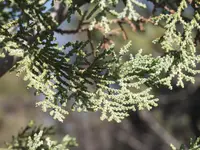
Red spruce, Picea rubens, is an evergreen coniferous tree valued for its dense, narrow crown and short, four-sided needles. It forms many upward-reaching branches that give a full, layered appearance.

This species is native to cool, moist forests of the northeastern United States and eastern Canada, where it often grows at higher elevations. Its slow to moderate growth and preference for steady moisture make it less forgiving of drought or compacted urban soils.

Gardeners who care for Red Spruce should provide cool conditions, consistent moisture, and acidic, well-drained soil. It generally prefers full sun but benefits from protection from hot, dry wind in warmer regions.

Main Plant Requirements

Care Difficulty

Moderate Care

Light Preference

Full Sun

Water Requirements

Moderate Water

Temperature Preference

Cold Hardy

Hardiness Zone

3–7

Soil Texture

Loamy, Sandy, Rocky

Soil pH

Strongly acidic (4.5–5.5), Acidic (5.5–6.5)

Soil Drainage

Moist but well-drained

Fertilization

Minimal (feed rarely)

Get Personalized Care Plan

Scan your plant to receive care tips personalized for your specific plant

Available on iOS and Android

How to Care for the Red Spruce

This species prefers cool, bright conditions that mimic open, northern forests.

  • Provide 6–8 hours of full sun daily, ideally with morning sun and light afternoon shade in hotter regions to limit needle scorch.
  • Tolerates light to moderate partial shade (around 3–4 hours direct sun), but dense shade leads to thin growth, longer internodes, and sparse foliage.
  • In summer, avoid reflected heat from pavement or south-facing walls; in winter, full sun helps maintain dense, healthy crowns for Red Spruce.

Picea rubens prefers consistently moist but never waterlogged soil.

  • Water when the top 3–5 cm of soil feels dry, allowing deeper roots to remain slightly moist; use this touch test rather than a fixed schedule.
  • Ensure sharply draining, slightly acidic soil; avoid standing water, which causes root rot, yellowing needles, and dieback from the base upward.
  • During the first 2–3 years, monitor closely in summer droughts for drooping, dull needles, and increase soaking depth rather than frequency.

This cold-hardy conifer is adapted to cool, moist climates with long winters.

  • Optimal growth occurs around 55–70°F (13–21°C), especially in cool summers with moderate humidity and protection from hot, drying winds.
  • Established trees tolerate cold down to about -40°F (-40°C), but young plants benefit from snow cover or mulch over the root zone in exposed sites.
  • Heat above 85–90°F (29–32°C) increases stress; provide mulch and avoid reflected heat surfaces to keep roots cooler during heatwaves.

This species prefers cool, moderately moist air but usually tolerates typical outdoor humidity in its range.

  • Aim for ambient humidity around 40–60% when young or in sheltered plantings, avoiding hot, very dry microclimates near walls or pavement.
  • Tolerates brief drier air, but prolonged low humidity with heat can cause browning needle tips and increased spider mite activity.
  • Increase local humidity outdoors by using organic mulch over the root zone and avoiding reflected heat surfaces that dry the air around Red Spruce.

Picea rubens performs best in cool, moist, well‑aerated mineral soils that never stay waterlogged.

  • Use a loamy or sandy-loam texture with high organic matter, such as a mix of native mineral soil, composted bark, and leaf mold.
  • Ensure steady drainage; the soil should stay evenly moist but excess water must move through the profile within a few hours after heavy rain.
  • Target a slightly acidic pH of about 4.5–6.0; avoid liming near the root zone and avoid strongly alkaline or heavily compacted soils.
  • Improve aeration and drainage on heavier sites by raising the planting area slightly and incorporating coarse sand or fine pine bark into the top 20–30 cm.

This species is only moderately suitable for container growing and usually stays healthiest in the ground.

  • Choose a deep, heavy container that resists tipping, since the plant develops a tall, wind-catching canopy over time.
  • Use a tall pot with ample root space to discourage circling roots, which stress conifers in long-term containers.
  • Select thicker-walled or stone-like containers in sunny, exposed sites to buffer root temperatures and reduce moisture swings.

This species usually needs little feeding in the ground, but light, balanced nutrition benefits young or container-grown Red Spruce.

  • Use a balanced slow-release fertilizer (for example 10-10-10) or a thin layer of well-rotted compost in early spring.
  • Feed only once per year for in-ground trees; containers may receive a half-strength liquid balanced NPK every 6–8 weeks in spring–summer.
  • Avoid fertilizing in late summer–winter to prevent soft growth that is vulnerable to cold damage.

Picea rubens needs minimal pruning and is best kept in its natural conical form.

  • Carry out any pruning in late winter or very early spring before new growth begins.
  • Remove only dead, diseased, or rubbing branches, cutting back to a healthy side branch or the trunk.
  • Avoid cutting back into bare, older wood, as spruce seldom refills with new buds there.
  • Use clean, sharp bypass pruners or a pruning saw to make smooth, angled cuts that heal more reliably.

This tree is seldom kept long term in containers, so focus on careful transplanting from nursery pots to the landscape.

  • Transplant in early spring or early fall when temperatures are mild and soil is moist but not waterlogged.
  • Look for circling roots at the pot edge or slowed growth as signs the young tree is ready to move out of its container.
  • Handle the root ball gently, loosening only lightly without tearing fine roots, and keep roots shaded and moist during the move.
  • Plant at the same soil depth as in the pot, water deeply, then mulch 5–8 cm to limit evaporation and root stress.

Picea rubens is usually propagated by seed in professional settings, with home propagation considered slow and somewhat technical.

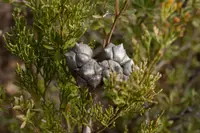
  • Collect ripe cones in late summer–fall, dry them, and extract seeds once scales open.
  • Cold-stratify seeds at 34–41°F for 6–8 weeks in moist sand to break dormancy.
  • Sow in a sterile, free-draining mix under cool, bright conditions, keeping the surface just slightly moist.
  • Maintain seedlings in shallow trays for 1–2 years before planting out, protecting them from strong sun and drought.

Mature plants are very cold hardy and generally require little special winter care in the landscape.

  • Apply a 5–8 cm mulch layer around the root zone in late fall, keeping it away from direct trunk contact.
  • Water deeply before ground freeze in dry autumns so roots enter winter well hydrated.
  • Move young container-grown trees into a sheltered, unheated but frost-free area, or heel containers into the ground and mulch heavily.

Care Tips

Windfirm Training

In the first 3–5 years, leave lower branches on and avoid heavy thinning so the tree builds a low, dense structure that better resists windthrow on exposed sites.


Snow Load Management

In areas with heavy, wet snow, gently shake or brush snow off young branches after storms to reduce the risk of bending and permanent deformation of the crown.

Root Zone Protection

Keep a 60–90 cm radius around the trunk free from foot traffic, mowers, and string trimmers, and maintain a mulch ring there to prevent soil compaction and root or bark injury.

Mycorrhiza Support

When planting in poor or disturbed soils, lightly mix a conifer-appropriate mycorrhizal inoculant into the backfill to support fine root development and long-term nutrient uptake.

Deer And Rodent Deterrence

Install a breathable trunk guard and, where browsing is common, use a physical fence or seasonal repellents around young trees, as consistent animal damage can permanently distort growth when growing Red Spruce.

Common Pests and Diseases

Spruce budworm

This pest is a small moth larva that feeds heavily on new needles and buds, causing thinning foliage and dieback at branch tips. Symptoms include brown, chewed needles and reduced new growth, often starting in the upper crown.

Solution

Prune out and destroy infested shoot tips where practical and monitor for caterpillars in late spring. For larger trees, use a Bacillus thuringiensis (Bt) product labeled for caterpillars during early larval stages, and encourage natural predators by avoiding broad-spectrum insecticides nearby.

Spruce gall adelgid

These insects induce cone‑like galls on new shoots, which deform twigs and can reduce vigor on young trees. Symptoms include green to brown, pineapple‑shaped galls along branches that open later in the season, leaving stubs and distorted growth.

Solution

Clip off and destroy green galls before they open, usually in late spring to early summer, to reduce the adelgid population. For persistent problems, apply a horticultural oil or insecticidal soap to swelling buds and new shoots in early spring, following label directions carefully.

Rhizosphaera needle cast

This disease is a fungal infection that causes interior needles to turn purple‑brown and drop prematurely, creating a thin, bare look on lower branches. Symptoms include rows of tiny black dots on infected needles, which are spore‑producing structures.

Solution

Prune and discard heavily affected lower branches and fallen needles to reduce spore sources, and water at soil level instead of wetting foliage. Improve airflow by spacing plants properly and, if disease is recurring, apply a copper‑based or chlorothalonil fungicide in late spring when new needles are half‑grown, repeating as label directions specify.

Cytospora canker

This disease is caused by a fungus that infects stressed branches, leading to progressive dieback, resin flow, and browning needles starting on lower limbs. Symptoms include white to amber resin patches on affected branches and sections of the lower crown slowly dying over several years.

Solution

Remove and destroy infected branches during dry weather by cutting back to healthy wood, disinfecting pruning tools between cuts with 10% bleach or 70% alcohol. Reduce plant stress by avoiding drought, preventing mechanical injury, and maintaining even soil moisture, as fungicides are generally not effective on established cankers.

Spruce spider mite

These mites feed on needles, causing fine stippling, a dull gray‑green color, and eventual bronzing or needle drop, especially in dry conditions. Symptoms include very fine webbing and dust‑like mites on the undersides of needles when inspected closely.

Solution

Spray foliage thoroughly with a strong stream of water to knock mites off the plant and repeat this rinsing every few days during outbreaks. If damage continues, use insecticidal soap or a miticide labeled for conifers, treating the undersides of needles and monitoring regularly, as part of broader Picea rubens care instructions.

Interesting Facts

High-elevation specialist

This species naturally dominates cool, moist mountaintop forests in the northeastern US and eastern Canada, often forming pure stands above about 1,200–1,500 m where few other conifers tolerate the harsh climate.

Keystone for rare birds

Red spruce canopies provide critical nesting and foraging habitat for high-elevation specialists such as the Bicknell’s thrush, a songbird with a very restricted breeding range in northeastern North America.

Acid deposition sensitivity

This species has shallow, nutrient-demanding roots that are especially vulnerable to soil acidification from historical acid rain, which contributed to notable canopy decline in some Appalachian and northeastern stands in the late 20th century.

Botan icon

Did you know?

Dendrochronology studies using red spruce growth rings have been central for reconstructing past climate in eastern North America, because this species can live for several centuries and records long-term temperature and atmospheric changes in its wood.

FAQs about Red Spruce

This species grows slowly, usually about 15–30 cm per year in good conditions. Growth is faster in cool, moist climates with deep, well-drained soil and slower in compacted, dry, or urban sites.

Grow Healthy Plants with Botan Care

Keep your plants happy and healthy with plant identification, disease detection, and easy care guidance.

Botan plant care app — identify plants on mobile

Explore More Plants