Wind-hardening young trees
In the first 2–3 years, expose young plants gradually to moderate wind or lightly stake them with flexible ties so trunks sway slightly and develop strong, tapered wood rather than becoming weak and top-heavy.

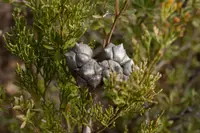
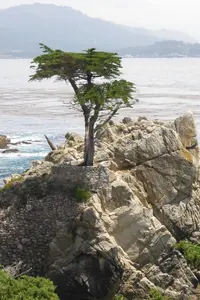
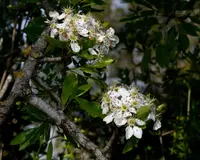
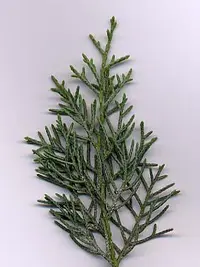
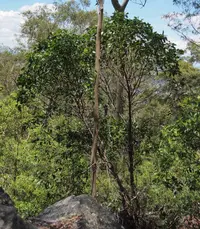
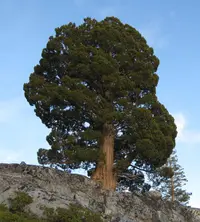
Oyster Bay pine, Callitris rhomboidea, is a compact conifer native to coastal and inland areas of southeastern Australia and Tasmania. It is usually grown as a shrub or small tree with dense, fine foliage. Mature plants form a rounded to columnar shape with small scale-like leaves and woody cones that stay on the branches for long periods. The foliage is often blue-green to grey-green, giving a soft, textural look in gardens or large containers. This species tolerates wind, salt spray, and poor, sandy soils, so it suits exposed coastal sites. To care for Oyster Bay Pine, provide full sun, well-drained soil, and avoid heavy, waterlogged conditions.

Care Difficulty
Moderate Care

Light Preference
Full Sun

Water Requirements
Low Water

Temperature Preference
Cool Climate

Hardiness Zone
8–10

Soil Texture
Sandy, Loamy, Rocky

Soil pH
Acidic (5.5–6.5), Slightly acidic (6.5–7.0)

Soil Drainage
Well-drained

Fertilization
Minimal (feed rarely)
Scan your plant to receive care tips personalized for your specific plant
Available on iOS and Android
This species prefers bright outdoor conditions similar to its native coastal habitats.
Callitris rhomboidea prefers evenly moist but never saturated soil once established outdoors.
This conifer tolerates a broad temperature range but performs best in mild, coastal-type climates.
Callitris rhomboidea tolerates a wide humidity range and usually does not need special humidity control indoors or outdoors.
Callitris rhomboidea prefers mineral, well-drained soil that mimics its native sandy or rocky habitats.
This species can be grown in containers for several years if the pot setup prioritizes drainage and root stability.
Callitris rhomboidea is adapted to nutrient-poor soils and needs only light, infrequent feeding in cultivation.
Callitris rhomboidea needs minimal pruning and responds best to light, selective work.
This species is most often grown in the ground; container plants and young field-grown Callitris rhomboidea need thoughtful transplanting to protect the root system.
Propagation of Callitris rhomboidea is usually done by seed, with cuttings used less often and requiring controlled conditions.
Callitris rhomboidea is generally cold hardy in mild to moderate climates and needs little specific winter care in the ground.

Plant Health Check
Not sure what's wrong with your plant? Check your plant's health inside the app.
This species naturally occurs along coastal and near-coastal areas of southeastern Australia, often on rocky headlands and poor sandy soils where many other trees struggle to establish.
The foliage consists of tiny overlapping scale leaves pressed tightly against slender branchlets, giving the tree a fine, feathery texture while reducing water loss in windy, dry environments.
Its small cones release seeds with narrow wings, which help wind disperse them away from the parent tree, an important strategy for growing Oyster Bay Pine in patchy, nutrient-poor habitats.

Some populations of this species can be extremely long-lived, with individual trees known to reach ages of several centuries, forming stable components of coastal vegetation that persist over many human generations.
This species is generally slow-growing, often adding around 15–30 cm per year under good conditions. Growth is slower in poor, dry, or compacted soils and slightly faster in sunny, well-drained, coastal-style sites.
Keep your plants happy and healthy with plant identification, disease detection, and easy care guidance.