Thorn-aware placement
Site the plant away from walkways, children’s play areas, and pet routes, as the very hard spines can injure skin and eyes; use sturdy gloves and eye protection whenever working close to the canopy.

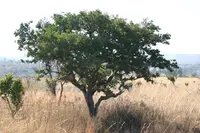
Spine-leaved monkey orange (Strychnos pungens) is a slow-growing, evergreen tree or large shrub known for its dense crown and very hard, spiny branches. It typically forms a compact, rounded shape and develops large, woody fruits with thick shells.
This species is native to dry woodland and savanna regions of southern Africa, where it is adapted to hot sun, poor soils, and low rainfall. Its thorny branches and slow growth make it better suited to experienced growers who understand how to care for Spine-leaved Monkey Orange.
The plant generally prefers bright light, well-drained sandy or loamy soil, and moderate, infrequent watering once established. It is usually grown outdoors in warm climates rather than as a typical houseplant.

Care Difficulty
Moderate Care

Light Preference
Full Sun

Water Requirements
Low Water

Temperature Preference
Warm Climate

Hardiness Zone
10–11

Soil Texture
Sandy, Loamy, Rocky

Soil pH
Slightly acidic (6.5–7.0), Neutral (7.0)

Soil Drainage
Well-drained

Fertilization
Minimal (feed rarely)
Scan your plant to receive care tips personalized for your specific plant
Available on iOS and Android
This sun-loving African shrub thrives in open, bright positions with long daily exposure.
This drought-tolerant shrub prefers deep, infrequent watering rather than constant moisture.
This species is adapted to warm, dry climates and does best with mild winters and hot summers.
This drought-adapted species tolerates low household humidity and rarely needs special moisture in the air.
This species prefers very well-drained, mineral-based soil that mimics its natural, rocky habitat.
This slow-growing tree can be maintained in a container for many years if the pot is chosen to support its deep, woody root system.
This dryland tree has low fertility needs, but light feeding can support steady growth in poor soils.
Pruning Strychnos pungens is mainly structural and corrective rather than intensive.
This species is usually grown in the ground, so focus on careful transplanting of young trees rather than frequent repotting.
Strychnos pungens is most often propagated from seed, which can be slow but is the most reliable method.
Mature plants are fairly drought and heat adapted but have limited frost tolerance and benefit from some winter attention.

Plant Health Check
Not sure what's wrong with your plant? Check your plant's health inside the app.
The leaves are thick, leathery, and end in sharp spine-like tips, and the short side branches also harden into strong thorns that help protect the tree from browsing animals in its savanna habitat.
The round, woody fruits develop an exceptionally hard shell that can remain intact on the ground long after the pulp is eaten, acting as a durable container that protects the seeds from many predators.
In its native range in southern Africa, large mammals such as baboons and some antelope species eat the fleshy pulp and then disperse the seeds, which are too hard for many smaller animals to process effectively.

The seeds and other parts of this species contain toxic alkaloids related to those in the notorious strychnine tree Strychnos nux-vomica, and the bitter-tasting seeds have traditionally been used in small quantities as fishing poison in some southern African communities.
All parts are highly toxic due to strychnine-type alkaloids, especially the seeds and bark. Ingestion can cause severe nervous system symptoms or death. Treat it as unsafe for children, pets, and livestock, and avoid medicinal self-use.
Keep your plants happy and healthy with plant identification, disease detection, and easy care guidance.