rose glorybower Care (Clerodendrum bungei)

Also known as: Glory-Flower
rose glorybower

About rose glorybower

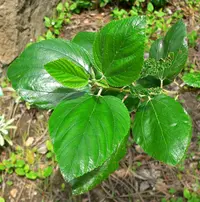
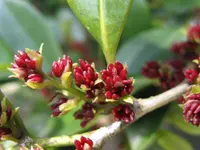
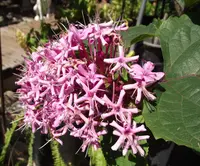
Rose glorybower, Clerodendrum bungei, is a deciduous flowering shrub grown for its bold foliage and showy late-summer blooms. It forms dense clumps from spreading roots and can become thicket-forming in mild climates. Large, heart-shaped leaves and domed clusters of fragrant, rosy-pink flowers give it a lush, tropical look in gardens or large containers. The plant is native to China and prefers warm conditions, rich soil, and regular moisture. It tends to be vigorous and sometimes invasive outdoors, but the top growth may die back in colder regions. Once its spreading habit and light needs are understood, it is relatively straightforward to care for rose glorybower.

Main Plant Requirements

Care Difficulty

Moderate Care

Light Preference

Partial Sun

Water Requirements

Regular Water

Temperature Preference

Warm Climate

Hardiness Zone

7–10

Soil Texture

Loamy, Sandy, Organic-rich

Soil pH

Acidic (5.5–6.5), Slightly acidic (6.5–7.0)

Soil Drainage

Moist but well-drained

Fertilization

Light (every 4–6 weeks)

Get Personalized Care Plan

Scan your plant to receive care tips personalized for your specific plant

Available on iOS and Android

How to Care for the rose glorybower

This shrub prefers bright, gentle sun with some protection from intense afternoon exposure.

  • Provide 4–6 hours of sun daily, ideally with morning sun and light afternoon shade to support flowering of rose glorybower.
  • In hot summers, use dappled or filtered light from trees or shade cloth during midday to prevent leaf scorch and faded blooms.
  • In cooler climates, choose a south or west-facing spot with longer sun exposure, but watch for leaf yellowing as a sign of too much shade.

This plant prefers consistently moist but not waterlogged soil, especially during active growth.

  • Allow the top 3–5 cm of soil to dry before watering, then soak the root zone deeply so moisture reaches 15–20 cm down.
  • In spring and summer, monitor more often in heat or wind; in fall and winter, reduce watering as growth slows and rainfall increases.
  • Watch for wilting, crisp edges, or dropped buds as signs of underwatering, and yellowing leaves or sour-smelling soil as signs of overwatering in Clerodendrum bungei.

This shrub grows best in warm, mild conditions and dislikes hard frost or extreme heat.

  • Aim for 65–80°F (18–27°C) during the main growing season to support strong shoots and abundant flower clusters.
  • Protect plants when temperatures fall near 28–32°F (-2–0°C); top growth may die back with light frost, but roots often survive if mulched.
  • In very hot periods above 90°F (32°C), provide afternoon shade and extra soil moisture to limit heat stress and leaf scorch.

This species prefers moderate to high humidity and reacts if air stays very dry.

  • Aim for 50–70% humidity for consistent growth and better flowering in rose glorybower.
  • Leaves may curl, brown at the edges, or drop buds when exposed to prolonged dry indoor air or strong heating vents.
  • Increase humidity with a pebble tray under the pot, grouping plants together, or running a small humidifier nearby.

Clerodendrum bungei grows best in loose, moisture-retentive but well-drained soil.

  • Use a loamy mix with high organic matter, such as 2 parts compost-based potting mix, 1 part pine bark, and 1 part perlite or coarse sand.
  • Ensure water drains freely within a few seconds; avoid heavy clay or mixes that stay soggy for more than 24 hours.
  • Aim for slightly acidic to neutral pH around 6.0–7.0 to support nutrient availability and root health.
  • Improve aeration by incorporating chunky bark or perlite and breaking up compacted layers before planting.

This shrub is suitable for container growing when the pot supports its vigorous root system and spreading habit.

  • Choose a wide, heavy container to counter the plant’s suckering habit and prevent it from tipping in wind.
  • Select a pot material like thick ceramic or clay to moderate moisture swings and keep roots cooler in summer heat.
  • Raise the container on feet or bricks so drainage holes release water quickly and roots do not sit in runoff.

Clerodendrum bungei responds well to moderate feeding during the active growing season.

  • Use a balanced liquid fertilizer (for example 10-10-10) at 1/2 strength every 3–4 weeks from spring to late summer when growing rose glorybower.
  • Alternatively, apply a slow-release balanced fertilizer once in spring, following label rates.
  • In rich soil, supplement with a light layer of compost instead of frequent synthetic feeds.
  • Stop feeding in fall and winter to avoid weak, frost-tender growth.

Pruning helps Clerodendrum bungei maintain a compact shape and support strong flowering.

  • Cut back weak, leggy, or overcrowded stems in late winter or very early spring before new growth starts.
  • Remove dead, diseased, or storm-damaged wood as soon as it appears using clean, sharp pruners.
  • After flowering, lightly shorten spent flowering stems to tidy the plant and encourage branching.
  • Thin out excess basal shoots or suckers to control spread and direct energy to selected stems.

This species is often grown in the ground but can be managed in containers with periodic repotting or division.

  • Repot or transplant every 2–3 years, or when roots circle the pot, growth slows, or watering frequency increases noticeably.
  • Aim for early spring, just before vigorous new growth, to allow quick root recovery.
  • Move to a pot only 1–2 in wider with free-draining soil, handling the root ball gently to limit shock.
  • Water thoroughly after moving, keep in bright but not harsh sun for 1–2 weeks, and avoid heavy feeding until new growth appears.

Clerodendrum bungei is commonly propagated from suckers and softwood cuttings.

  • Lift and divide rooted suckers in spring, replanting pieces with several shoots and a good root portion.
  • Take 10–15 cm softwood cuttings in late spring to early summer, removing lower leaves.
  • Dip cut ends in rooting hormone, then place in moist, free-draining mix under high humidity and bright, indirect light.
  • For seeds, sow fresh in warm (70–75°F), evenly moist medium, noting that germination can be slow and uneven.

This plant is moderately cold hardy but benefits from some winter preparation in cooler regions.

  • In USDA zones around 6–7, top growth may die back, but roots usually survive and resprout in spring.
  • Apply a 5–8 cm mulch layer over the root zone after the first hard frost, keeping it slightly away from stems.
  • In colder areas or exposed sites, container plants should be moved to a frost-free, cool, bright location.

Care Tips

Root sucker control

Inspect surrounding soil several times each growing season and promptly dig out root suckers with a spade, removing a short section of the connecting root to prevent an expanding thicket.

Rhizome barrier use

In small gardens, install a vertical root barrier 30–40 cm deep around the planting area to limit lateral rhizome spread while still allowing the plant to form a dense clump.

Bloom management

Deadhead spent flower clusters before they form seed to reduce unwanted self-seeding and to direct more energy into vegetative growth and root strength.

Seasonal thinning

In late winter or very early spring, selectively remove the oldest, thickest stems at ground level to maintain good air flow, reduce mildew risk, and encourage vigorous new shoots.

Targeted pest scouting

From late spring, check the undersides of leaves weekly for aphids, whiteflies, and spider mites, and treat early with a strong water spray or horticultural soap to keep caring for rose glorybower manageable without heavy chemical use.

Common Pests and Diseases

Spider mites

This pest often appears on plants grown in warm, dry conditions and feeds on the undersides of leaves, causing fine stippling and possible webbing. Symptoms include dull, speckled foliage and leaves that may yellow and drop prematurely.

Solution

Rinse foliage thoroughly with a strong but controlled stream of water, focusing on leaf undersides, and repeat every few days until activity declines. For heavier infestations, use an insecticidal soap or horticultural oil labeled for spider mites and increase humidity around the plant while avoiding leaf wetness at night.

Whiteflies

These insects congregate on the undersides of leaves, flying up in a small cloud when disturbed and sucking plant sap. Symptoms include sticky honeydew, sooty mold growth on leaves, and gradual decline in vigor.

Solution

Remove heavily infested leaves and use yellow sticky traps to monitor and reduce adult numbers. Treat remaining foliage with insecticidal soap or horticultural oil, repeating at 5–7 day intervals to target newly emerged nymphs, and avoid overfertilizing, which encourages faster reproduction.

Aphids

These insects cluster on young shoots, flower buds, and leaf undersides, feeding on sap and distorting new growth. Symptoms include curled or twisted leaves, sticky honeydew, and possible sooty mold on the leaf surface.

Solution

Prune and discard heavily infested shoot tips, then wash remaining stems and leaves with a firm stream of water. Follow with insecticidal soap or neem oil spray applied in the early morning or evening, repeating as needed, and encourage natural predators outdoors by avoiding broad-spectrum insecticides.

Leaf spot

This disease causes small to medium brown or black spots on leaves, sometimes with yellow halos, leading to premature leaf drop in humid or crowded conditions. Symptoms include patchy thinning of the canopy and reduced ornamental quality.

Solution

Remove and discard affected leaves and any fallen debris around the plant to reduce pathogen spores. Improve air circulation by spacing and light pruning, water at the base rather than overhead, and if the problem persists, apply a copper-based or other labeled fungicide according to directions for ornamental shrubs.

Powdery mildew

This disease appears as a white or gray powdery coating on leaf surfaces, especially in shaded, humid, but not overly wet conditions. Symptoms include distorted new growth and reduced flowering if the infection is severe.

Solution

Increase light and airflow around the plant by thinning dense stems and avoiding overcrowding, and water soil directly rather than wetting foliage. Remove the most affected leaves and, if needed, use a fungicide labeled for powdery mildew on ornamentals, applying at the first sign of the white coating as part of broader Clerodendrum bungei care instructions.

Interesting Facts

Strong root suckering

This species spreads vigorously by underground suckers, allowing a single plant to form large clonal thickets if the roots are not contained or regularly removed.

Scented yet malodorous foliage

The pink flower clusters are sweetly fragrant to humans and pollinators, but the crushed leaves release a pungent, often described as unpleasant, odor due to volatile compounds in the tissues.

Late-summer nectar source

In many temperate gardens, this shrub flowers in late summer to early autumn, providing nectar for butterflies and other insects when many earlier-flowering ornamentals have already finished.

Botan icon

Did you know?

In parts of the southeastern United States and other mild regions, Clerodendrum bungei has escaped cultivation and is locally considered invasive because its vigorous suckering growth allows it to outcompete nearby ornamental and native plants.

FAQs about rose glorybower

Lack of flowers often comes from too much shade, heavy or dry soil, or old woody stems. Improve light exposure, keep soil evenly moist, and prune after flowering to refresh growth and encourage next season’s buds.

Grow Healthy Plants with Botan Care

Keep your plants happy and healthy with plant identification, disease detection, and easy care guidance.

Botan plant care app — identify plants on mobile

Explore More Plants