stickpea Care (Calliandra haematocephala)

Also known as: scarlet powder-puff, pink powder-puff, red powder-puff
stickpea

About stickpea

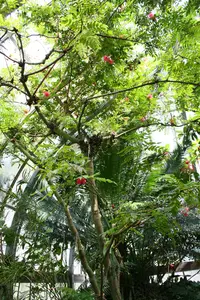
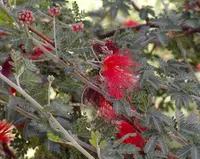
Stickpea, Calliandra haematocephala, is a tropical shrub or small tree known for its dense, rounded shape and bright red, powder-puff flower heads. The fluffy blooms attract hummingbirds and other pollinators, making it a striking ornamental choice.

In nature it occurs in tropical and subtropical regions, often in warm, frost-free landscapes. It grows relatively fast and can be pruned to maintain size, but needs consistent warmth and light, so it is moderately easy rather than low maintenance.

Gardeners who want to care for stickpea should know it prefers bright light, evenly moist but well-drained soil, and protection from cold or drying winds.


Main Plant Requirements

Care Difficulty

Moderate Care

Light Preference

Full Sun

Water Requirements

Moderate Water

Temperature Preference

Tropical / Frost Sensitive

Hardiness Zone

9–11

Soil Texture

Sandy, Loamy, Organic-rich

Soil pH

Acidic (5.5–6.5), Slightly acidic (6.5–7.0)

Soil Drainage

Moist but well-drained

Fertilization

Light (every 4–6 weeks)

Get Personalized Care Plan

Scan your plant to receive care tips personalized for your specific plant

Available on iOS and Android

How to Care for the stickpea

Calliandra haematocephala thrives in bright outdoor conditions with ample direct sun for strong flowering.

  • Provide 6–8 hours of direct sun daily, ideally with morning sun and light afternoon shade in very hot climates.
  • Tolerates light or dappled shade for part of the day, but dense shade reduces blooms and leads to leggy stickpea growth.
  • In summer, protect from intense late-afternoon sun in hot regions to prevent leaf scorch; in winter, maximize exposure by avoiding heavy overstory shade.

This shrub prefers evenly moist, well-drained soil and reacts quickly to extremes in watering.

  • Allow the top 3–5 cm of soil to dry before deep watering, then soak the root zone thoroughly so water reaches 15–20 cm depth.
  • In hot growing seasons, expect more frequent watering, while in cooler months reduce frequency once growth slows and flowers are fewer.
  • Watch for yellowing, soft leaves or persistent wet soil as signs of overwatering, and for dull, curling leaves and very dry soil as signs of underwatering in Calliandra haematocephala.

This species grows best in warm, frost-free climates with mild temperature swings.

  • Aim for 65–85°F (18–29°C) for active growth, as this range supports strong foliage and flowering.
  • Short dips to about 40°F (4°C) are usually tolerated, but repeated exposure near freezing damages young shoots and flower buds.
  • Protect from frost and hard freezes below 32°F (0°C), and in extreme heat above 95°F (35°C) offer light afternoon shade and consistent soil moisture to limit stress.

Calliandra haematocephala prefers moderately humid air but copes with brief drier periods if watered correctly.

  • Aim for 50–70% humidity to keep foliage lush and flower buds forming reliably.
  • In prolonged air below 40%, leaf edges may brown, curl, or drop, and new growth may stay small.
  • Increase humidity outdoors with grouped plantings and mulch; indoors for stickpea use a nearby tray of damp pebbles rather than misting leaves directly.

This species needs freely draining, airy soil that stays evenly moist but never waterlogged.

  • Use a loose loam-based mix with roughly 40–50% organic matter (compost or leaf mold) and 50–60% mineral material such as coarse sand and perlite.
  • Aim for slightly acidic to neutral pH, around 6.0–7.0, which supports nutrient uptake and balanced growth.
  • Improve aeration by including chunky particles (pine bark fines or coarse perlite) so roots receive ample oxygen and resist rot.
  • Avoid heavy clay, compacted substrates, or mixes dominated by fine peat that hold water and create soggy conditions around the root zone.

This shrub adapts well to container growing when the pot supports its fast, woody root system.

  • Choose a wide, heavy container to counterbalance the top growth and prevent tipping in wind or on balconies.
  • Select a pot depth that comfortably accommodates a developing woody root ball, avoiding shallow dishes that restrict anchor roots.
  • Ensure large, unobstructed drainage holes so excess irrigation water leaves within minutes, preventing saturation at the bottom layer.

Calliandra haematocephala responds well to moderate feeding, especially in containers, to support flowering and steady growth.

  • Use a balanced liquid fertilizer (such as 10-10-10) at 1/2 strength every 4–6 weeks during spring–summer for stickpea grown in pots.
  • In the ground, apply a light layer of compost or slow-release balanced granules once in early spring.
  • Skip or greatly reduce feeding in fall–winter, especially where growth slows.
  • Water before and after fertilizing to avoid root burn and improve nutrient uptake.

Pruning helps Calliandra haematocephala stay compact, healthy, and floriferous in garden or container settings.

  • Plan main pruning for late winter or very early spring before vigorous new growth starts.
  • Remove dead, damaged, crossing, or inward-growing branches using clean, sharp bypass pruners.
  • Shorten overly long shoots to maintain a rounded shrub form and encourage dense branching and more flower clusters.
  • Lightly tip-prune after main blooming flushes to tidy the plant without removing too many new buds.

Container-grown plants and young landscape specimens benefit from thoughtful repotting or transplanting to maintain strong root systems.

  • Look for roots circling the pot, pushing through drainage holes, or for slowed growth as signals it is time to move Calliandra haematocephala.
  • Plan repotting or transplanting in spring, when active growth supports recovery from root disturbance.
  • Shift to a container 1–2 in wider with well-drained mix, keeping the root ball at the same soil level.
  • Loosen circling roots gently, water thoroughly after planting, and keep the plant shaded and evenly moist for 7–10 days to limit stress.

New Calliandra haematocephala plants are commonly produced from both semi-hardwood cuttings and seeds under warm, bright conditions.

  • Take semi-hardwood cuttings in late spring–summer, 8–10 cm long, and remove lower leaves.
  • Dip cut bases in rooting hormone, then place in a moist, free-draining mix under high humidity and bright, indirect light.
  • Sow fresh seeds in warm (70–80°F) conditions; lightly scarify hard seed coats to improve germination.
  • Keep both cuttings and seed trays evenly moist, not waterlogged, and avoid temperature swings to support root formation.

This subtropical shrub needs careful winter management in regions with frost or prolonged cold.

  • In USDA zones colder than 9, grow in containers and move indoors or into a heated greenhouse before nights drop near 32°F.
  • For in-ground plants in mild climates, add 5–8 cm of mulch around the root zone, keeping it away from the trunk.
  • During indoor overwintering, provide bright light, reduce watering, and avoid cold drafts to limit stress and leaf drop.

Care Tips

Wind exposure management

Site plants where they receive good light but are sheltered from persistent strong winds, which can desiccate the fine leaflets and shred flower heads; use a hedge, fence, or taller shrubs as a windbreak if your location is very exposed.

Selective framework training

In the first 2–3 years, choose 3–5 strong basal shoots as permanent framework branches and remove weak or crossing stems, which creates an open, well-structured shrub that carries heavier bloom without splitting after storms.

Root zone protection

Maintain a 5–8 cm organic mulch ring over the root zone, keeping it a few cm away from the trunk, to buffer soil temperature, reduce weed competition, and protect the relatively shallow feeder roots from mechanical damage.

Flowering flush management

After a heavy flush of flowers, lightly deadhead and thin congested twiggy growth to stimulate new shoots, which is where the next round of buds forms, improving repeat bloom through the warm season.

Scale and mite monitoring

Inspect undersides of leaflets and young stems every 2–3 weeks in warm, dry weather for early signs of spider mites or scale insects, and wash foliage with a firm water spray or apply horticultural oil promptly if pests are detected, which is a key part of caring for stickpea in container and landscape settings.

Common Pests and Diseases

Spider mites

This pest often appears in hot, dry conditions and causes fine stippling, yellowing, and leaf drop on Calliandra foliage. Symptoms include delicate webbing between leaflets and along stems.

Solution

Increase humidity around the plant, hose down foliage thoroughly to dislodge mites, and prune heavily infested shoots. For persistent issues, use insecticidal soap or a horticultural oil, coating the undersides of leaves and repeating every 7–10 days until new growth appears clean.

Scale insects

These insects attach along stems and leaf midribs, sucking sap and causing yellowing, stunted growth, and sticky honeydew deposits on leaves and nearby surfaces. Sooty mold may develop where honeydew accumulates.

Solution

Manually remove visible scales with a cotton swab dipped in alcohol and prune badly infested twigs. Follow with repeated applications of horticultural oil or insecticidal soap, focusing on stem joints and undersides of leaves, and improve plant vigor with proper watering and light to help recovery.

Caterpillar defoliation

This pest category includes various moth and butterfly larvae that feed heavily on the fine leaflets, sometimes stripping large sections of foliage in a short time. Symptoms include chewed leaf edges, missing leaflets, and frass (small dark droppings) on leaves or soil.

Solution

Inspect plants regularly and hand-pick caterpillars where possible, especially on young or potted specimens. For heavier infestations, apply a targeted biological control such as Bacillus thuringiensis (Bt) to the foliage in the evening, repeating as new larvae hatch, and encourage natural predators by avoiding broad-spectrum insecticides.

Powdery mildew

This disease shows as white, powdery patches on young leaves, buds, and new stems, leading to distorted growth and reduced flowering. Symptoms include dull, grayish foliage and premature leaf drop in shaded or crowded conditions.

Solution

Improve air circulation by thinning dense branches and avoid overhead watering that keeps foliage damp for long periods. Remove and discard affected leaves, then apply a sulfur or potassium bicarbonate fungicide labeled for ornamental shrubs if new infections continue, focusing on new growth.

Leaf spot

This disease causes small to medium brown or purplish spots on leaflets that may merge, leading to partial defoliation, especially in humid or rainy weather. Symptoms include yellow halos around spots and early shedding of older leaves on stressed plants.

Solution

Promptly remove and dispose of affected leaves and avoid wetting foliage during irrigation. Improve airflow, reduce overhead watering, and if spotting continues, use a copper-based or chlorothalonil fungicide according to label directions, focusing on protecting new leaves during wet periods to support long-term Calliandra haematocephala care.

Interesting Facts

Brush-like flower structure

The red powderpuff blooms consist of many long stamens, while the petals and sepals remain small and inconspicuous, so the showy part of the flower is actually the male reproductive organs rather than petals.

Daylength-sensitive blooming

In subtropical regions the shrub typically flowers most heavily in winter when days are shorter, indicating a photoperiod response where flower initiation is linked to changing daylength rather than only to temperature.

Nitrogen-fixing partnership

As a legume, this species forms nodules on its roots that house symbiotic bacteria able to convert atmospheric nitrogen into forms the plant can use, which can improve soil fertility over time in its planting area.

Botan icon

Did you know?

The species is native to Bolivia and is not known from the wild outside cultivation in many regions, yet it has become a widely planted ornamental in warm climates around the world due to its distinctive powderpuff inflorescences and ability to flower over an extended season.

FAQs about stickpea

Poor flowering often relates to insufficient light, heavy pruning at the wrong time, or excessive nitrogen fertilizer. Cool night temperatures and a short dry rest can help trigger buds. Avoid cutting young shoots that carry future flower buds.

Grow Healthy Plants with Botan Care

Keep your plants happy and healthy with plant identification, disease detection, and easy care guidance.

Botan plant care app — identify plants on mobile

Explore More Plants