bamboo orchid Care (Arundina graminifolia)

bamboo orchid

About bamboo orchid

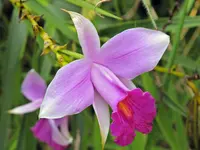
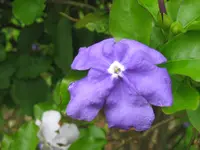
The bamboo orchid, Arundina graminifolia, is a terrestrial orchid with tall, reed-like stems and narrow, grasslike leaves. It produces showy, pink-purple flowers that appear in sequence along the stem.

This species is native to Southeast Asia and often grows in open, sunny, upland areas, rather than shaded forest. It tends to form clumps and can become a substantial, shrub-like presence in suitable climates.

Its need for bright light, consistent warmth, and humid but well-drained conditions makes it easier outdoors in tropical or subtropical regions than indoors. Gardeners who understand how to care for bamboo orchid usually find it moderately challenging rather than difficult.

Main Plant Requirements

Care Difficulty

Moderate Care

Light Preference

Full Sun

Water Requirements

Regular Water

Temperature Preference

Warm Climate

Hardiness Zone

9–11

Soil Texture

Sandy, Loamy, Organic-rich

Soil pH

Acidic (5.5–6.5), Slightly acidic (6.5–7.0)

Soil Drainage

Moist but well-drained

Fertilization

Light (every 4–6 weeks)

Get Personalized Care Plan

Scan your plant to receive care tips personalized for your specific plant

Available on iOS and Android

How to Care for the bamboo orchid

This terrestrial orchid prefers bright, warm conditions similar to open, tropical grasslands.

  • Provide 6–8 hours of bright light daily, with full morning sun and light afternoon shade, especially in hot climates.
  • Tolerates light, shifting shade during midday; filtered light through high shrubs or a shade cloth (30–40%) helps prevent leaf scorch.
  • Leaves that yellow or develop brown, crispy edges often receive too much direct sun, while pale, floppy growth and weak flowering in bamboo orchid indicate insufficient light.

This species prefers evenly moist but never waterlogged conditions in free-draining soil.

  • Water when the top 2–4 cm of soil feel dry, aiming for consistently damp soil around the roots without standing water.
  • Use a sharply draining mix or raised bed to prevent root rot; prolonged soggy soil, wilting with soft, yellowing leaves, suggests overwatering.
  • In hotter months, expect more frequent watering and monitor for drooping, thin leaves as a sign of dryness, while cooler seasons usually require reduced watering.

This orchid thrives in warm, frost-free conditions with only mild temperature swings.

  • Optimal growth occurs at 70–85°F (21–29°C) by day and 60–70°F (16–21°C) at night, supporting steady shoot and flower production.
  • Arundina graminifolia tolerates brief drops to about 50°F (10°C) but should be protected from frost, which can kill canes and buds.
  • In hot spells above 90°F (32°C), increase shade and airflow; in cooler seasons, shelter plants from cold winds and sudden night chills.

This species prefers moderately humid air and reacts quickly to dry conditions.

  • Aim for 50–70% humidity, which mimics the moist air of its natural habitat.
  • Leaves curling at edges, tip browning, and stalled new canes indicate humidity stress in bamboo orchid.
  • Increase humidity with a nearby humidifier, grouped plants, or a pebble tray, rather than misting that only raises moisture briefly.

This terrestrial orchid needs loose, well-aerated, sharply draining soil to avoid root suffocation.

  • Use a mix of 40% fine bark, 30% coarse sand or grit, and 30% compost or leaf mold to balance drainage and organic matter.
  • Target slightly acidic to neutral pH around 6.0–7.0, avoiding strongly alkaline or saline conditions that restrict nutrient uptake.
  • Improve aeration by adding perlite or pumice if the mix compacts or retains water for more than 2–3 days after watering.
  • Avoid heavy clay, peat-only, or waterlogged substrates, which promote root rot and weak, yellowing growth in Arundina graminifolia.

This orchid adapts well to container growing when the pot is chosen to match its tall, cane-like growth.

  • Select a tall, relatively narrow pot to support deep, fibrous roots and keep upright canes from leaning outward excessively.
  • Use a heavier material such as ceramic when grown outdoors in windy areas to reduce tipping of top-heavy clumps.
  • Raise the container slightly on pot feet or bricks so drainage holes clear the ground and water cannot pool under the base.

Arundina graminifolia benefits from light, consistent feeding during its active growing season.

  • Use a balanced liquid NPK fertilizer at 1/4–1/2 strength every 2–4 weeks from spring to early fall.
  • Alternatively, apply a thin layer of compost or a low-dose slow-release fertilizer at the start of the growing season.
  • Avoid fertilizing dry soil; water first, then feed to reduce root burn risk.
  • In late fall and winter, pause feeding or reduce to very light applications only if the bamboo orchid is still actively growing indoors.

Pruning Arundina graminifolia keeps clumps tidy and sustains flowering performance over time.

  • Best time is late winter to early spring, just before strong new growth begins.
  • Cut back spent flowering canes at the base once they yellow, leaving fresh green shoots untouched.
  • Remove dead, damaged, or crossing stems with clean, sharp pruners to improve airflow and reduce disease risk.
  • Light shaping by thinning the oldest canes maintains an upright, bamboo-like form without stressing the plant.

This species is more often grown in the ground, but container plants need occasional repotting to stay vigorous.

  • Plan to repot or transplant every 2–3 years, ideally in spring when active growth starts.
  • Look for roots circling the pot, pushing through drainage holes, or for slowed growth and faster drying soil.
  • Move into a slightly larger container with free-draining, fertile mix, disturbing roots as little as possible.
  • Water thoroughly after repotting, shade for a few days, and avoid heavy feeding until new growth resumes strongly.

Arundina graminifolia plant care often includes propagation to expand clumps or replace older canes.

  • Division in spring is the most reliable method; lift the clump and split it into sections with healthy roots and several canes.
  • Replant divisions quickly into moist, well-drained medium and keep them shaded and evenly damp until new growth appears.
  • Stem cuttings from semi-mature canes can root in warm, humid conditions using a loose orchid mix or sand-perlite blend.
  • Seed propagation is slow and usually requires sterile, controlled conditions, so it is uncommon in home settings.

This subtropical orchid needs thoughtful winter care in regions with frost or prolonged cold.

  • In mild climates (above about 30°F), in-ground clumps usually overwinter with minimal damage once established.
  • Apply a 5–8 cm mulch layer around the root zone in late fall, keeping it slightly away from canes.
  • In colder areas, grow in containers and move indoors to a bright, cool spot before freezing nights arrive.
  • Reduce watering in winter so the medium stays lightly moist, never waterlogged, to prevent root rot in cool conditions.

Care Tips

Staking Tall Canes

Install slim bamboo stakes or fiberglass rods and loosely tie the upright shoots in 2–3 places to prevent wind snap and keep the tall canes from bending under flower weight.

Progressive Clump Renewal

Every 2–3 years, cut out the oldest, woody culms at the base right after peak flowering to keep the clump open, encourage new shoots, and reduce fungal issues around crowded stems.

Airflow-Oriented Spacing

When planting in beds or large containers, space clumps so that mature leaves just avoid touching, which improves airflow around foliage and lowers the risk of foliar fungi and scale outbreaks.

Container Rotation Routine

If grown in a pot, rotate the container 90° every 2–3 weeks during active growth so the canes develop evenly, reducing leaning and the need for heavy corrective staking.

Preemptive Pest Monitoring

Inspect the undersides of leaves and cane joints weekly during warm, still weather with a hand lens, and treat early with insecticidal soap at the first sign of scale or spider mites as part of caring for bamboo orchid in a long growing season.

Common Pests and Diseases

Spider mites

This pest often colonizes the narrow leaves and young canes, especially in hot, dry, sheltered sites. Symptoms include fine webbing, silvery stippling, and gradual yellowing of foliage.

Solution

Increase humidity around the clump, hose down foliage thoroughly, and prune heavily infested canes. For persistent infestations, use insecticidal soap or a horticultural oil, repeating applications to catch new hatchlings and focusing on the undersides of leaves.

Scale insects

These insects attach to canes and leaf sheaths, drawing sap and causing yellowing, poor flowering, and sticky honeydew that can lead to sooty mold. Infestations are often clustered along the segmented bamboo‑like stems.

Solution

Physically remove larger scales with a cotton swab dipped in alcohol and prune out badly infested stems. Follow with 2–3 rounds of horticultural oil or insecticidal soap at 7–10 day intervals, coating stems and leaf bases where scales hide.

Leaf spot

This disease causes brown or purplish spots on the narrow leaves, sometimes merging into larger patches that make clumps look scorched. Symptoms include premature leaf drop, especially in dense, poorly ventilated plantings.

Solution

Remove and discard affected leaves and thin crowded canes to improve airflow. Avoid wetting foliage late in the day and, if spots continue to spread, apply a broad‑spectrum fungicide labeled for ornamental orchids according to label directions.

Bacterial soft rot

This disease attacks pseudobase tissues and lower stems, causing soft, water‑soaked, foul‑smelling rot at the base of canes. Symptoms include sudden collapse of individual shoots while surrounding foliage may still appear green at first.

Solution

Cut out and discard all affected canes and surrounding soft tissue, sterilizing cutting tools between cuts. Improve drainage and air movement, keep water off the lower stems, and avoid overhead watering and crowding, which favor bacterial spread.

Mealybugs

These insects hide in leaf axils and around the segmented stem joints, appearing as white cottony clusters and causing stunted growth and reduced flowering. Honeydew and sooty mold may develop on foliage beneath infestations.

Solution

Blast plants with water to dislodge visible colonies, then dab remaining clusters with alcohol on a cotton swab. Follow up with insecticidal soap or horticultural oil directed into leaf bases and stem joints, repeating every 7–10 days until no new mealybugs appear.

Interesting Facts

Ever-blooming terrestrial orchid

Unlike many orchids that have a short, defined blooming season, this species can flower almost continuously in warm climates, producing new blooms on tall cane-like stems for much of the year.

Grasslike leaf adaptation

Its narrow, linear leaves resemble bamboo or coarse grass and help the plant tolerate strong sun and wind exposure in open, disturbed habitats such as roadsides and hillsides.

Pioneer of disturbed land

This orchid frequently colonizes landslides, embankments, and cleared areas in tropical Asia, acting as a pioneer species that stabilizes soil while other vegetation re-establishes.

Botan icon

Did you know?

In parts of its introduced range, such as Hawaii and some Caribbean islands, this species has naturalized so successfully that it forms large, self-sustaining stands, demonstrating an unusual ability for a showy orchid to behave almost like a roadside shrub.

FAQs about bamboo orchid

Limited light intensity, nutrient imbalance, or cramped roots commonly reduce flowering. Ensure bright conditions, a slight dry rest between waterings, and a balanced fertilizer with a bit more phosphorus. Mature, well-spaced clumps bloom more reliably.

Grow Healthy Plants with Botan Care

Keep your plants happy and healthy with plant identification, disease detection, and easy care guidance.

Botan plant care app — identify plants on mobile

Explore More Plants