Alpine-style potting
Use a tall, free-draining pot and plant slightly high in the container so the collar of leaves sits above the compost, which helps keep the crown dry and reduces rot in damp weather.

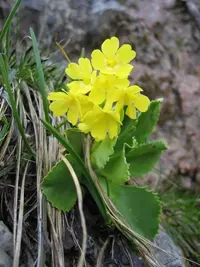
Bear's ear, Primula auricula, is a compact perennial primrose grown mainly for its neat rosettes of fleshy leaves and striking spring flowers. Plants form low clumps with upright flower stems carrying clusters of rounded blooms in many colors.
This species is native to alpine regions of central Europe, where it grows in rocky, well-drained sites with cool conditions. It is considered moderately easy to grow when its need for good drainage, consistent moisture, and cool roots is met.
Gardeners often care for Bear's ear in pots, troughs, or rock gardens, where light shade and a free-draining, humus-rich soil help maintain healthy growth.

Care Difficulty
Moderate Care

Light Preference
Partial Shade

Water Requirements
Regular Water

Temperature Preference
Cool Climate

Hardiness Zone
4–8

Soil Texture
Loamy, Peaty, Organic-rich

Soil pH
Acidic (5.5–6.5), Slightly acidic (6.5–7.0)

Soil Drainage
Moist but well-drained

Fertilization
Light (every 4–6 weeks)
Scan your plant to receive care tips personalized for your specific plant
Available on iOS and Android
Primula auricula prefers bright, cool conditions with protection from intense midday sun.
Primula auricula needs steadily moist but not waterlogged soil for healthy roots and flowers.
This primula prefers cool conditions and dislikes both deep freezes and intense heat.
Primula auricula prefers cool, moderately moist air and reacts quickly to very dry conditions.
Primula auricula grows best in a cool, free-draining yet moisture-retentive mix.
This species is well suited to container growing when drainage and moisture balance are carefully managed.
Primula auricula benefits from modest, well-timed feeding to support compact growth and good flowering.
Primula auricula responds well to light, hygienic pruning that keeps rosettes healthy and flowering well.
This plant prefers cool, stable conditions, so repot or transplant Primula auricula only when clear signs show it needs more space.
New Primula auricula plants are most reliably produced by division, with seed used mainly for breeding or larger numbers.
Primula auricula is fairly cold hardy but benefits from light winter protection, especially in containers or very cold regions.

Plant Health Check
Not sure what's wrong with your plant? Check your plant's health inside the app.
Primula auricula is naturally restricted to limestone and dolomite cliffs and scree in the European Alps and nearby mountain ranges, where it grows in rock crevices with very thin, alkaline soils.
The leaves often carry a pale, mealy coating called farinose indumentum, produced by specialized surface cells that excrete fine waxy particles which help reduce water loss and protect against intense alpine light.
From the 16th century onward, gardeners in Europe selected and bred this species into elaborate show auriculas, with strict classification groups and judged displays that are still maintained by auricula societies today.

In the wild, Primula auricula often forms small, long-lived clumps on near-vertical rock faces, with individual plants able to persist for decades in the same crevice as long as the rock remains stable and competition is low.
Lack of flowers is often due to insufficient winter chill, overcrowded roots, or excess shade. Divide clumps every few years, avoid high-nitrogen fertilizer, and ensure a cool dormant period to support reliable spring flowering.
Keep your plants happy and healthy with plant identification, disease detection, and easy care guidance.