Astrocaryum alatum Care

Astrocaryum alatum

About Astrocaryum alatum

Astrocaryum alatum is a spiny, clumping palm native to humid tropical forests of Central America. It typically grows as a multi-stemmed palm with dense, arching fronds and a very armored trunk and leaf bases.

In nature it occurs in lowland to premontane rainforests, often in partially shaded sites with consistently moist, well-drained soils. Its heavy spines, slow growth, and need for warm, stable conditions make it challenging outside true tropical climates.

For those exploring how to care for Astrocaryum alatum, it suits experienced growers who can provide high humidity, filtered light, and protection from cold and physical contact with the spines.

Main Plant Requirements

Care Difficulty

Hard Care

Light Preference

Partial Shade

Water Requirements

Regular Water

Temperature Preference

Tropical / Frost Sensitive

Hardiness Zone

11–12

Soil Texture

Loamy, Silty, Organic-rich

Soil pH

Acidic (5.5–6.5)

Soil Drainage

Moist but well-drained

Fertilization

Minimal (feed rarely)

Get Personalized Care Plan

Scan your plant to receive care tips personalized for your specific plant

Available on iOS and Android

How to Care for the Astrocaryum alatum

This palm prefers bright, filtered light similar to a light tropical understory.

  • Provide 4–6 hours of bright, filtered sun daily; morning sun with light afternoon shade suits Astrocaryum alatum in warm climates.
  • Allow partial shade (up to 60–70% shade cloth) in hot regions to prevent leaf scorch and pale, bleached fronds.
  • In cooler seasons, increase exposure by reducing shade or choosing a more open site, ensuring some direct morning sun for stronger growth.

This species favors consistently moist but well-drained soil.

  • Irrigate when the top 3–5 cm of soil feels barely dry, aiming for deep watering that moistens the full root zone without leaving standing water.
  • During hot, dry periods, increase frequency so the root area does not fully dry; in cooler or rainy seasons, reduce watering to avoid root rot.
  • Early signs of underwatering include folding or brittle leaflets; overwatering shows as yellowing fronds and a sour smell from saturated soil.

This palm is strictly tropical and sensitive to cold.

  • Best growth occurs around 75–86°F (24–30°C), with steady warmth and high humidity supporting faster leaf and root development.
  • Avoid temperatures below 55°F (13°C); exposure near 40°F (4°C) can cause leaf damage, and freezing conditions kill young plants.
  • Short heat waves up to 95°F (35°C) are tolerated if soil moisture is stable and the plant has some shade during intense afternoon sun.

This palm prefers consistently moist air and reacts noticeably to dry indoor conditions.

  • Aim for 60–80% humidity, as Astrocaryum alatum is native to humid lowland forests and does poorly in very dry rooms.
  • Crisping leaflet tips and stalled growth often indicate air that is too dry rather than underwatering.
  • Group plants, use a room humidifier, or place the container on a wide pebble tray with water kept below the pot base.

This species needs deep, well‑aerated, moisture‑retentive yet freely draining soil to support its strong root system.

  • Use a rich loamy mix combining roughly 40% compost, 30% coarse sand, and 30% fine bark or perlite to balance nutrients, drainage, and aeration.
  • Keep drainage fast; water should move through the mix within seconds, without pooling on the surface or in the pot saucer.
  • Target a slightly acidic to neutral pH around 6.0–7.0, avoiding strongly alkaline substrates that can lock up micronutrients.
  • Avoid heavy clay, compacted garden soil, or pure sand, which either suffocate roots or dry out too quickly for stable establishment of Astrocaryum alatum.

This palm can be grown in large containers, mainly while young or in compact forms.

  • Choose a tall, heavy container to accommodate the deep root system and reduce the risk of the palm tipping in strong winds.
  • Ensure multiple large drainage holes so high watering volumes can exit quickly, preventing prolonged saturation around the root zone.
  • Select thicker-walled pots, such as clay or heavy plastic, to stabilize the developing trunk and moderate rapid moisture swings in hot weather.

This palm is adapted to low-nutrient tropical soils, so fertilization for Astrocaryum alatum should stay light and targeted.

  • Use a slow-release, balanced NPK palm fertilizer or well-aged compost applied to the soil surface at the start of the warm growing season.
  • In active growth, feed 1–2 times per year, keeping total nitrogen modest to avoid weak, overly lush tissue.
  • Dilute liquid products to 1/2–1/4 strength and apply to moist soil to reduce root burn risk.
  • Stop feeding in cooler months or any dormant period, resuming only when consistent warmth and new growth return.

Pruning Astrocaryum alatum focuses on safety and hygiene rather than shaping the palm.

  • Carry out any pruning in the dry season or during stable warm weather to reduce rot risk on fresh cuts.
  • Remove only dead, badly damaged, or diseased fronds, cutting them close to the trunk without injuring living tissue.
  • Leave all healthy green fronds; they are needed for energy production and trunk development.
  • Use clean, sharp loppers or a pruning saw, disinfecting blades between plants to limit disease spread.

Transplanting this spine-armed palm demands planning, as established specimens resent root disturbance.

  • Look for signs like roots circling the container, water running off quickly, or slowed growth despite good care before planning a move.
  • Schedule transplanting for warm, stable weather in late spring or early summer, typically every several years for container-grown plants.
  • Prepare a deep, well-drained site; shift the root ball gently, keeping as much soil attached as possible to limit shock.
  • Water thoroughly after transplanting, provide light shade for several weeks, and maintain even soil moisture while new roots establish.

Propagation of Astrocaryum alatum is usually done from seed and requires patience and consistent warmth.

  • Collect fully ripe seeds, clean off fruit pulp, and sow soon after harvest to maintain viability.
  • Provide a warm medium at 77–86°F with high humidity and very free drainage to reduce fungal problems.
  • Expect slow and uneven germination; some seeds may take many months to sprout.
  • Keep seedlings in light shade, avoid root disturbance, and pot on only once a firm root system has formed.

This tropical palm is not frost tolerant and needs careful winter management outside its native climate.

  • In regions below about 50°F, grow in large containers that can be moved to a bright, frost-free space for winter.
  • Maintain indoor temperatures above 60°F with good air circulation and avoid cold drafts near windows or doors.
  • Water sparingly in winter, letting the top soil layer dry slightly, since cool, wet conditions increase root rot risk.
  • For in-ground plants in marginal climates, use a thick mulch layer over the root zone to moderate soil temperature.

Care Tips

Plan for spines

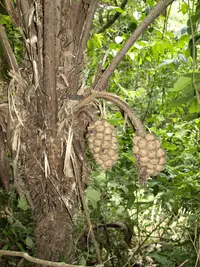
Install a permanent barrier or maintain a 1–1.5 m no-access ring around the trunk to prevent injuries from the very sharp spines and to make future maintenance and harvesting safer.

Stabilize young trunk

Stake young plants with 2–3 sturdy posts placed outside the root zone and use soft, wide ties so the palm can flex slightly but remain upright in wind until the root system is well anchored.

Manage leaf litter

Allow fallen fronds to decompose as a mulch ring 30–60 cm from the trunk, but periodically remove or shred older, dense piles to reduce habitat for rodents and some insect pests.

Monitor for nut borers

Inspect developing fruits regularly for small entry holes or frass and remove and destroy infested nuts promptly to limit spread of borers and protect the remaining crop.

Support underplanting

Use tough, shade-tolerant groundcovers or low shrubs outside the spine zone to reduce soil erosion, buffer root temperatures, and improve site biodiversity when growing Astrocaryum alatum in plantations or large gardens.

Common Pests and Diseases

Bruchid seed beetles

These insects attack fallen and stored seeds, boring into the kernel and destroying seed viability. Symptoms include small round exit holes and powdery frass inside the nut.

Solution

Collect and destroy infested or fallen seeds promptly, and avoid storing seeds in the open. For seed conservation or nursery use, dry and freeze-clean seed batches when feasible, or store in sealed containers after heat-treating or hot-water treating seeds according to forestry guidelines for caring for Astrocaryum alatum.

Leaf skeletonizer caterpillars

This pest feeds between leaf veins on young fronds, leaving a lace-like or skeletonized appearance and sometimes large transparent patches. Heavy feeding can slow growth of young palms in nurseries or plantations.

Solution

Hand-pick and destroy visible caterpillars and heavily damaged pinnae on small palms. Encourage natural predators by maintaining plant diversity nearby, and if needed use targeted applications of Bacillus thuringiensis (Bt), a biological insecticide that affects caterpillars but is safer for other organisms when used as directed.

Palm bud rot

This disease affects the central growth point, causing yellowing or collapse of the emerging spear leaf and a foul smell from decaying tissue. Symptoms include wilting of the crown and eventual death of the palm if the bud is fully infected.

Solution

Improve drainage and avoid water accumulation in the crown, especially in young plants under cultivation. Remove and destroy severely affected plants, and for early infections in nursery stock apply a copper-based fungicide into and around the spear area while reducing overhead irrigation and improving spacing and airflow.

Pink disease

This disease, caused by the fungus Erythricium salmonicolor, produces pinkish to whitish crusts on stems or leaf bases and leads to dieback of affected parts. Symptoms include cracking, cankers, and drying of fronds beyond the infected area.

Solution

Prune and destroy infected fronds and stem sections, cutting back into healthy tissue and sterilizing tools between cuts. Improve light and airflow around the palm and, in plantations or nurseries, apply a registered copper or triazole fungicide to affected areas and nearby healthy tissue following label directions.

Interesting Facts

Spiny fruit defense

This palm produces large ovoid fruits with a thick, woody endocarp (inner shell) that is armed with sharp spines, a structure thought to reduce seed predation by mammals that crack palm nuts.

Seed dispersal by agoutis

Field studies in Central America show that agoutis, small rodent-like mammals, are major dispersers of this species by burying its seeds as food caches, some of which are forgotten and later germinate.

Understory forest specialist

The species typically grows in the shaded understory of lowland to premontane rainforests in Costa Rica and western Panama, where it can form locally dense stands on well-drained, moist soils.
Botan icon

Did you know?

The extremely hard, spiny endocarp of this species has been used in ecological and paleobotanical research as a diagnostic feature to identify its remains in soil and fossil deposits, helping scientists reconstruct past forest composition and animal–plant interactions.

FAQs about Astrocaryum alatum

Container culture is possible when the palm is young, but growth is slow and roots are deep. Use a very large, heavy pot, well‑drained mix, and expect to transplant into the ground as it matures.

Grow Healthy Plants with Botan Care

Keep your plants happy and healthy with plant identification, disease detection, and easy care guidance.
Botan plant care app — identify plants on mobile

Explore More Plants