tabardillo Care (Calliandra californica)

Also known as: Baja fairy duster
tabardillo

About tabardillo

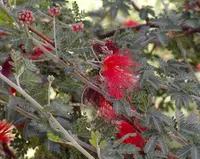
Tabardillo, Calliandra californica, is a small evergreen shrub known for its fine, fern-like foliage and bright red, powderpuff-style flowers. It typically has a compact, rounded habit and can be shaped as a low shrub or airy hedge.

This species is native to arid and semi-arid regions of northwestern Mexico and the southwestern United States, where it thrives in hot, dry conditions. It suits gardeners who prefer low-maintenance, drought-tolerant plants once established.

It generally prefers full sun, lean well-drained soil, and modest watering, which makes it a good choice for xeriscapes. Those who want to learn how to care for tabardillo usually appreciate its resilience in heat and poor soils, provided drainage is good.

Main Plant Requirements

Care Difficulty

Easy Care

Light Preference

Full Sun

Water Requirements

Low Water

Temperature Preference

Warm Climate

Hardiness Zone

8–11

Soil Texture

Sandy, Loamy, Rocky

Soil pH

Slightly acidic (6.5–7.0), Neutral (7.0)

Soil Drainage

Well-drained

Fertilization

Minimal (feed rarely)

Get Personalized Care Plan

Scan your plant to receive care tips personalized for your specific plant

Available on iOS and Android

How to Care for the tabardillo

Calliandra californica prefers strong sun exposure to produce dense foliage and abundant flowers.

  • Provide 6–8 hours of direct sun daily; full sun is ideal, especially in coastal or mild-summer climates where tabardillo naturally thrives.
  • In very hot inland areas, give morning sun with light afternoon shade to reduce leaf scorch and stress during 95°F (35°C)+ heat waves.
  • In partial shade (3–4 hours direct sun), expect fewer blooms; prune surrounding plants or relocate if stems stretch toward light.

Calliandra californica prefers deep, infrequent watering once established, with time to dry between soakings.

  • Allow the top 5–8 cm of soil to dry before watering; use a finger test rather than a fixed schedule, especially in varying climates.
  • Ensure sharply drained soil; water slowly until the root zone is moistened, then let excess drain to avoid root rot, yellowing leaves, or mushy stems.
  • In summer heat, expect more frequent deep soakings; in cooler months, reduce watering when growth slows and watch for leaf curl or drop as a sign of underwatering.

This desert-adapted shrub prefers warm conditions and tolerates significant heat once established.

  • Optimal growth occurs around 65–90°F (18–32°C), with flowering strongest in sustained warmth and full sun exposure.
  • Mature plants often survive brief drops to about 25°F (−4°C), but young plants are more tender and can suffer stem dieback near freezing.
  • Protect from hard frost by mulching the root zone and avoid reflected heat above 100°F (38°C) that can dry roots; provide some afternoon shade in extreme heat zones.

This desert-adapted shrub tolerates low humidity and rarely needs special moisture in typical indoor air.

  • Target 30–40% humidity, which matches arid native conditions and helps prevent fungal issues.
  • Dry indoor air is usually acceptable for tabardillo, provided soil moisture is appropriate and roots are not overwatered.
  • Humidity stress shows as leaf tip browning paired with wet, compacted soil rather than truly dry air; increase airflow instead of misting.

Calliandra californica prefers lean, fast-draining soil that mimics dry, rocky habitats.

  • Use a sandy or gritty mix, such as 50% cactus mix with 25% coarse sand and 25% small pumice or perlite, to keep roots dry and aerated.
  • Aim for slightly acidic to neutral pH around 6.0–7.2, which supports nutrient uptake without encouraging excessive foliage at the expense of flowering.
  • Improve drainage by raising planting areas or using mounded beds so water runs off quickly and does not pool around the root zone.
  • Avoid heavy clay, compacted, or peat-heavy media that stay wet for more than 1–2 days after watering, as this increases root rot risk for C. californica.

This species adapts well to container growing when given a stable, fast-draining setup.

  • Choose a wide, heavy container to counterbalance the shrub’s branching top growth and reduce tipping in wind-prone spots.
  • Select thick-walled clay or unglazed ceramic pots to let moisture escape faster, matching this plant’s preference for dry intervals.
  • Elevate the pot on feet or grids so drainage holes remain clear and water cannot stagnate under the container.

Calliandra californica benefits from modest feeding in containers but often needs little fertilizer in well-prepared garden soil.

  • Use a balanced slow-release fertilizer (around 10-10-10) or light compost in spring to support flowering tabardillo plants.
  • Feed container specimens every 6–8 weeks during the warm growing season, following label rates for shrubs.
  • Dilute liquid fertilizer to 1/2 strength if used, applying to moist soil to avoid root burn.
  • Stop feeding in late fall and withhold fertilizer in winter dormancy to prevent weak, frost-tender growth.

Pruning Calliandra californica helps maintain a compact form and encourages more flowering wood.

  • Carry out main pruning in late winter or very early spring before vigorous new growth begins.
  • Remove dead, damaged, crossing, or very crowded stems back to healthy wood with clean bypass pruners.
  • Shorten overly long shoots by up to 1/3 of their length to keep a dense, rounded shrub shape.
  • Lightly tip-prune after flushes of bloom to stimulate additional branching and flower production.

This desert shrub is usually grown in the ground; focus on careful transplanting and limited container upsizing.

  • Transplant or shift to a larger pot in late winter to early spring when active growth is about to resume.
  • Look for roots circling the pot, water running straight through, or stunted growth as signs a container plant needs more space.
  • Move up only 1 pot size, teasing apart circling roots gently and trimming broken ones with sterilized tools.
  • Water thoroughly after transplanting, then keep soil lightly moist and shaded from harsh sun for 7–10 days to reduce root stress.

Calliandra californica is commonly propagated by seeds and semi-hardwood cuttings under warm conditions.

  • Collect ripe seeds in late summer to fall, scarify lightly, then sow in a fast-draining mix kept at 70–80°F.
  • Take semi-hardwood cuttings in late spring to summer, 7–10 cm long, from non-flowering shoots.
  • Remove lower leaves, dip bases in rooting hormone, and insert into a sterile, gritty medium.
  • Maintain bright, indirect light, high humidity, and gentle bottom warmth until firm roots develop.

This species is best suited to mild-winter regions but needs protection in colder climates.

  • Tolerates light frost but may suffer damage below about 25°F, especially on young growth.
  • In-ground plants benefit from a 5–8 cm mulch layer around the root zone, kept away from the stem.
  • Move container plants indoors or into a bright, frost-free shelter before hard freezes are forecast.
  • Reduce watering in winter, keeping soil barely moist to prevent root rot in cool conditions.

Care Tips

Encourage Dense Form

Pinch back soft new shoot tips in late spring to early summer to encourage a fuller, bushier canopy and more flowering sites along the stems when growing tabardillo outdoors.

Train As Small Standard

While stems are still flexible, stake a single strong leader and remove lower side shoots gradually over 1–2 seasons to form a small tree shape that keeps flowers at eye level and off pathways.

Protect From Windburn

In exposed sites, install a low, breathable windbreak or plant on the leeward side of a wall or shrub border to reduce wind scorch on young foliage and prolong flower display.

Smart Mulch Management

Use a thin (2–3 cm) gravel or coarse bark mulch ring that stops 5–8 cm short of the stems to reduce weed pressure and soil splash without trapping excess moisture around the crown.

Flower Debris Control

Site plants away from pools, ponds, and outdoor seating areas or place a stepping-stone strip beneath overhanging branches to make it easier to sweep up spent flowers and fine leaflets.

Common Pests and Diseases

Spider mites

This pest often appears in hot, dry conditions and feeds on the undersides of leaves, causing fine stippling, leaf bronzing, and webbing on Calliandra foliage.

Solution

Rinse foliage thoroughly with a strong stream of water, focusing on leaf undersides, and repeat weekly until activity drops; in severe cases, use an insecticidal soap or horticultural oil labeled for mites and improve humidity slightly and air movement to reduce flare‑ups.

Root-knot nematodes

These microscopic worms attack roots in sandy or light soils, causing galls, reduced vigor, poor flowering, and chronic wilting despite adequate watering.

Solution

Remove and discard severely affected plants, avoid replanting in the same spot, and improve soil structure with organic matter; in landscape settings, use resistant companion plants, solarize infested soil during the hottest months, and keep Calliandra californica on the dry side to reduce stress while roots recover.

Leaf spot

This disease causes small brown or purplish spots on the fine leaflets, which can merge into larger blotches and lead to early leaf drop, especially under humid or overhead-irrigated conditions.

Solution

Prune out heavily affected shoots, dispose of fallen leaves, and water at soil level rather than overhead; if leaf spot persists, apply a copper-based or other ornamental shrub fungicide according to label directions and improve spacing and airflow around the shrub.

Armillaria root rot

This disease, also called oak root fungus, attacks woody roots in poorly drained or previously infected sites, leading to gradual decline, branch dieback, and eventual plant death.

Solution

Remove and discard affected plants including as much root material as possible, avoid planting Calliandra or other susceptible woody shrubs in known infested spots, and select well-drained sites with minimal irrigation to lower the risk of infection.

Aphids

These insects cluster on young shoots and flower buds, sucking sap and excreting sticky honeydew that can lead to sooty mold on leaves and stems.

Solution

Spray infested shoots with a firm stream of water to knock aphids off, repeat every few days as needed, and encourage natural predators like lady beetles; for persistent infestations, use insecticidal soap or a light horticultural oil, ensuring thorough coverage of tender growth while following Calliandra californica care instructions for sun and watering so the plant can outgrow minor damage.

Interesting Facts

Year‑round desert blooms

This species can flower in every month of the year in frost‑free desert climates, providing nearly continuous nectar and pollen for hummingbirds and other pollinators when many shrubs are not in bloom.

Specialist hummingbird magnet

Its long, bright red brush‑like flower clusters are shaped so that hummingbirds can access nectar while simultaneously dusting their heads with pollen, making these birds especially effective pollinators for this shrub.

Native Baja drylands shrub

It is naturally found on rocky slopes, washes, and coastal scrub in Baja California and adjacent northwestern Mexico, showing strong adaptation to high light, heat, and prolonged dry periods in arid habitats.

Botan icon

Did you know?

In the wild, this shrub often re‑sprouts vigorously from its woody base after drought or light disturbance, allowing it to persist for many years as a stable nectar source in desert and coastal scrub ecosystems.

FAQs about tabardillo

Poor flowering usually relates to insufficient light intensity, heavy pruning at the wrong time, or nutrient imbalance. Excess nitrogen encourages foliage over buds. Avoid pruning new wood late in the season and use a balanced, low-nitrogen fertilizer if needed.

Grow Healthy Plants with Botan Care

Keep your plants happy and healthy with plant identification, disease detection, and easy care guidance.

Botan plant care app — identify plants on mobile

Explore More Plants