


Stabilize Pseudobulbs
Use a snug orchid pot and medium that holds the base firmly so new pseudobulbs do not wobble, which reduces stress on roots and helps spikes develop straight.

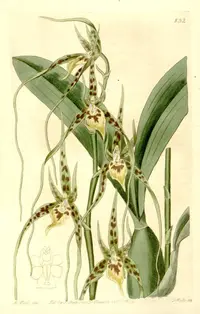
The cricket orchid, Brassia caudata, is an epiphytic orchid that usually grows on tree trunks and branches in tropical America and the Caribbean. It forms arching sprays of narrow, star-shaped flowers with long, trailing segments that give it a spider-like look.
In cultivation it tends to grow as a clump of pseudobulbs with slender leaves, producing dramatic flower spikes when conditions are favorable. It adapts fairly well to indoor or greenhouse conditions if given stable warmth, good air movement, and moderate humidity.
Light, moisture, and temperature consistency strongly influence how to care for Cricket orchid and how reliably it blooms.

Care Difficulty
Moderate Care

Light Preference
Bright Indirect Light

Water Requirements
Moderate Water

Temperature Preference
Tropical / Frost Sensitive

Hardiness Zone
Unknown

Soil Texture
Organic-rich, Peaty

Soil pH
Acidic (5.5–6.5)

Soil Drainage
Moist but well-drained

Fertilization
Moderate (every 2–4 weeks)
Scan your plant to receive care tips personalized for your specific plant
Available on iOS and Android
This orchid prefers bright, filtered light that mimics dappled forest conditions.
Watering should keep roots moist but never waterlogged to avoid rot.
Stable warm conditions are important for vigorous growth and flowering.
This orchid benefits from moderately high, stable humidity for sustained growth and flowering.
Brassia caudata grows best in a coarse, airy medium that drains very quickly yet holds slight, even moisture around the roots.
This species adapts very well to container growing when root space and drainage are carefully managed.
Brassia caudata benefits from light, consistent feeding during active growth for reliable flowering.
Pruning Brassia caudata is minimal and focuses on hygiene rather than shaping the plant.
This orchid prefers tight conditions but benefits from careful repotting when overcrowded or declining.
Propagation of Brassia caudata is usually done by division rather than from seed in home settings.
Brassia caudata is not frost tolerant and needs mild conditions during winter, especially in temperate climates.

Plant Health Check
Not sure what's wrong with your plant? Check your plant's health inside the app.
The long, narrow sepals and petals of this orchid create a spider-like appearance that helps it blend into surrounding vegetation and may confuse herbivores searching for leaves or flowers to eat.
Flowers are strongly fragrant at night, when scent compounds increase in the air to attract nocturnal moth pollinators that navigate using smell more than color.
This species occurs naturally from southern Florida through the Caribbean and into parts of Central America, where it typically grows as an epiphyte on tree branches in warm, humid coastal forests.

Pollination in Brassia caudata involves large night-flying moths that mistake the long, narrow floral segments for the legs of a prey item, causing them to probe the flower in a way that precisely deposits or collects pollen on their bodies.
Lack of blooms usually comes from insufficient light, too-warm nights, or no slight winter rest. Provide bright, filtered light, a 5–10°F night drop, and avoid heavy feeding in cooler months to support spike formation when growing Cricket orchid.
Keep your plants happy and healthy with plant identification, disease detection, and easy care guidance.

 POPULAR
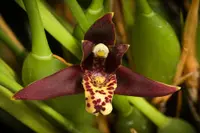
Coconut orchid
Maxillaria tenuifolia

Plymouth rose gentian
Sabatia kennedyana
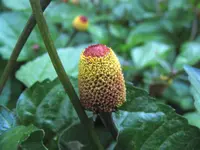
toothache plant
Acmella oleracea
 POPULAR
Crystal Anthurium
Anthurium crystallinum
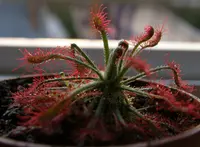
Drosera neocaledonica
Drosera neocaledonica
 POPULAR
Happy Bean plant
Peperomia ferreyrae
Acaena juvenca
Acaena juvenca

Rattlesnake-plant
Goeppertia insignis