Use airy mounts
Mount plants on cork or hardwood slabs with a thin layer of long-fiber sphagnum around the roots if strong air movement is available, which helps mimic natural epiphytic growth and reduces root rot risk.

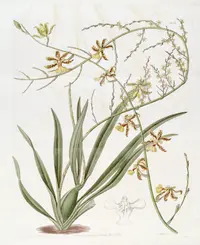
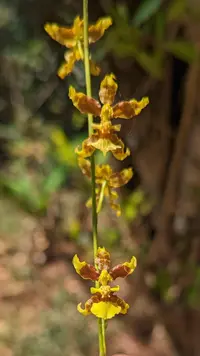
Wydler's dancing-lady orchid, Oncidium altissimum, is an epiphytic orchid that usually grows on trees rather than in soil. It forms arching sprays of many small, bright yellow flowers that resemble tiny dancing figures. In nature it occurs in tropical regions of the Caribbean and nearby areas, where it enjoys warm, airy conditions with good light and regular moisture. The plant grows from pseudobulbs, which store water and give it moderate drought tolerance but still require steady humidity. For anyone learning how to care for Wydler's dancing-lady orchid, its preference for bright, filtered light and fast-draining, bark-based orchid mixes is important to understand early on.

Care Difficulty
Moderate Care

Light Preference
Bright Indirect Light

Water Requirements
Moderate Water

Temperature Preference
Tropical / Frost Sensitive

Hardiness Zone
11–12

Soil Texture
Sandy, Organic-rich

Soil pH
Acidic (5.5–6.5)

Soil Drainage
Well-drained

Fertilization
Moderate (every 2–4 weeks)
Scan your plant to receive care tips personalized for your specific plant
Available on iOS and Android
This orchid prefers bright, filtered light that mimics high tree canopies in the tropics.
Oncidium altissimum prefers frequent, light watering with fast drainage and short drying periods.
This species prefers intermediate to warm conditions with stable, frost‑free temperatures.
This orchid benefits from moderately high, stable humidity for steady growth.
Use a very airy, fast-draining orchid substrate rather than standard potting soil.
This species is well suited to container culture when the pot supports its fine, air-loving roots.
This orchid benefits from light, consistent feeding during active growth but is sensitive to excess salts.
Oncidium altissimum needs only light, targeted pruning to maintain health and flowering.
This species prefers slightly tight conditions and only needs repotting when the medium breaks down or roots overcrowd the pot.
This orchid is most reliably propagated by division rather than by seed or cuttings in home settings.
This tropical orchid is frost-sensitive and needs indoor or greenhouse conditions in regions with cold winters.

Plant Health Check
Not sure what's wrong with your plant? Check your plant's health inside the app.
This species is native to higher-elevation regions of the Caribbean, especially Jamaica, where it grows as an epiphyte on trees in humid, breezy forests rather than in soil.
Plants can produce long, many-branched inflorescences bearing dozens of small yellow and brown flowers that give a delicate, cloud-like effect around the host tree canopy.
The species has a complex taxonomic history and has at times been placed in different genera or confused with related Oncidium species, so older literature and collections may list it under other names.

Historic records show that this species was among the early Caribbean orchids brought into European cultivation in the 18th and 19th centuries, helping spark long-lasting horticultural interest in the broader Oncidium group.
This species usually blooms once a year, often in late winter to spring, depending on growing conditions. Individual flower sprays can remain attractive for 3–6 weeks if the plant is stable, well-hydrated, and not heat-stressed.
Keep your plants happy and healthy with plant identification, disease detection, and easy care guidance.