Mounting Technique
Consider mounting the plant on cork or tree fern with a thin pad of sphagnum to mimic its epiphytic habit, but keep the moss layer very shallow so roots dry quickly between waterings.

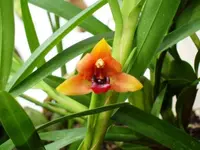
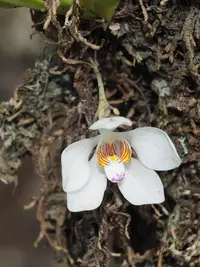
Variable Maxillaria (Maxillaria variabilis) is a compact, epiphytic orchid that often grows on tree branches rather than in soil. It forms small clumps of narrow leaves with many tiny, waxy flowers that can vary in color, which gives the species its name.
This orchid occurs from Mexico through Central America into parts of South America, usually in warm to cool, humid forests. It is considered moderately challenging, mainly because it prefers stable humidity and good air movement.
Bright, filtered light and evenly moist but well-drained media suit it best. Understanding how to care for Variable Maxillaria starts with recreating its airy, forest canopy environment indoors or in a greenhouse.

Care Difficulty
Moderate Care

Light Preference
Bright Indirect Light

Water Requirements
Regular Water

Temperature Preference
Tropical / Frost Sensitive

Hardiness Zone
11–13

Soil Texture
Peaty, Organic-rich, Loamy

Soil pH
Acidic (5.5–6.5)

Soil Drainage
Moist but well-drained

Fertilization
Moderate (every 2–4 weeks)
Scan your plant to receive care tips personalized for your specific plant
Available on iOS and Android
This species prefers bright, indirect light similar to bright forest shade.
This orchid prefers evenly moist but never soggy conditions around its roots.
This orchid does best in intermediate temperatures with mild seasonal shifts.
This small orchid prefers consistently moist air to maintain healthy foliage and pseudobulbs.
This orchid needs a loose, airy epiphytic mix rather than regular potting soil.
This species is well suited to container growing due to its compact, clumping habit.
This small epiphytic orchid benefits from light, consistent feeding rather than heavy fertilizer doses.
This orchid needs only light pruning to stay tidy and healthy.
This orchid prefers to stay slightly root-bound but declines if the medium breaks down or stays soggy.
Division is the most practical way to increase this orchid for home growers.
This orchid is not frost hardy and requires indoor protection in winter in most climates.

Plant Health Check
Not sure what's wrong with your plant? Check your plant's health inside the app.
This species occurs from near sea level up to around 2,600 m in its native range from Mexico through Central America to parts of northern South America, showing strong adaptability to different montane forest conditions.
The flowers are very small, often under 1 cm across, and show considerable variation in color and pattern between individual plants, which is the reason for the epithet variabilis, meaning variable.
Maxillaria variabilis usually grows as an epiphyte on trees in humid forests, anchoring to bark with its roots while taking moisture and nutrients from rain, mist, and decomposing organic matter around it.
Lack of flowers usually comes from insufficient light, too-warm nights, or no slight winter rest. Provide bright filtered light, a mild temperature drop at night, and slightly drier conditions after growth matures to trigger flower spikes.
Keep your plants happy and healthy with plant identification, disease detection, and easy care guidance.