Shelterbelt positioning
Plant ring-cup oak where nearby taller trees or buildings provide wind shelter from prevailing winter winds, which reduces leaf scorch and branch dieback in exposed sites.

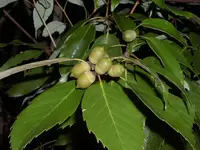
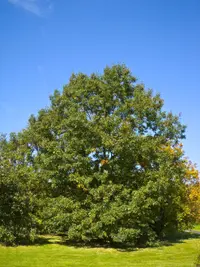
Ring-cup oak, Quercus glauca, is an evergreen oak tree valued for its dense, glossy foliage and graceful, rounded crown. It keeps its leaves year-round, giving steady structure and color. Native to East Asia, it grows in woodland and hillside habitats, often in mild, humid climates. In gardens and landscapes, it is used as a specimen tree, screen, or small shade tree where space allows. Growth is moderate and long-lived, so planting position needs planning. It is generally considered sturdy once established but can be slow to settle after transplanting. To understand how to care for ring-cup oak, focus on providing sun to light shade, evenly moist but well-drained soil, and protection from extreme cold in young plants.

Care Difficulty
Moderate Care

Light Preference
Full Sun

Water Requirements
Moderate Water

Temperature Preference
Warm Climate

Hardiness Zone
7–10

Soil Texture
Loamy, Clay, Organic-rich

Soil pH
Acidic (5.5–6.5), Slightly acidic (6.5–7.0)

Soil Drainage
Moist but well-drained

Fertilization
Minimal (feed rarely)
Scan your plant to receive care tips personalized for your specific plant
Available on iOS and Android
Quercus glauca grows best in bright, indirect light with some direct sun exposure.
Quercus glauca prefers evenly moist, well-drained soil that never stays waterlogged.
This evergreen oak prefers mild climates but tolerates a reasonable range of temperatures.
This species prefers moderately moist air but adapts to a range of outdoor humidity levels.
This oak needs well-structured, free-draining soil to support deep, long-lived roots.
This species can be grown in containers for some years, though it ultimately prefers open ground.
Quercus glauca is a relatively low-demand evergreen tree, but light feeding improves growth in containers or nutrient-poor soils.
Pruning Quercus glauca is mainly structural and corrective, focusing on safety and a stable evergreen form.
Transplanting or shifting Quercus glauca is infrequent and should be planned carefully to protect its woody root system.
Propagation of Quercus glauca is usually done from seed and is moderately slow, requiring patience and stable conditions.
This evergreen oak is moderately cold hardy but benefits from some winter attention in colder regions.

Plant Health Check
Not sure what's wrong with your plant? Check your plant's health inside the app.
This species is an evergreen oak with thick, glossy, laurel-like leaves that stay on the tree for several years, giving it a dense, dark green canopy even in winter.
The specific epithet glauca refers to the bluish or grayish bloom on the underside of the leaves, caused by a waxy coating that reduces water loss and light stress.
In parts of East Asia, this oak is a dominant canopy tree in warm-temperate and subtropical broadleaf forests, providing critical habitat and acorns for birds, mammals, and invertebrates.

Quercus glauca is one of the few oak species commonly used as a clipped evergreen hedge or large topiary in traditional East Asian gardens, where its ability to resprout strongly after pruning and hold dense foliage year-round makes it especially valued for structured landscape forms.
This species is an evergreen tree, keeping most of its glossy, dark-green leaves year-round. Older leaves are gradually replaced, so it may shed some foliage in late winter or spring without indicating serious health problems.
Keep your plants happy and healthy with plant identification, disease detection, and easy care guidance.