Early form training
In the first 3–5 years, select 1 strong central leader and remove competing uprights during the dry season to develop a stable, wind-resistant canopy structure.

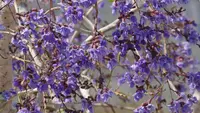
Bowdichia virgilioides is a medium to large, deciduous legume tree native to tropical and subtropical regions of South America, especially Brazil. It is often found in dry forests and savanna-type ecosystems, where it tolerates seasonal drought and poor soils.
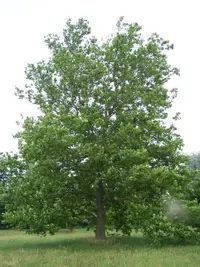
The tree typically develops a straight trunk with a rounded to slightly open crown and fine-textured foliage. In suitable climates it produces attractive flowers, followed by narrow seed pods.
Because of its drought tolerance and ability to cope with low-fertility soils, it is considered relatively resilient once established. However, it requires warm conditions and is best suited to frost-free areas, which influences how to care for Bowdichia virgilioides in cultivation.
In landscapes it usually prefers full sun, well-drained soil, and only occasional supplemental watering after establishment.

Care Difficulty
Moderate Care

Light Preference
Full Sun

Water Requirements
Moderate Water

Temperature Preference
Tropical / Frost Sensitive

Hardiness Zone
10–12

Soil Texture
Sandy, Loamy, Clay

Soil pH
Slightly acidic (6.5–7.0), Neutral (7.0)

Soil Drainage
Well-drained

Fertilization
Minimal (feed rarely)
Scan your plant to receive care tips personalized for your specific plant
Available on iOS and Android
This South American tree performs best in strong, direct light suited to open, sunny sites.
This species prefers deep, infrequent watering that allows the soil to dry between events once established.
This tree is adapted to warm climates and does best in stable, frost-free conditions.
This species is adapted to relatively dry to moderately humid air and rarely needs special humidity management outdoors.
Bowdichia virgilioides prefers well-drained, moderately fertile mineral soils that do not stay waterlogged.
This tree can be grown in containers only during its juvenile stage or for temporary cultivation, not as a long-term pot specimen.
This drought-tolerant tree usually needs minimal feeding when grown in suitable soil.
This species benefits from light structural pruning to maintain a strong canopy and remove defects.
This tree is usually field-grown and transplanted rather than kept long term in containers.
Propagation is typically done from seed, which is more reliable than cuttings for this species.
This warm-climate tree has limited frost tolerance and may need protection in cooler regions.

Plant Health Check
Not sure what's wrong with your plant? Check your plant's health inside the app.
This tree is native to the Brazilian cerrado, a fire-influenced savanna ecosystem, where it grows on nutrient-poor, often acidic soils and tolerates strong seasonal drought.
As a member of the legume family, it forms symbiosis with nitrogen-fixing bacteria in its roots, enriching poor soils and supporting surrounding plant communities in its native habitats.
Its wood is extremely dense and durable, and in its native range it has been valued for uses such as heavy construction, fence posts, and other applications that require long-lasting timber.

In parts of Brazil, this tree is one of the characteristic woody species that helps define the physiognomy of certain cerrado formations, contributing significantly to the vertical structure and seasonal flowering display of these savanna landscapes.
This tree is moderately fast-growing in warm climates, often adding 30–60 cm in height per year once established. Growth slows in poor, compacted, or very dry soils and in cooler regions with shorter growing seasons.
Keep your plants happy and healthy with plant identification, disease detection, and easy care guidance.