Goeppertia bachemiana Care

Goeppertia bachemiana

About Goeppertia bachemiana

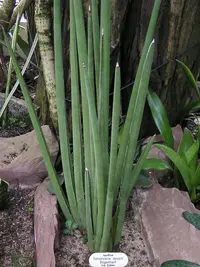
Goeppertia bachemiana is a tropical, evergreen foliage plant from the rainforests of Brazil, grown mainly for its patterned leaves rather than flowers. It forms a clumping habit with narrow, elongated leaves that often show contrasting light and dark green markings.

This species belongs to the prayer plant group, so its leaves may slightly shift position between day and night. It prefers warm, stable indoor conditions with high humidity, soft filtered light, and evenly moist but airy soil.

For most home growers, the main challenges are maintaining adequate humidity and avoiding overwatering, so understanding how to care for Goeppertia bachemiana is important for long-term success.

Main Plant Requirements

Care Difficulty

Moderate Care

Light Preference

Bright Indirect Light

Water Requirements

Keep Soil Moist

Temperature Preference

Tropical / Frost Sensitive

Hardiness Zone

11–12

Soil Texture

Loamy, Peaty, Organic-rich

Soil pH

Acidic (5.5–6.5), Slightly acidic (6.5–7.0)

Soil Drainage

Moist but well-drained

Fertilization

Light (every 4–6 weeks)

Get Personalized Care Plan

Scan your plant to receive care tips personalized for your specific plant

Available on iOS and Android

How to Care for the Goeppertia bachemiana

This species prefers bright, filtered light similar to a lightly shaded tropical understory.

  • Provide 6–8 hours of bright, indirect light each day; gentle morning sun is acceptable, but avoid direct midday or afternoon sun that can scorch leaves.
  • Place Goeppertia bachemiana where it receives dappled or curtain-filtered light, or in partial shade with open sky nearby for good brightness.
  • In winter, move plants closer to bright windows or brighter outdoor positions, but still shield foliage from harsh low-angle sun to prevent leaf burn.

This plant prefers evenly moist but not saturated soil around the root zone.

  • Water when the top 2–3 cm of soil feel dry, allowing moisture deeper in the pot or bed while avoiding a fully dry root ball.
  • Use a loose, well-draining mix so excess water runs out quickly; yellowing, limp leaves and a sour smell indicate overwatering and possible root rot.
  • In warmer months, expect to water more often as evaporation rises; in cooler seasons, extend intervals and watch for curling, crisp leaf edges as a sign of underwatering.

This tropical plant grows best in consistently warm, stable temperatures without sudden swings.

  • Aim for 65–80°F (18–27°C) for active growth; short exposures to 82–86°F (28–30°C) are tolerated if humidity is high and soil does not dry out fully.
  • Protect it from cold; growth slows below 60°F (16°C), and damage often appears if temperatures drop under 50°F (10°C).
  • Keep plants away from drafts, air-conditioning vents, and exterior doors; avoid any chance of frost, which can rapidly kill foliage and stems.

This species prefers consistently high humidity and reacts quickly to dry indoor air.

  • Aim for 60–80% humidity; levels below 50% often trigger leaf-edge browning and rolling.
  • Watch for crispy margins, curled leaves, and stalled growth as signs of humidity stress.
  • Increase humidity with grouped plants, a room humidifier, or a pebble tray, rather than misting alone.

This plant needs a loose, airy, organic-rich mix that drains freely but stays lightly moist.

  • Use a base of peat or coco coir with added fine bark and perlite to create a fibrous, moisture-retentive yet porous structure.
  • Target a slightly acidic pH around 5.5–6.5, avoiding strongly alkaline mixes that can lock out nutrients.
  • Improve drainage and aeration by keeping at least 30–40% of the mix as coarse components such as perlite, pumice, or bark chips.
  • Avoid heavy garden soil, pure compost, or mixes that stay waterlogged, as these quickly lead to root rot in Goeppertia bachemiana.

This species adapts well to container growing when moisture and root space are carefully managed.

  • Choose a pot that is wider than it is deep to accommodate its spreading rhizomes without forcing them into dense clumps.
  • Select a stable, heavier container material if the foliage makes the plant top-heavy, to prevent tipping when watered.
  • Ensure drainage holes are unobstructed and empty saucers promptly so the lower root zone does not remain submerged.

This species benefits from light, consistent feeding to support foliage color and steady growth.

  • Use a balanced liquid fertilizer (around 10-10-10 or 20-20-20) diluted to 1/4–1/2 strength for Goeppertia bachemiana.
  • Feed every 4–6 weeks during the active growing season in spring and summer.
  • Avoid fertilizing dry soil; water first, then apply fertilizer to reduce root burn risk.
  • Reduce feeding to 1 light application in fall and stop in winter when growth slows.

Pruning is mainly hygienic and helps maintain a neat, compact clump.

  • Best time for pruning is late winter to early spring or whenever individual leaves decline.
  • Remove yellowing, crispy, or mechanically damaged leaves at the base with clean, sharp scissors.
  • Thin out crowded, shading leaves to improve airflow and light penetration into the clump.
  • Disinfect tools before and after use to lower the risk of spreading leaf spot or other diseases.

Repotting keeps roots healthy and supports stable moisture for this shallow-rooted plant.

  • Check for roots circling the pot, pushing through drainage holes, or noticeably slowed growth as repotting signals.
  • Plan to repot every 1–2 years in spring, just as new growth starts.
  • Move to a pot only 2–3 cm wider, using airy, peat-free or peat-reduced mix with good drainage.
  • Handle roots gently, keep the root ball largely intact, water thoroughly, then keep humidity high for 1–2 weeks to limit stress.

Goeppertia bachemiana is most reliably multiplied by division rather than from seed.

  • Carry out division in warm spring when the plant is actively growing.
  • Tip the plant from its pot, gently separate the clump into sections, each with several stems and healthy roots.
  • Plant divisions in small pots with evenly moist, fine-textured mix and bright, indirect light.
  • Maintain high humidity (60–70%+), stable warmth around 70–80°F, and avoid overwatering until new growth appears.

This tropical understory plant is frost-sensitive and needs stable indoor conditions in cool climates.

  • Keep temperatures above 60°F; exposure to near-freezing conditions damages foliage and roots.
  • In cold regions, grow in containers and overwinter indoors away from drafts and heating vents.
  • Reduce watering in winter, keeping soil slightly moist but never saturated.
  • Maintain moderate humidity with trays or humidifiers to limit leaf edge browning during heating season.

Care Tips

Rotate for symmetry

Rotate the pot 90° every 1–2 weeks so new leaves orient evenly to the light and the clump stays balanced instead of leaning to one side.

Use wide, shallow pots

Choose a pot that is wider than it is tall to match the shallow, spreading rhizomes and reduce the risk of water sitting deep around the roots.

Gentle leaf cleaning

Wipe both sides of the leaves every 3–4 weeks with a soft, barely damp cloth to remove dust, improve gas exchange, and make pest checks easier.

Divide only when dense

Divide the clump only when the pot is tightly filled with healthy rhizomes, and separate sections with at least 3–4 leaves each to reduce transplant shock when growing Goeppertia bachemiana.

Quarantine new plants

Keep any new houseplants in a separate room for 2–3 weeks and inspect them weekly so that pests such as spider mites or mealybugs do not spread to this species.

Common Pests and Diseases

Spider mites

This pest thrives in dry indoor air and feeds on leaf sap, causing tiny yellow speckles, dull foliage, and fine webbing on the undersides of leaves.

Solution

Rinse both sides of the leaves with a strong but gentle stream of lukewarm water, then wipe with a soft cloth and apply a horticultural soap or neem oil spray every 5–7 days until no new damage appears; raise humidity to 60–70% and avoid placing the plant near heating vents to make conditions less favorable for mites.

Fungus gnats

These insects develop in constantly moist potting mix and their larvae feed on fine roots, which can cause slow growth, leaf yellowing, and wilting in sensitive calatheas.

Solution

Allow the top 2–3 cm of soil to dry slightly between waterings, use yellow sticky traps to catch adults, and drench the potting mix with a biological control such as Bacillus thuringiensis israelensis (BTI) or beneficial nematodes to reduce larvae populations.

Mealybugs

This pest appears as white, cottony clusters in leaf axils, along midribs, and on stems, sucking sap and causing distortion, yellowing, and sticky honeydew on leaves.

Solution

Isolate the plant, dab visible insects with cotton swabs dipped in isopropyl alcohol, then treat the whole plant (including leaf undersides and stems) with insecticidal soap or neem oil at 7–10 day intervals until no new clusters form, checking hidden leaf joints carefully as part of regular Goeppertia bachemiana care instructions.

Leaf spot (fungal or bacterial)

This disease causes brown, tan, or dark purple spots with possible yellow halos on the decorative leaf surface, often starting on older leaves in warm, humid, poorly ventilated conditions.

Solution

Promptly remove and discard affected leaves, avoid wetting the foliage, improve air circulation around the plant, and water at the soil level; in persistent cases, apply a labeled indoor fungicide according to instructions and avoid overcrowding plants to reduce future outbreaks.

Oedema

Symptoms include small corky, blister-like bumps or rough patches on the underside of leaves when roots take up more water than the leaves can transpire, a situation common in calatheas kept in low light and overly wet soil.

Solution

Reduce watering frequency so the top 2–3 cm of mix dries before rewatering, increase light to bright indirect levels, and ensure the pot has good drainage; affected leaves will not return to normal, but new growth should emerge unmarked once watering and light are balanced.

Interesting Facts

Narrow forest specialist

This species is naturally restricted to the Atlantic Forest region of southeastern Brazil, where it grows on the shaded, humid forest floor rather than across a wide tropical range.

Distinctive leaf striping

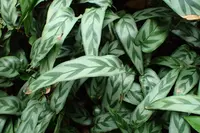
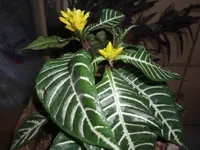
Its leaves show pale, irregular longitudinal bands against a darker green background, a pattern that helps distinguish it from many other Goeppertia species with more feathered or elliptical markings.

Compact terrestrial growth

Unlike some relatives that can form taller, more open clumps, this plant typically maintains a relatively low, compact rosette habit close to the ground in its native habitat.

FAQs about Goeppertia bachemiana

This species is generally moderate-growing. With stable warmth, humidity, and consistent care, new leaves appear gradually through the year. In average home conditions, it may take 2–3 years to form a full, lush clump.

Grow Healthy Plants with Botan Care

Keep your plants happy and healthy with plant identification, disease detection, and easy care guidance.

Botan plant care app — identify plants on mobile

Explore More Plants