West Indian tufted airplant Care (Guzmania monostachia)

West Indian tufted airplant

About West Indian tufted airplant

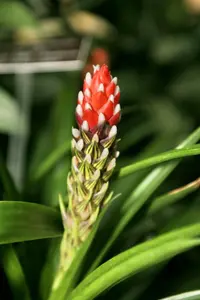
The West Indian tufted airplant, Guzmania monostachia, is an epiphytic bromeliad that often grows attached to tree branches rather than in soil. It forms a tight rosette of narrow, arching leaves that collect water in a central cup. A single upright flower spike, usually white to pale yellow with colorful bracts, appears from the center and gives the plant a tufted look. In nature, it occurs in warm, humid forests of the Caribbean and parts of Central and South America. This species is considered moderately easy to grow when its need for bright filtered light, good air movement, and regular moisture is met, and learning how to care for West Indian tufted airplant helps keep it healthy indoors.

Main Plant Requirements

Care Difficulty

Moderate Care

Light Preference

Bright Indirect Light

Water Requirements

Keep Soil Moist

Temperature Preference

Tropical / Frost Sensitive

Hardiness Zone

11–12

Soil Texture

Peaty, Organic-rich, Loamy

Soil pH

Strongly acidic (4.5–5.5), Acidic (5.5–6.5)

Soil Drainage

Moist but well-drained

Fertilization

Light (every 4–6 weeks)

Get Personalized Care Plan

Scan your plant to receive care tips personalized for your specific plant

Available on iOS and Android

How to Care for the West Indian tufted airplant

This bromeliad prefers bright, indirect light that mimics dappled tropical shade.

  • Provide 6–8 hours of filtered or dappled light each day, such as under a shade tree or behind sheer curtains, to prevent leaf scorching.
  • Accepts light morning sun but should be shielded from strong midday and afternoon sun; foliage turning pale or crispy indicates excess direct light.
  • Tolerates partial shade, but in deep shade flower spikes weaken; in winter at higher latitudes, move the West Indian tufted airplant to a brighter, indirect position.

This species needs consistent moisture with careful attention to both its central cup and roots.

  • Keep the central tank filled with fresh water about halfway and flush it every 1–2 weeks to avoid stagnation; empty fully if water smells sour.
  • Allow the top 2–3 cm of surrounding mix or mounting material to dry slightly between waterings; leaves folding or curling inward suggest thirst.
  • Reduce watering in cooler months when growth slows, and watch for yellowing, limp base leaves or a sour smell as early signs of overwatering in Guzmania monostachia.

This bromeliad prefers warm, stable temperatures similar to lowland tropical conditions.

  • Aim for 65–80°F (18–27°C) for active growth; short peaks to 85–90°F (29–32°C) are tolerated if humidity and airflow are good.
  • Protect from cold; growth slows below 60°F (16°C), and sustained exposure under 50°F (10°C) can damage tissues.
  • Avoid frost entirely, as freezing quickly kills the plant; in regions with cool nights or sudden cold snaps, move it to a sheltered, frost-free location.

This bromeliad prefers consistently high humidity to maintain healthy foliage and tank function.

  • Aim for 60–80% humidity; it tolerates brief dips but prolonged dry air leads to browning leaf tips.
  • Crisp, curling leaves and shrinking central cup indicate humidity stress in West Indian tufted airplant.
  • Increase humidity with daily misting around, not into, the cup, grouped plants, or a pebble tray with water below the pot base.

Guzmania monostachia grows best in a very airy, organic, fast-draining mix that mimics epiphytic conditions.

  • Use a loose mix such as 50–70% fine orchid bark with added sphagnum moss and a small amount of perlite for structure.
  • Ensure rapid drainage; water should flow through in seconds and the mix should never remain waterlogged or compacted.
  • Slightly acidic conditions around pH 5.5–6.5 help nutrient uptake and discourage mineral buildup at the roots.
  • Avoid dense garden soil, peat-only mixes, or heavy compost that collapses over time and smothers the shallow root system.

This species is well suited to container culture due to its small root system and rosette growth habit.

  • Select a stable, relatively heavy pot to prevent tipping once the tall flower spike develops.
  • Choose a shallow but wide container so the limited roots anchor firmly while the rosette has room to spread.
  • Use a pot material with moderate moisture retention, such as glazed ceramic or plastic, to slow drying of the very airy bromeliad mix.

Guzmania monostachia is a light feeder that benefits from diluted nutrients during active growth.

  • Use a balanced liquid fertilizer (around 10-10-10) at 1/4–1/2 strength, applied to the tank and lightly over the leaves.
  • Feed every 4–6 weeks in spring and summer while the West Indian tufted airplant is actively growing.
  • Avoid heavy, soil-directed feeding; this epiphytic species absorbs most nutrients through leaves and central cup.
  • Stop or greatly reduce fertilizing in fall and winter, resuming only when new growth is visible.

Pruning needs for Guzmania monostachia are minimal and focus on hygiene rather than shaping.

  • Remove spent flower spikes at the base after they fade to keep the rosette tidy and redirect energy to offsets.
  • Trim dead, yellow, or damaged leaves with clean, sharp scissors, cutting close to the base without injuring healthy tissue.
  • Leave healthy offsets (pups) attached until they are at least 1/3–1/2 the size of the mother before separating.
  • Disinfect blades with alcohol before and after use to limit disease spread between plants.

Container-grown plants need only infrequent repotting because the roots of this epiphytic bromeliad are shallow.

  • Consider repotting every 2–3 years or when roots circle the pot or medium breaks down and drains poorly.
  • Plan repotting in spring, when temperatures are stable and new growth begins, to reduce transplant shock.
  • Use a very loose, airy mix such as orchid bark with some perlite, and move to a slightly larger pot only if necessary.
  • Handle roots gently, keep the rosette at the same height, water lightly after, and maintain high humidity while it settles.

This species is most commonly propagated by offsets rather than by seed in home settings.

  • Allow pups to develop until they reach about 1/3–1/2 the size of the mother rosette before removal.
  • Separate offsets in warm spring or early summer, using a clean knife to include a small section of base and roots.
  • Pot each pup into a very free-draining bromeliad or orchid-type mix and keep the central cup lightly filled with water.
  • Maintain bright, indirect light, 70–80°F temperatures, and high humidity to support rooting and stable establishment.

Guzmania monostachia is frost-sensitive and must be kept above freezing in winter.

  • Keep indoor plants at 60–75°F in bright, indirect light away from cold drafts and heater vents.
  • If grown outdoors in containers, move them indoors before temperatures drop below 50°F.
  • Reduce watering in winter, keeping the tank only partly filled and the medium just barely moist to prevent rot.

Care Tips

Use Rainwater Flush

Every 4–6 weeks, take the plant to a sink or shower and flush the leaf tank and roots thoroughly with room-temperature rainwater or filtered water to remove accumulated salts and organic debris that can lead to leaf burn or rot.

Secure Mounted Displays

If grown mounted on cork or bark, fix the base firmly with soft garden wire or biodegradable twine and add a thin layer of sphagnum moss around the roots to maintain stable contact and prevent the plant from wobbling as it grows.

Rotate For Even Rosettes

Turn the pot or mount 90° every 1–2 weeks so the rosette develops evenly and does not lean strongly toward one light source, which helps keep the plant symmetrical and reduces stress on the leaf bases.

Manage Spent Inflorescences

After the floral spike has completely faded and dried, cut it off cleanly at the base with sterilized pruners, then inspect the crown and gently remove any trapped brown bracts to improve air flow and reduce fungal issues while pups develop.

Separate Pups Strategically

Wait until offsets reach about one-third to one-half the size of the mother plant before detaching with a sterile, sharp knife, keeping a small portion of the basal stem attached to each pup to improve establishment when you grow Guzmania monostachia in a new pot or mount.

Common Pests and Diseases

Mealybugs

This pest feeds on the soft leaf bases and flower bracts, often hiding deep in the rosette where it is protected from casual inspection. Symptoms include white cottony clusters, sticky honeydew, and distorted or weakened foliage.

Solution

Flush the rosette with a strong but gentle stream of lukewarm water, then swab remaining insects with cotton dipped in 70% isopropyl alcohol, taking care not to overfill the central cup afterward. For heavier infestations, apply a light horticultural soap or neem oil spray to all leaf surfaces and leaf axils, and repeat every 7–10 days while also improving air movement and isolating the plant from others.

Scale insects

These insects attach firmly to leaves and flower stalks, sucking sap and producing honeydew that can lead to sooty mold. Symptoms include small tan, brown, or dark bumps that do not rub off easily and general loss of vigor.

Solution

Gently scrape or wipe individual scales from leaves using a cotton swab or soft cloth dipped in 70% isopropyl alcohol, focusing on the lower leaf surfaces and near the base. Follow with a horticultural soap treatment every 7–10 days for several cycles, keeping the plant in bright filtered light and reducing plant-to-plant contact to limit spread.

Bromeliad rust

This disease causes yellow to orange spots on leaves that later turn brown and sunken, often beginning on older foliage in crowded or poorly ventilated conditions. Symptoms include patchy discoloration and reduced overall vigor.

Solution

Remove and discard affected leaves, then increase spacing, airflow, and light levels while avoiding prolonged leaf wetness, especially at night. If symptoms continue to spread, apply a copper-based fungicide labeled for ornamental bromeliads, making sure to keep spray out of the central cup and repeating as directed on the label.

Central cup rot

This disease develops when water trapped in the central cup stays stagnant and contaminated, leading to a soft, foul-smelling collapse of the plant’s core. Symptoms include browning, mushy leaf bases and a sour odor from the rosette.

Solution

Empty the cup completely and remove all soft or decayed tissue, then keep the plant drier at the center while maintaining moderate ambient humidity. Disinfect the cup with a light hydrogen peroxide solution (about 3% diluted 1:1 with water), discard severely affected plants, and in the future refresh cup water regularly rather than topping up and avoid cold water sitting in the rosette overnight.

Bacterial leaf spot

This disease produces small water-soaked spots on leaves that enlarge, turn dark, and sometimes develop a yellow halo, often starting where water stands on the foliage. Symptoms include irregular lesions and a sour or musty smell in advanced cases.

Solution

Cut off affected leaves with sterile tools and discard them, then keep foliage dry, avoiding overhead misting and stagnant water on leaves. Improve air circulation and, if necessary, apply a labeled bactericide for ornamentals, using it preventively on nearby plants grown under similar conditions as part of Guzmania monostachia care instructions.

Interesting Facts

Sunlight-induced leaf variegation

This species can switch from plain green leaves to striking striped variegation when grown in higher light, a plastic response that helps optimize photosynthesis without changing its genetics.

Tank-forming water reservoir

Its tightly overlapping leaf bases form a central water-holding tank that collects rain, leaf litter, and small invertebrates, creating a tiny aquatic habitat in tree canopies.

Flexible growth habit

Guzmania monostachia naturally grows as an epiphyte on trees but can also root in leaf litter or loose organic substrates, showing high adaptability to different support and nutrient sources.

Botan icon

Did you know?

Studies have shown that Guzmania monostachia can adjust how it absorbs and uses nitrogen depending on water availability, shifting between more root-based uptake and increased foliar absorption from its leaf tank, which is unusual flexibility for a bromeliad.

FAQs about West Indian tufted airplant

This species usually flowers once when mature, then slowly declines while producing offsets around the base. Lack of bloom is often due to immaturity or stress from cold, low humidity, or recent repotting rather than a permanent problem.

Grow Healthy Plants with Botan Care

Keep your plants happy and healthy with plant identification, disease detection, and easy care guidance.

Botan plant care app — identify plants on mobile

Explore More Plants