Thief palm Care (Phoenicophorium borsigianum)

Thief palm

About Thief palm

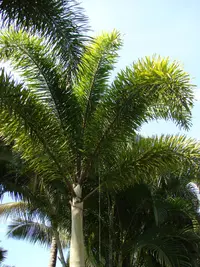
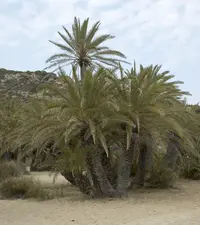
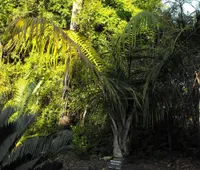
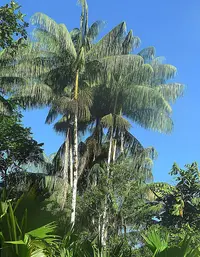
Thief palm (Phoenicophorium borsigianum) is a solitary, trunk-forming palm known for its large, strongly veined, heart-shaped leaves. It has a distinctive, architectural look that stands out among other palms.

This species is native to the Seychelles, where it grows in humid, coastal and valley forests. In cultivation it tends to be slow growing and can be sensitive to cold and very dry air.

It suits warm, sheltered gardens or specialized indoor collections, so it is not usually a beginner’s first palm. Those who learn how to care for Thief palm will find it prefers bright, filtered light, steady moisture, and well-drained, organic-rich soil.

Main Plant Requirements

Care Difficulty

Hard Care

Light Preference

Partial Shade

Water Requirements

Regular Water

Temperature Preference

Tropical / Frost Sensitive

Hardiness Zone

11–12

Soil Texture

Sandy, Loamy, Organic-rich

Soil pH

Acidic (5.5–6.5)

Soil Drainage

Moist but well-drained

Fertilization

Minimal (feed rarely)

Get Personalized Care Plan

Scan your plant to receive care tips personalized for your specific plant

Available on iOS and Android

How to Care for the Thief palm

This Seychelles palm prefers bright, filtered light that mimics high, broken canopy conditions.

  • Provide 4–6 hours of bright, dappled light daily, such as morning sun with light afternoon shade, to prevent leaf scorch.
  • Allow light partial shade, especially in hot climates; Thief palm tolerates lower light but growth slows and fronds become more sparse.
  • Protect from intense midday sun and highly reflective surfaces; in summer, increase shade, while in winter ensure more open exposure to maintain strong growth.

This palm favors consistently moist but not saturated soil, with brief drying at the surface between waterings.

  • Water when the top 2–4 cm of soil or ground feels dry, allowing deeper soil to stay slightly moist but never waterlogged.
  • Improve drainage with a loose, organic, well-draining mix or amended ground soil to reduce root rot risk in Phoenicophorium borsigianum.
  • In warm, windy periods, expect faster drying and possible leaf tip browning if underwatered; in cool or rainy seasons, reduce frequency and watch for yellowing, mushy roots as overwatering signs.

This species thrives in warm, humid, frost-free climates typical of lowland tropical coasts.

  • Aim for 70–85°F (21–29°C) for best growth, as sustained warmth supports strong frond and trunk development.
  • Avoid temperatures below 55°F (13°C); short dips to 45–50°F (7–10°C) may be survived but can cause leaf damage and slowed growth.
  • Protect from frost at all times and from extreme heat above 95°F (35°C) with extra shade and moisture, especially during dry, hot winds or peak summer periods.

This palm prefers consistently humid air and reacts poorly to prolonged dryness indoors.

  • Aim for 60–80% humidity around Thief palm, especially in heated or air-conditioned rooms.
  • Crisp leaflet tips, slowed growth, and increased spider mite activity indicate humidity stress.
  • Use a nearby humidifier, grouped plants, or a wide pebble tray under the pot to raise local humidity without waterlogging roots.

This species prefers deep, moist, well-drained, organic-rich soil that stays aerated.

  • Use a loamy mix with high organic matter, such as 2 parts peat or coco coir, 1 part compost, and 1 part perlite or coarse sand.
  • Ensure free drainage so water moves through in seconds, leaving the mix moist but never waterlogged or soupy.
  • Aim for slightly acidic to neutral pH around 6.0–7.0, which supports nutrient availability for Phoenicophorium borsigianum.
  • Avoid heavy clay, compacted, or pure sand substrates, and periodically loosen the top layer to maintain air spaces around roots.

This palm can be grown in containers, especially when young or in cooler climates.

  • Choose a wide, heavy container to counter its tall, leaf-heavy crown and reduce tipping in wind or on balconies.
  • Select thick-walled terracotta or similar porous material if extra evaporation is needed to prevent the mix staying wet for long periods.
  • Use a tall pot that allows a deep root run, then fill the bottom with a coarse drainage layer to keep the main root zone slightly elevated above residual water.

Nutrient needs for Phoenicophorium borsigianum are moderate but consistent during warm, active growth.

  • Use a balanced, slow-release palm fertilizer (for example 10-10-10 or similar) mixed into the topsoil in spring.
  • Apply every 8–10 weeks through the growing season, keeping granules away from the trunk base.
  • For container plants, use a half-strength balanced liquid feed every 4–6 weeks on moist soil.
  • Stop feeding in late fall and winter, resuming only when new growth clearly restarts.

Pruning needs for Phoenicophorium borsigianum are light and mainly sanitary.

  • Best timing is late winter to early spring, before strong new growth starts.
  • Remove only dead, yellowing, or storm-damaged fronds, cutting close to the base without injuring the trunk.
  • Avoid cutting green, healthy fronds, as this weakens the palm and slows canopy development.
  • Use clean, sharp loppers or a pruning saw, disinfecting blades between plants to limit disease spread.

Container-grown plants are uncommon, so focus mostly on careful outdoor transplanting of this palm.

  • Plan transplanting for warm, stable weather in late spring or early summer to reduce shock.
  • Look for circling roots, crowded containers, or stalled growth as signals a potted Thief palm needs a larger pot.
  • Move up only 1–2 pot sizes, keep the root ball intact, and backfill with a free-draining, organic-rich mix.
  • Water deeply after planting, shade lightly for 1–2 weeks, and maintain even moisture while roots re-establish.

Phoenicophorium borsigianum is usually propagated from seed, which requires patience and stable warmth.

  • Collect fresh, fully ripe seeds and clean off all fruit pulp to reduce fungal problems.
  • Sow in a sterile, very well-drained mix, barely covering the seed, and keep at 77–86°F with high humidity.
  • Provide bright, indirect light and consistent moisture, never waterlogged, since germination may take several months.
  • Ventilate trays gently and treat with a mild fungicide if damping-off disease appears.

This tropical palm is not frost hardy and needs thorough winter protection in climates with cool seasons.

  • In regions below 50–55°F, grow in large containers so plants can be moved indoors or into a heated greenhouse.
  • Indoors, give bright, indirect light, temperatures above 60°F, and reduced but steady watering.
  • For in-ground plants in marginal climates, mulch the root zone 5–10 cm deep with coarse bark or leaves.
  • Wrap the trunk and crown loosely with breathable frost cloth during short cold spells to limit tissue damage.

Care Tips

Protective leaf handling

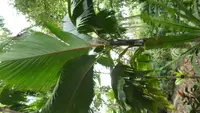
Use two hands and support the base of each frond when moving or cleaning the plant to avoid tearing the thin, papery leaf blades and damaging the midrib.

Trunk stabilization

As the palm gains height, install a discreet stake or tie it to a stable structure using soft, wide ties to prevent wobbling and root disturbance in windy patios or near door drafts.

Salt-sensitive placement

Keep the pot well away from sidewalks, driveways, or areas treated with de-icing salts or softened water discharge, since this species is notably sensitive to salt buildup in the root zone.

Gradual light transition

When shifting the plant between locations with different light levels, increase or decrease exposure over 7–10 days to prevent sun scorch on the broad leaves.

Routine pest scouting

Inspect both sides of the leaves and the leaf bases every 1–2 weeks for scale, spider mites, and mealybugs, so that any infestation is caught early and caring for Thief palm stays manageable.

Common Pests and Diseases

Red palm mite

This pest feeds on the underside of fronds, causing yellow stippling, bronzing, and eventual leaf decline, especially in warm, dry conditions. Fine webbing may be visible along the leaf veins.

Solution

Rinse fronds thoroughly with a strong but controlled stream of water, focusing on the undersides, and repeat weekly until populations drop. Increase humidity, isolate the plant, and use a horticultural oil or insecticidal soap labeled for mites, making sure to coat both leaf surfaces and repeat according to label directions.

Scale insects

These insects attach to stems and leaf midribs as small, dome-shaped bumps, sucking sap and weakening the palm. Symptoms include sticky honeydew and sooty mold on the fronds.

Solution

Manually remove visible scales with a soft cloth or cotton swab dipped in diluted alcohol, then wash fronds with lukewarm soapy water. For persistent infestations, apply an insecticidal soap or light horticultural oil, repeating every 7–14 days and improving airflow and light levels to support recovery as part of general Phoenicophorium borsigianum plant care.

Mealybugs

This pest appears as white, cottony clusters in leaf bases, along petioles, and in crown folds, where it feeds on plant sap. Infested plants may show slowed growth, leaf yellowing, and sticky residue.

Solution

Inspect crown and leaf bases closely, then dab visible mealybugs with a cotton swab dipped in diluted alcohol and rinse the foliage afterward. For larger infestations, use an insecticidal soap spray directed into tight leaf bases and repeat treatments every 7–10 days while improving cleanliness around the plant to reduce hiding spots.

Leaf spot

This disease causes small water-soaked or tan to dark-brown lesions on the leaf blades that may enlarge and merge, giving fronds a blotched appearance. Symptoms include premature yellowing and shedding of older leaves in humid, crowded conditions.

Solution

Remove and discard affected fronds to reduce inoculum, and avoid wetting the foliage when watering. Improve air circulation, reduce overcrowding, and if spots continue to spread, apply a copper- or chlorothalonil-based fungicide labeled for palms, following label instructions carefully.

Bud and spear rot

This disease affects the central growing point, causing the emerging spear leaf to wilt, yellow, or pull out easily, often with a foul smell. Symptoms include collapse of new growth while older fronds may initially appear normal.

Solution

Remove and dispose of severely affected crown tissue, keeping the area as dry and clean as possible, and avoid overhead watering onto the crown. In early cases, drench the crown area with a fungicide labeled for palm bud rot and adjust watering and drainage to prevent persistent moisture around the plant’s growing point.

Interesting Facts

Seychelles granite specialist

This palm is endemic to the granitic islands of the Seychelles, where it grows on steep, exposed granite slopes rather than typical deep soils, anchoring itself in rock crevices and thin soil pockets.

Scarred red crownshaft

Mature plants develop a striking red to reddish-brown crownshaft with persistent old leaf bases that leave pronounced scars, giving the stem a rough, armored appearance that is distinctive in its native habitat.

Hurricane-adapted leaf shape

The large, stiff, wedge-shaped leaves are often torn into narrow segments by strong ocean winds; this shredding reduces wind resistance and helps the palm survive frequent tropical storms.

Botan icon

Did you know?

This species is listed as Vulnerable on the IUCN Red List because of its very restricted range in the Seychelles and ongoing habitat disturbance, making in-situ conservation of its native forest fragments critically important.

FAQs about Thief palm

Brown leaf tips or edges usually come from low humidity, underwatering, or buildup of salts from fertilizer. Large brown patches can indicate past cold or heat stress. Remove damaged parts and correct the underlying cause to prevent further browning.

Grow Healthy Plants with Botan Care

Keep your plants happy and healthy with plant identification, disease detection, and easy care guidance.

Botan plant care app — identify plants on mobile

Explore More Plants