Stabilize Young Trunks
Install 2–3 sturdy stakes around young palms and secure the trunk with soft, wide ties in a loose figure-eight pattern to prevent wind rock and root damage while the plant establishes.

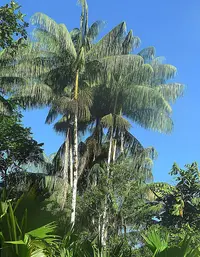
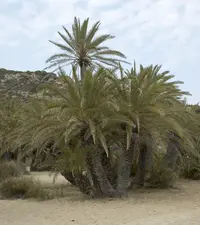
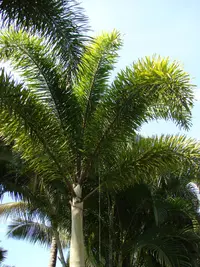
Amazon açaí, Euterpe precatoria, is a single-stemmed palm tree native to the western and central Amazon rainforest. It typically grows tall and slender with a narrow crown of graceful, feathery fronds.
In nature it occurs along riverbanks and in humid lowland forests, where it experiences warm temperatures and consistently moist, well-drained soils. Fruits are smaller and less clustered than the more commercial açaí species but are still valued locally.
For home growers, this species needs stable warmth, high humidity, and protection from cold or dry air, which can make it challenging outside tropical climates. It suits advanced growers who want to care for Amazon açaí in containers, greenhouses, or very sheltered outdoor spots in frost-free areas.

Care Difficulty
Hard Care

Light Preference
Partial Shade

Water Requirements
Keep Soil Moist

Temperature Preference
Tropical / Frost Sensitive

Hardiness Zone
11–12

Soil Texture
Loamy, Silty, Organic-rich

Soil pH
Acidic (5.5–6.5)

Soil Drainage
Moist but well-drained

Fertilization
Minimal (feed rarely)
Scan your plant to receive care tips personalized for your specific plant
Available on iOS and Android
This tropical canopy palm prefers bright, filtered light that mimics dappled rainforest conditions.
This species prefers consistently moist, never waterlogged soil that mimics humid lowland rainforest conditions.
This palm thrives in stable, warm, frost-free climates typical of lowland tropical forests.
This species prefers consistently high humidity and reacts quickly to dry air.
This palm needs deep, moisture-retentive yet well-drained, organic-rich soil for stable growth.
This species can be grown in containers when young or in cooler climates, but requires careful attention to stability and drainage.
This palm benefits from light, consistent feeding during warm months, especially in containers.
Pruning Euterpe precatoria is minimal and focuses on health and safety rather than shaping.
Transplanting this tall palm requires planning, as it dislikes major root disturbance once established.
New Euterpe precatoria plants are almost always raised from seed rather than vegetative methods.
This strictly tropical palm is highly frost-sensitive and needs strong winter protection outside its native climate.

Plant Health Check
Not sure what's wrong with your plant? Check your plant's health inside the app.
Unlike its close relative Euterpe oleracea, which forms multi-stemmed clumps, this species usually develops a single, tall, slender trunk, which affects how it regenerates after disturbance and how fruits are harvested.
In its native western Amazon forests, this palm often fruits high in the canopy, providing a key food source for birds, primates, and other wildlife that disperse its seeds across flooded and non-flooded habitats.
Euterpe precatoria naturally occurs both on seasonally flooded riverbanks and on terra firme (never-flooded) soils, showing ecological flexibility compared with many other Amazonian palms.

Molecular studies have confirmed that Euterpe precatoria is a distinct species from the commercially dominant Euterpe oleracea, which means many plantations based on wild Amazon açaí fruit actually mix products from two closely related but genetically separate palms.
Growth is moderate under warm, humid, consistently moist conditions. Seedlings may add 30–60 cm per year, slowing as the trunk thickens. Cool temperatures, drought, nutrient-poor soil, or root restriction significantly reduce growth rate.
Keep your plants happy and healthy with plant identification, disease detection, and easy care guidance.