Rhizome division timing
Lift and divide rhizomes every 3–4 years in late winter or early spring, replanting only firm, healthy segments with at least 2–3 buds to maintain vigorous clumps and reliable flowering.

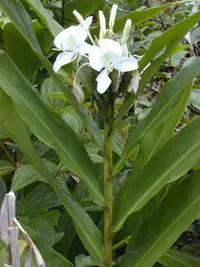
The white garland-lily, Hedychium coronarium, is a rhizomatous perennial from the ginger family grown for its fragrant, orchid-like white flowers. It forms upright clumps of tall, reed-like stems with lush, lance-shaped leaves, giving a tropical look even in small gardens.
In nature it occurs in moist, warm regions of the Himalayas and has naturalized in many subtropical areas. The flowers open in succession, attracting pollinators and providing a long bloom period in suitable climates.
This species prefers bright, filtered light, consistently moist but not waterlogged soil, and shelter from strong wind. With the right warmth and moisture, it is relatively straightforward to care for white garland-lily.

Care Difficulty
Moderate Care

Light Preference
Partial Sun

Water Requirements
Keep Soil Moist

Temperature Preference
Tropical / Frost Sensitive

Hardiness Zone
8–11

Soil Texture
Loamy, Silty, Organic-rich

Soil pH
Acidic (5.5–6.5), Slightly acidic (6.5–7.0)

Soil Drainage
Moist but well-drained

Fertilization
Moderate (every 2–4 weeks)
Scan your plant to receive care tips personalized for your specific plant
Available on iOS and Android
This species prefers bright, gentle light that mimics a warm, humid understory edge.
This rhizomatous plant prefers consistently moist but not waterlogged soil.
This tropical ginger grows best in warm, frost-free conditions with moderate seasonal shifts.
This species benefits from fairly high humidity for best growth and flowering.
Hedychium coronarium prefers deep, moist, well-drained, organic-rich soil for strong rhizome and shoot development.
This species grows reliably in containers when given ample root space and stable moisture.
This rhizomatous perennial responds well to moderate feeding during active growth.
Hedychium coronarium benefits from light, targeted pruning to maintain vigor and tidy growth.
This ginger spreads by rhizomes and occasionally needs more space in containers or garden beds.
This species is most commonly multiplied by dividing its rhizomes.
This tropical ginger is sensitive to hard frost and needs some winter preparation in cooler climates.

Plant Health Check
Not sure what's wrong with your plant? Check your plant's health inside the app.
The flowers release their strongest fragrance in the evening and early night, when air is cooler and more humid, which helps attract nocturnal moth pollinators.
In its native Himalayan and Southeast Asian range, the plant is primarily pollinated by long-tongued hawkmoths that can reach nectar hidden deep inside the tubular flowers.
Its thick underground rhizomes can survive periodic flooding and low-oxygen soil conditions, which helps the plant persist and spread along riverbanks and wet ditches in tropical and subtropical climates.

This species is the national flower of Cuba, where it is known as mariposa blanca and historically symbolized purity and clandestine resistance during the independence movement, with flowers sometimes used to hide secret messages.
Lack of flowering usually comes from insufficient maturity, inadequate warmth, or nutrient imbalance. Plants often need 2–3 seasons to establish. Ensure a warm growing season, avoid deep shade, and use a balanced, low-nitrogen fertilizer to support bud formation.
Keep your plants happy and healthy with plant identification, disease detection, and easy care guidance.