giant airplant Care (Tillandsia fasciculata)

Also known as: giant airplant, Common Wild Pine, Stiff-Leaved Wild Pine
giant airplant

About giant airplant

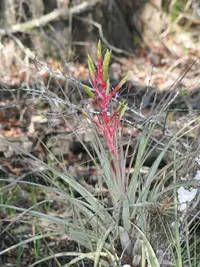
The giant airplant, Tillandsia fasciculata, is a large epiphytic bromeliad that naturally grows on trees and rocks rather than in soil. It forms a tight rosette of stiff, arching leaves and can produce a tall, colorful flower spike.

This species is native to parts of the southern United States, the Caribbean, Mexico, and Central America, where it thrives in warm, bright, airy habitats. It relies on its leaves to absorb water and nutrients from rain, mist, and dust, which shapes how to care for giant airplant in home conditions.

Its lack of a traditional root system makes it relatively easy to place and display, but it still needs regular moisture, bright filtered light, and good air circulation to stay healthy.


Main Plant Requirements

Care Difficulty

Moderate Care

Light Preference

Partial Sun

Water Requirements

Low Water

Temperature Preference

Tropical / Frost Sensitive

Hardiness Zone

10–12

Soil Texture

Sandy, Rocky, Organic-rich

Soil pH

Acidic (5.5–6.5)

Soil Drainage

Well-drained

Fertilization

Light (every 4–6 weeks)

Get Personalized Care Plan

Scan your plant to receive care tips personalized for your specific plant

Available on iOS and Android

How to Care for the giant airplant

Tillandsia fasciculata prefers bright, indirect light that mimics open, airy tree canopies.

  • Provide 4–6 hours of bright, filtered light daily; early morning sun is fine, but protect from harsh midday and late-afternoon sun, especially in hot climates.
  • Outdoors, place the giant airplant where it gets dappled shade under trees or shade cloth; indoors, use an east or bright north window, or bright light near a south window.
  • Watch foliage color: pale, crispy tips or bleached patches indicate excess sun, while dark, soft, or limp leaves suggest too little light, especially in winter.

This epiphytic species absorbs water through its leaves, so moisture must reach the foliage rather than roots.

  • Soak or thoroughly drench leaves for 5–10 minutes, then shake off excess; allow plant to dry within 2–3 hours to avoid rot in the leaf bases.
  • Water 2–3 times per week in warm, dry weather and about weekly in cool, humid seasons, adjusting based on faster or slower drying of the leaves.
  • Observe the foliage: curling, stiff, or brittle leaves suggest underwatering, while limp, dark, or foul-smelling bases indicate overwatering or poor air movement.

This species prefers warm, frost-free conditions with good air movement.

  • Aim for 65–85°F (18–29°C) for steady growth, with brief peaks to 90°F (32°C) tolerated if humidity is higher and air circulates well.
  • Protect from cold; growth slows below 55°F (13°C), and tissue damage often occurs below 40°F (4°C), especially if plants are wet at night.
  • Avoid frost entirely; during cold snaps, move plants to a sheltered spot and keep them slightly drier to reduce cold damage risk.

This species prefers moderate to high humidity and reacts quickly to very dry air.

  • Aim for 50–70% humidity, with regular air movement to prevent rot on dense rosettes.
  • Tolerates brief dips to 30–40% if you increase misting or soaking frequency during dry spells.
  • Crisping or rolling leaf tips signal low humidity; increase humidity with grouped plants, trays of water near displays, or a room humidifier for giant airplant.

Tillandsia fasciculata is epiphytic and should not be grown in conventional potting soil.

  • Use a loose, airy mix such as large orchid bark, chunky perlite, and a little sphagnum, keeping the plant above the mix rather than buried.
  • Ensure extremely fast drainage so water flows through in seconds, leaving roots and leaf bases exposed to air.
  • Aim for slightly acidic to neutral conditions (pH 5.5–7.0) by avoiding heavy liming agents and garden soil.
  • Improve aeration by using larger particle sizes (1–3 cm) and avoiding fine peat or compost that can pack around the base and cause rot.

This species can be grown in containers if mounted or loosely set above a very airy medium.

  • Choose a wide, stable container or basket to prevent a large rosette from tipping as it gains size and weight.
  • Secure the base to cork, wood, or mesh within the container so the plant cannot wobble and damage new roots.
  • Use slatted or perforated pots that allow strong side airflow, which helps leaf bases dry quickly after watering.

Tillandsia fasciculata benefits from light, diluted feeding rather than heavy fertilization.

  • Use a balanced water-soluble NPK fertilizer formulated for epiphytes or orchids, avoiding urea-heavy products.
  • Feed every 3–4 weeks in spring and summer, misting the solution directly onto the leaves.
  • Dilute fertilizer to 1⁄4–1⁄2 strength to prevent leaf burn and salt buildup on this giant airplant.
  • Reduce feeding to once in late fall and skip midwinter applications when growth slows.

Pruning for Tillandsia fasciculata focuses on hygiene and maintaining an open, healthy rosette.

  • Perform light pruning after flowering or during active growth in spring and summer.
  • Gently remove dead, brown, or damaged leaves by pulling downward at the base, or trim with small clean scissors.
  • Cut spent flower spikes at the base once they fade to direct energy into offsets and foliage.
  • Thin crowded clumps by removing whole offsets if airflow or light penetration becomes poor.

This epiphytic species is usually mounted or placed loosely in containers, so it is moved rather than traditionally repotted.

  • Shift plants when they outgrow the mount, topple from displays, or show poor airflow and declining vigor.
  • Best timing is spring to early summer, when temperatures are warm and growth is active.
  • Typical interval is every 2–4 years, often when large clumps form or mounting material decays.
  • During transplanting, handle the base gently, avoid burying it, and secure onto new wood, cork, or inert media to minimize stress.

Propagation of Tillandsia fasciculata is most reliable through offsets produced after flowering.

  • Separate pups when they reach about 1⁄3–1⁄2 the size of the parent, usually in spring or early summer.
  • Support the base firmly and twist or cut pups away with a sterile blade to avoid tearing tissue.
  • Mount or place separated offsets where they receive bright light, good airflow, and 65–80°F temperatures.
  • Seed propagation is possible but slow, requiring fine, exposed surfaces, high humidity, and bright indirect light.

Winter care focuses on keeping Tillandsia fasciculata above freezing and in dry, well-aerated conditions.

  • Treat the plant as frost sensitive; damage occurs near or below 32°F, especially when wet.
  • In cold regions, move mounted or potted plants indoors or into a greenhouse before first frost.
  • Indoors, provide bright light, moderate airflow, and allow leaves to dry completely between waterings.

Care Tips

Mounting strategy

Mount plants on rough, non-toxic surfaces like cork bark or unfinished hardwood using breathable materials such as nylon fishing line or soft plant wire, making sure only the base is secured so the leaves are not constricted as the rosette expands.

Airflow management

Place plants where there is consistent, gentle air movement from a ceiling fan, oscillating fan, or open screened window, which helps leaves dry within 2–3 hours after soaking and significantly reduces rot risk.

Rainwater collection

If outdoor conditions are suitable, hang plants where they can catch natural rain during warm months, then bring them under cover and tilt them briefly after heavy downpours so excess water drains from the leaf bases.

Seasonal outdoor shifts

Move plants outdoors in bright shade once night temperatures stay reliably above 60°F, then return them indoors before temperatures regularly drop below 55°F to maintain steady growth without cold stress.

Bloom and pup handling

After flowering, leave the fading rosette attached until offsets reach at least one-third the size of the parent, then gently twist or cut pups away at the base to encourage a compact, multi-plant clump that simplifies caring for giant airplant over time.

Common Pests and Diseases

Scale insects

This pest attaches to the stiff leaves and leaf bases, sucking sap and weakening the rosette over time. Symptoms include small brown or gray bumps, sticky honeydew, and sometimes sooty mold on the foliage.

Solution

Remove visible insects with a cotton swab dipped in isopropyl alcohol, then rinse the plant thoroughly with room‑temperature water and let it dry with strong airflow. Keep the plant in brighter light and lower humidity for a while, and repeat alcohol spot treatments weekly until no new scale appears; this approach fits well into general Tillandsia fasciculata care.

Mealybugs

These insects hide in leaf axils and around the base of the rosette, where they feed on plant sap and excrete sticky honeydew. Symptoms include white cottony masses, distorted new growth, and sometimes black sooty mold on older leaves.

Solution

Isolate the plant, then flush the rosette thoroughly under running water to dislodge insects and debris. After drying, treat remaining clusters with a cotton swab dipped in isopropyl alcohol and maintain strong air movement and slightly brighter light, repeating treatments every 7–10 days until the infestation clears.

Bromeliad mite damage

This pest (often eriophyid mites) feeds inside tight leaf bases and developing tissue, causing rough leaf surfaces, bronzing, and distorted or stunted new leaves. Symptoms include fine scarring or stippling on inner leaves without obvious visible insects.

Solution

Remove the most damaged inner leaves if possible and increase air movement and light to reduce mite pressure. Rinse the plant thoroughly, then apply a targeted miticide labeled for ornamental bromeliads if the problem persists, following label directions and allowing the plant to dry fully after each treatment.

Leaf spot

This disease is usually caused by fungal or bacterial pathogens favored by constant moisture on leaves and poor air circulation. Symptoms include water‑soaked or tan spots with darker margins that can merge into irregular patches on the leaves.

Solution

Improve spacing, airflow, and watering technique by soaking or misting early in the day and allowing the plant to dry within a few hours. Remove and discard badly spotted leaves, then apply a copper‑based or broad‑spectrum fungicide labeled for ornamental foliage plants if spots continue to spread, making sure excess solution drains away from the leaf bases.

Crown rot

This disease develops when water sits for long periods in the center of the rosette under cool or stagnant conditions, allowing fungi or bacteria to break down the tissues. Symptoms include a soft, foul‑smelling central crown, collapsing inner leaves, and rapid decline of the whole plant.

Solution

At the first sign of soft tissue, invert the plant to drain trapped water, trim out all mushy or brown inner leaves, and let the remaining rosette dry in bright, airy conditions. If firm offsets are present, separate and keep only healthy pups, then adjust watering so the plant dries completely within a few hours after each soak and avoid leaving water in the crown during cool nights.

Interesting Facts

Tank-forming air bromeliad

This species naturally forms a water-holding rosette, or tank, at its base that collects rain, leaf litter, and small invertebrates, creating a tiny aquatic habitat used by insects and small amphibians in its native range.

Striking color shift

Before blooming, the stiff foliage can flush with red or purple pigments called anthocyanins, which help protect the plant from strong light and may make the inflorescence more visible to pollinators.

Native to hurricane zones

It is native to Florida, the Caribbean, Mexico, and Central America, where it has evolved to withstand strong winds by anchoring tightly to tree branches with specialized root structures that act mainly as holdfasts rather than for water uptake.

Botan icon

Did you know?

In parts of its native Florida range, this species has suffered major population declines due to infestation by the invasive Mexican bromeliad weevil (Metamasius callizona), making some local populations a focus of active conservation and biological control efforts.

FAQs about giant airplant

Flowering depends on maturity, light intensity, and nutrition. This species usually needs several years of steady growth, bright but not scorching light, and consistent air movement. Stress, sudden temperature swings, or recent division can delay bloom formation.

Grow Healthy Plants with Botan Care

Keep your plants happy and healthy with plant identification, disease detection, and easy care guidance.

Botan plant care app — identify plants on mobile

Explore More Plants