Paperflower Care (Bougainvillea glabra)

Also known as: lesser bougainvillea, Bougainvillea
Paperflower

About Paperflower

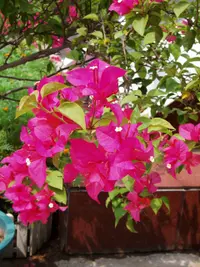
Paperflower, Bougainvillea glabra, is a woody evergreen climber known for its colorful papery bracts that surround small, white tubular flowers. It is often grown as a vine, shrub, or trained standard in warm climates and containers. This species originates from Brazil and thrives in bright, sunny, and relatively dry conditions. It develops woody, sometimes thorny stems and can form dense screens or cascades over structures. Once established, it is relatively drought-tolerant but resents root disturbance, which affects how easy it is to transplant. Understanding how to care for Paperflower focuses mainly on giving it strong light, free-draining soil, and avoiding overwatering.

Main Plant Requirements

Care Difficulty

Moderate Care

Light Preference

Full Sun

Water Requirements

Low Water

Temperature Preference

Tropical / Frost Sensitive

Hardiness Zone

9–11

Soil Texture

Sandy, Loamy, Rocky

Soil pH

Acidic (5.5–6.5), Slightly acidic (6.5–7.0)

Soil Drainage

Well-drained

Fertilization

Light (every 4–6 weeks)

Get Personalized Care Plan

Scan your plant to receive care tips personalized for your specific plant

Available on iOS and Android

How to Care for the Paperflower

This sun-loving climber flowers best with strong, consistent light exposure outdoors.

  • Provide 6–8 hours of direct sun daily; full southern or western exposure gives the most abundant bracts on Paperflower.
  • Tolerates light afternoon shade in very hot climates, but dense or all-day shade leads to weak growth, long internodes, and poor flowering.
  • In winter or overcast seasons, prioritize the brightest spot available and avoid shading from trees or structures that block low-angle sun.

This plant prefers thorough but infrequent watering once its roots are established.

  • Allow the top 3–5 cm of soil to dry before watering, then soak deeply so moisture reaches the root zone in well-drained soil.
  • Reduce watering in cooler months when growth slows; increase only during hot, windy periods if leaves begin to curl or wilt mid-day.
  • Watch for overwatering signs such as yellowing leaves and stem dieback in Bougainvillea glabra, especially in heavy soils or poorly drained sites.

This subtropical shrub performs best in warm, stable temperatures without frost exposure.

  • Ideal growth occurs around 65–85°F (18–29°C), with strongest flowering when days are warm and nights are slightly cooler.
  • Tolerates short peaks up to about 95–100°F (35–38°C) if soil is drained and roots are not waterlogged, but flowering may pause in extreme heat.
  • Minimum safe temperature is around 40°F (4°C); light frost can damage new growth, and hard freezes can kill stems to the ground or the whole plant.

Bougainvillea glabra handles a wide humidity range and rarely needs special humidity management.

  • Ideal humidity is around 30–50%, similar to typical indoor air in heated or air-conditioned homes.
  • Dry air is usually tolerated, but extreme dryness with hot drafts can cause crisp leaf edges and bud drop.
  • If air is very dry, increase humidity slightly by grouping plants together rather than misting, which offers only brief benefit.

This species needs sharply drained, lean soil that dries quickly between waterings.

  • Use a coarse, sandy or gritty loam with 30–50% mineral materials such as horticultural sand, fine gravel, or perlite to prevent waterlogging.
  • Aim for slightly acidic to neutral pH, roughly 6.0–7.0, which supports nutrient availability without encouraging excessive softness and weak growth.
  • In containers, mix roughly 2 parts commercial potting mix with 1 part coarse sand or perlite to improve aeration and root oxygen access.
  • Avoid compacted, clay-heavy, or constantly moist media, which promote root rot and severely reduce Bougainvillea glabra vigor.

This species is well suited to container growing when drainage and stability are managed carefully.

  • Choose a relatively small but deep container to keep roots slightly constrained, which supports flowering and prevents excessive leafy growth.
  • Select a heavy material such as terracotta or ceramic in windy locations to reduce tipping of the vigorous, climbing top growth.
  • Raise the pot on feet or bricks so drainage holes stay clear and excess water escapes quickly after heavy watering or rain.

Bougainvillea glabra flowers best with modest, controlled feeding rather than rich soil or heavy fertilization.

  • Use a balanced or slightly high-potassium NPK, or a slow-release formula labeled for flowering shrubs, to support blooming.
  • Feed every 4–6 weeks during the warm growing season; avoid adding compost-rich mixes that encourage leafy growth over flowers.
  • Apply at 1/2 strength for liquid feeds, always on moist soil, to reduce root burn risk in Paperflower.
  • Stop or reduce feeding to 1 light application in late fall, then hold fertilizer entirely during winter dormancy.

Bougainvillea glabra responds well to thoughtful pruning that controls size and improves flowering wood.

  • Schedule main pruning in late winter or very early spring before vigorous new growth begins.
  • Remove dead, damaged, or crossing stems first, then thin congested interior growth to improve light and air flow.
  • Shorten long, unruly shoots to maintain desired shape on trellises, fences, or containers and encourage more flowering tips.
  • Use clean, sharp bypass pruners, making angled cuts just above outward-facing buds or junctions to limit dieback.

This species prefers slightly root-bound conditions, so repot or transplant Bougainvillea glabra only when clearly necessary.

  • Look for roots circling the pot, pushing through drainage holes, or a noticeable slowdown in growth despite good care.
  • Plan repotting or transplanting for late spring to early summer, once nights are warm and growth is active.
  • Expect container plants to need a step-up only every 2–3 years, moving to a pot just 2–5 cm wider with gritty, fast-draining mix.
  • Water the plant well before and after, handle the brittle roots gently, and shade it lightly for several days to reduce transplant shock.

New Bougainvillea glabra plants are most commonly produced from semi-hardwood cuttings rather than seed.

  • Take 8–12 cm semi-ripe cuttings in late spring or summer from non-flowering shoots with several nodes.
  • Remove lower leaves, lightly wound the base, and dip in rooting hormone to improve callus and root formation.
  • Insert cuttings into a sharply drained medium such as 50% perlite and 50% coarse sand or fine bark.
  • Maintain bright, indirect light, bottom warmth around 70–75°F, and high humidity until roots develop, then harden off gradually.

Bougainvillea glabra is frost-sensitive and needs active winter management in climates below USDA zone 9b.

  • In-ground plants in mild climates benefit from a 5–8 cm mulch layer over the root zone, kept slightly away from the stem.
  • Where light frost occurs, wrap main stems with breathable frost cloth and avoid cutting back until spring growth shows damage limits.
  • Move container plants indoors or into a frost-free garage or greenhouse when temperatures approach 35°F.
  • Keep overwintered plants cool, bright, and on the dry side, watering only enough to prevent complete root ball drying.

Care Tips

Encourage Heavy Bloom

Lightly root-prune and slightly disturb the rootball when potting up to the next container size to keep the plant a bit root-bound, which promotes heavier flowering rather than leafy growth.

Use Strong Support

Install sturdy trellis, wires, or fencing before the plant reaches them, then gently tie new canes with soft ties every 15–20 cm to guide branches and prevent wind damage to the brittle wood.

Control Rampant Shoots

Pinch or tip back long, green water shoots during the growing season to redirect energy into side-branching, which produces more flowering spurs and a denser canopy.

Protect From Windburn

In exposed sites, use windbreaks such as lattice panels or hedging to reduce strong, drying winds that can shred bracts and cause stem dieback, especially on young plants.

Manage Cold Snaps

In regions with occasional frost, wrap the base and main framework stems with breathable frost cloth and mulch the root zone 5–8 cm deep before cold nights to reduce cold injury while growing Paperflower outdoors.

Common Pests and Diseases

Bougainvillea looper

This pest is a green to brown caterpillar that feeds at night, chewing scalloped edges and holes in the leaves and bracts. Symptoms include ragged foliage while the caterpillars themselves are often hidden during the day.

Solution

Hand-pick loopers at night with a flashlight when they are most active, and prune heavily infested shoots. For larger outbreaks, use a targeted biological product containing Bacillus thuringiensis (Bt) applied in the evening, and reduce nighttime lighting that can attract adult moths nearby.

Aphids

These insects cluster on new growth and flower bracts, sucking sap and causing distorted, sticky shoots from honeydew secretion. Symptoms include curling young leaves and black sooty mold developing on the honeydew.

Solution

Spray soft growth thoroughly with a strong stream of water to dislodge colonies, then apply insecticidal soap or a light horticultural oil to all shoot tips and leaf undersides. Improve air movement and avoid excessive nitrogen fertilizer, which encourages the soft, lush growth aphids prefer when growing Paperflower.

Bougainvillea mites

This pest is a microscopic eriophyid mite that feeds on young bracts and leaves, causing bronzing, rough texture, and distorted or stunted bracts. Symptoms include dull, off-color bracts that fail to open normally.

Solution

Prune and discard heavily affected shoots to remove most of the mite population, and avoid overhead watering that keeps foliage chronically damp. Use a labeled miticidal soap or horticultural oil, applied repeatedly to new growth, and maintain good spacing and airflow around the plant to limit reinfestation.

Leaf spot

This disease causes small tan to dark brown spots on leaves, sometimes with yellow halos, leading to premature leaf drop in warm, humid conditions. Symptoms include thinning foliage and scattered spotting that starts on lower, older leaves.

Solution

Remove and discard affected leaves from the plant and soil surface, and water at the base instead of overhead to keep foliage dry. Improve airflow, avoid crowding, and if spotting continues, use a copper- or chlorothalonil-based fungicide labeled for ornamental shrubs, applied according to instructions.

Botrytis blight

This disease is a gray mold that attacks fading bracts, flowers, and tender shoots during cool, damp weather. Symptoms include soft, brown patches on bracts and stems that develop a fuzzy gray growth, especially in dense or poorly ventilated plantings.

Solution

Promptly remove and dispose of all affected bracts, flowers, and soft stems, and reduce humidity by increasing spacing and airflow. Water early in the day so foliage dries quickly and, in persistent cases, use a labeled ornamental fungicide for Botrytis, rotating products if repeated treatments are needed.

Interesting Facts

Color comes from bracts

The showy purple “flowers” are actually papery bracts, while the true flowers are small, white, and tubular, adapted to attract pollinators at close range rather than from a distance.

Naturally scrambling climber

This species climbs by long, flexible, thorny stems that lean and weave through other vegetation rather than by tendrils or aerial roots, which is why it often forms sprawling, layered hedges in warm climates.

Pioneer on poor soils

In its native range of Brazil, this plant is often found on dry, rocky slopes and disturbed sites, where its deep root system and drought tolerance allow it to establish in nutrient-poor substrates.

Botan icon

Did you know?

Historical records indicate that this species was among the earliest Bougainvillea forms brought from Brazil to European glasshouses in the 19th century, and many modern purple ornamental selections trace their origins back to those early introductions.

FAQs about Paperflower

Sparse or absent blooms usually result from insufficient light, too much nitrogen fertilizer, or lack of a slight dry spell between waterings. Mild root restriction and periodic pruning after flowering also help trigger stronger bract and flower production.

Grow Healthy Plants with Botan Care

Keep your plants happy and healthy with plant identification, disease detection, and easy care guidance.

Botan plant care app — identify plants on mobile

Explore More Plants