Invasive Spread Control
Install a root barrier or maintain a closely mowed or mulched strip around plantings to limit suckering and unwanted spread, and remove any volunteer seedlings within 1–2 seasons before they develop deep roots.

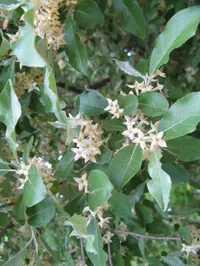
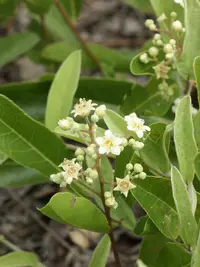
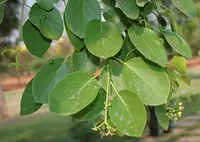
Autumn olive, Elaeagnus umbellata, is a hardy deciduous shrub known for its silvery leaves, fragrant spring flowers, and clusters of small red berries in fall. It often forms dense thickets and can reach several meters in height, giving strong screening or hedging structure in larger landscapes.
The species is native to Asia but is now widespread in many temperate regions, including parts of North America. It grows quickly, tolerates poor soils, and fixes nitrogen, which makes it vigorous and sometimes invasive outdoors.
These traits mean it is generally easy to establish, but hard to contain in open ground. Understanding how to care for autumn olive starts with recognizing its preference for full sun, well-drained soil, and relatively dry to moderate moisture levels.

Care Difficulty
Easy Care

Light Preference
Full Sun

Water Requirements
Low Water

Temperature Preference
Cold Hardy

Hardiness Zone
3–8

Soil Texture
Sandy, Loamy, Clay

Soil pH
Slightly acidic (6.5–7.0), Slightly alkaline (7.0–7.5)

Soil Drainage
Well-drained

Fertilization
Minimal (feed rarely)
Scan your plant to receive care tips personalized for your specific plant
Available on iOS and Android
This sun-loving shrub fruits best in open, bright conditions with long daily exposure.
This drought-tolerant shrub prefers deep, infrequent watering once established rather than frequent light applications.
This hardy shrub tolerates a wide temperature range but has an optimal window for active growth and fruiting.
Humidity is not a significant factor for Elaeagnus umbellata, which adapts well to typical outdoor air levels.
Elaeagnus umbellata grows reliably in a range of mineral soils if drainage is adequate.
This species can be grown in large outdoor containers if the pot provides sufficient root volume and stability.
This nitrogen-fixing shrub usually needs minimal feeding, especially in reasonably fertile soil.
Thoughtful pruning keeps Elaeagnus umbellata manageable, healthy, and productive.
This shrub is usually grown in the ground, so care focuses on transplanting rather than frequent repotting.
Elaeagnus umbellata can be propagated by seed, cuttings, or layering, though it can spread aggressively in some regions.
This cold-hardy shrub generally needs minimal winter care once established in the landscape.

Plant Health Check
Not sure what's wrong with your plant? Check your plant's health inside the app.
This species forms root nodules with actinobacteria in the genus Frankia, allowing it to fix atmospheric nitrogen and thrive on very poor, sandy, or disturbed soils where many other shrubs struggle.
Mature shrubs can produce large crops of small red berries with silvery speckles that are rich in carotenoids and lycopene, which are antioxidant pigments also found in tomatoes.
The abundant fruits are readily eaten and dispersed by birds, which has contributed to this species spreading aggressively outside its native range in Asia and becoming a serious invasive shrub in many parts of the eastern and central United States.

This species was widely planted in the mid-20th century across North America for wildlife habitat, windbreaks, and erosion control, and those intentional introductions are a major reason it is now classified as an invasive plant in many US states and targeted for active removal in conservation areas.
The fruits are edible and rich in lycopene, often used for jams, sauces, and juices. Raw berries taste tart to sweet. Leaves, bark, and seeds are not commonly eaten and should be avoided in large quantities.
Keep your plants happy and healthy with plant identification, disease detection, and easy care guidance.