candle tree Care (Parmentiera cereifera)

candle tree

About candle tree

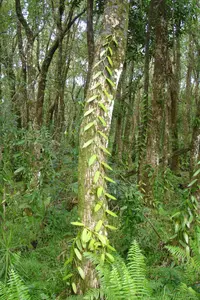
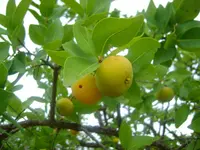
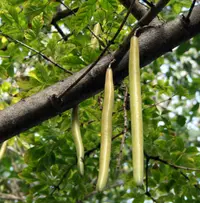
The candle tree, Parmentiera cereifera, is a small tropical tree known for its long, waxy, candle-like fruits that hang directly from the trunk and branches. It keeps its leaves year-round in warm climates and forms a rounded, moderately dense canopy.

This species is native to Central America, especially Panama, where it grows in lowland tropical forests and cultivated areas. Its unusual trunk-fruiting habit makes it more of a specialty or collectors plant than a common home garden tree.

The candle tree prefers consistently warm conditions, bright light, and moisture-retentive but well-drained soil. Gardeners who understand how to care for candle tree usually find it moderate in difficulty, mainly due to its need for tropical temperatures and protection from cold.

Main Plant Requirements

Care Difficulty

Moderate Care

Light Preference

Full Sun

Water Requirements

Regular Water

Temperature Preference

Tropical / Frost Sensitive

Hardiness Zone

11–12

Soil Texture

Sandy, Loamy, Organic-rich

Soil pH

Slightly acidic (6.5–7.0), Neutral (7.0)

Soil Drainage

Moist but well-drained

Fertilization

Minimal (feed rarely)

Get Personalized Care Plan

Scan your plant to receive care tips personalized for your specific plant

Available on iOS and Android

How to Care for the candle tree

This tropical tree performs best with bright, consistent light suited to lowland climates.

  • Provide 6–8 hours of direct sun daily, ideally strong morning sun with some light afternoon shade in hot regions.
  • In hotter inland sites, use filtered light through sparse canopy or shade cloth during 12–4 pm to limit leaf scorch on candle tree foliage.
  • In partial shade (3–4 hours sun), growth slows and flowering may drop; thin overhead branches if canopies cast dense shade year-round.

This species favors evenly moist, well-drained soil that never stays soggy for long periods.

  • Irrigate when the top 3–5 cm of soil feel dry, applying a deep soak that penetrates the root zone rather than frequent light splashes.
  • Use soil with good drainage and, on sloped or compacted sites, create a slight mound so Parmentiera cereifera roots do not sit in standing water.
  • Reduce watering during cooler months, watching for leaf yellowing and soft new growth from overwatering or crispy leaf edges and droop from underwatering.

This lowland tropical tree prefers warm, frost-free conditions throughout the year.

  • Aim for 70–86°F (21–30°C) for active growth, which supports consistent flowering and fruiting under stable moisture and light.
  • Protect from temperatures below 40°F (4°C); brief exposure near this level may cause leaf drop, while hard frost can kill young wood.
  • The tree tolerates short hot spells up to about 95°F (35°C) if soil moisture is stable, but mulch and some afternoon shade reduce heat stress in dry periods.

This species prefers moderately humid air but adapts to a wide range of household conditions.

  • Aim for 40–60% humidity to support steady growth and reduce leaf-edge browning.
  • It tolerates short periods of drier air, but prolonged humidity below 30% can cause leaf tip scorch and increased leaf drop in candle tree.
  • Increase humidity with a nearby open tray of water and stones, grouping plants, or a room humidifier rather than misting directly onto foliage.

Parmentiera cereifera grows best in deep, airy, well-drained soil that still holds some moisture.

  • Use a loose, loamy mix built from roughly 40% compost, 30% coarse sand, and 30% fine bark or perlite for structure and drainage.
  • Keep drainage sharp so water moves through within seconds; avoid mixes that stay wet and heavy for more than 2–3 days.
  • Target a slightly acidic to neutral pH of about 6.0–7.0 to support nutrient availability and root health.
  • Improve aeration in existing mixes by blending in extra perlite or pine bark fines and avoid compacted garden clay or silt-heavy soil.

This tree can be grown in large containers when provided with adequate root space and stability.

  • Choose a tall, heavy pot that resists tipping as the canopy becomes woody and top-heavy over time.
  • Select a container volume that allows a deep root zone, leaving at least 10–15 cm of fresh mix below the current root base for extension.
  • Use a pot material with moderate breathability, such as thick-walled terracotta or concrete, to balance moisture retention with evaporation and structural stability.

Parmentiera cereifera benefits from modest, steady nutrition rather than heavy feeding.

  • Use a balanced, slow-release fertilizer (for example 10-10-10) or well-finished compost at the start of the growing season.
  • Feed container plants every 6–8 weeks in spring–summer with diluted liquid fertilizer at 1/2 strength.
  • Avoid high-nitrogen products that push soft, weak growth at the expense of flowering and fruiting.
  • Reduce or stop feeding in fall–winter when growth slows, especially in cooler indoor conditions.

Pruning helps Parmentiera cereifera maintain a strong framework and manageable size.

  • Carry out structural pruning in late winter or very early spring before active growth resumes.
  • Remove dead, diseased, crossing, or storm-damaged branches first, cutting back to sound wood.
  • Thin crowded interior shoots to improve light penetration and air flow within the canopy.
  • Use clean, sharp bypass pruners or a pruning saw, making smooth cuts just outside the branch collar.

This species is most often grown in the ground, but container plants and young trees benefit from careful transplanting.

  • Plan major transplanting for late winter to early spring, before vigorous new growth begins.
  • Look for roots circling the pot, slow growth, or frequent drying as signs a container candle tree needs a larger pot.
  • Transplant or shift up 1 pot size every 2–3 years, using a well-drained, slightly rich mix.
  • Water thoroughly before and after moving, keep roots shaded, and reduce stress by pruning only lightly at transplant time.

Parmentiera cereifera plant care sometimes includes propagation for new landscape specimens, mainly from seeds and semi-hardwood cuttings.

  • Sow fresh seeds in warm conditions (75–80°F) in spring, using a sterile, free-draining seed mix kept evenly moist.
  • Provide bright, indirect light and gentle bottom warmth to encourage steady germination.
  • Take semi-hardwood cuttings in late spring–summer, apply rooting hormone, and place in a moist, airy propagation medium.
  • Maintain high humidity around cuttings with a vented cover and avoid waterlogging to limit rot.

This tropical tree is frost sensitive and needs protection in climates with cool winters.

  • In areas near freezing, grow Parmentiera cereifera in a large container and move it indoors or into a heated greenhouse before nights drop below 40°F.
  • Outdoors in mild zones, apply 5–8 cm of organic mulch around the root zone, keeping it away from the trunk.
  • Shield young stems from light frost with breathable fabric covers, removing them once temperatures rise.

Care Tips

Early structural training

In the first 2–3 years, lightly stake and tie the main stem with soft, wide ties to guide a single straight trunk, then gradually remove supports once the wood has thickened and can bear the weight of future fruits.

Branch spacing management

Select and keep 3–5 strong lateral branches spaced vertically around the trunk and remove crowded or rubbing shoots so the tree can support heavy fruit loads without splitting or tearing.

Wind and fruit support

In windy sites or when branches set many fruits on the trunk, use discreet props or sling-style supports under heavy-laden branches to prevent breakage and trunk damage.

Mulch for root stability

Apply a 5–8 cm layer of coarse organic mulch in a wide ring around the root zone, keeping it a few cm away from the trunk, to buffer soil temperature, reduce surface root stress, and limit mechanical damage during maintenance.

Seasonal health monitoring

At the end of each warm season, inspect bark and lower branches for mechanical cracks, canker-like lesions, or scale insects, and address problems early to keep the framework strong when growing candle tree to maturity.

Common Pests and Diseases

Scales

This pest forms small, dome-shaped bumps on young stems and the undersides of leaves, feeding on sap and stressing the tree. Symptoms include sticky honeydew on leaves and sooty mold growing on that residue.

Solution

Prune and discard heavily infested twigs, then wipe remaining scales off smooth bark and leaves with cotton pads soaked in diluted isopropyl alcohol. For larger trees, use repeated applications of a light horticultural oil, making sure to coat stems and leaf undersides, and reduce plant stress through proper watering and fertilization to support natural predator activity.

Mealybugs

These insects appear as white, cottony clusters in leaf axils, on new shoots, and sometimes along developing candle-shaped fruits, where they suck sap and stunt growth. Honeydew and accompanying sooty mold may follow heavy infestations.

Solution

Remove visible clusters with a cotton swab dipped in diluted alcohol and rinse foliage with a firm stream of water to dislodge remaining insects. If needed, apply an insecticidal soap or light horticultural oil to all plant surfaces every 7–10 days until no new mealybugs appear, and keep the canopy thinned enough so interior areas dry quickly after rain or irrigation.

Leaf spot

This disease causes small water-soaked or tan to dark-brown spots on leaves, often with yellow halos, which can merge and lead to premature leaf drop in humid conditions. Symptoms include heavier damage in dense, shaded parts of the canopy where moisture lingers.

Solution

Collect and discard fallen leaves, then remove and destroy the worst-affected foliage to reduce the pathogen load. Improve air movement by light canopy thinning and avoiding overhead irrigation, and in very wet climates consider a preventive copper-based fungicide on new flushes of growth according to label directions.

Anthracnose

This disease produces irregular brown lesions along leaf margins and on young shoots, which can cause tip dieback on tender growth during warm, wet weather. Symptoms include deformed new leaves and a generally ragged canopy if infections repeat across growth cycles.

Solution

Prune out and dispose of infected shoot tips during dry weather, cutting back into healthy tissue, and disinfect tools between cuts. Maintain an open canopy and avoid watering foliage late in the day; in high-pressure areas or collections where growing candle tree is important, use a labeled systemic or copper fungicide at the start of warm, rainy periods.

Interesting Facts

Night-blooming bat flowers

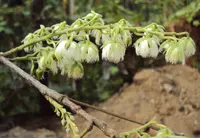
The candle tree produces tubular, cream-white flowers that open at night and are pollinated mainly by bats attracted to their pale color and nocturnal scent.

Hanging candle fruits

Its long, narrow fruits dangle directly from trunks and branches, resembling dripped wax candles, which is the origin of both its common name and the species name cereifera, meaning wax-bearing.

Lowland rainforest specialist

This species naturally occurs in humid lowland forests of Central America, especially Panama, where it grows as a small to medium tree along forest edges and riverbanks.

Botan icon

Did you know?

The fleshy fruits are eaten by various mammals in its native range, and the seeds pass through the animals’ digestive systems, helping the species disperse across the forest landscape.

FAQs about candle tree

Lack of flowers usually comes from insufficient light, cool night temperatures, or a young tree not yet mature. Avoid heavy pruning of young wood and keep fertilization moderate, focusing on balanced nutrients rather than high nitrogen.

Grow Healthy Plants with Botan Care

Keep your plants happy and healthy with plant identification, disease detection, and easy care guidance.


Botan plant care app — identify plants on mobile

Explore More Plants