Support For Branches
Install a sturdy trellis or wire frame early and loosely tie young shoots with soft ties so flower-laden branches do not snap under their own weight later.

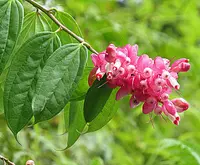
Mountain grape, Cavendishia bracteata, is an evergreen shrub from high-elevation cloud forests of Central and South America. It belongs to the heath family, the same group as blueberries.
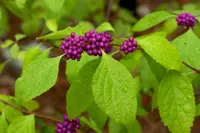
The plant typically forms arching or slightly trailing branches with glossy green leaves and clusters of tubular, often red to pink flowers. These are followed by small, decorative berry-like fruits.
It is usually grown as a specialty ornamental in cool, mild climates or protected containers, rather than as a common landscape shrub. It can be moderately challenging, since it needs consistently moist, acidic, well-drained soil and protection from heat and strong sun.
Gardeners who want to learn how to care for Mountain Grape should focus on stable temperatures, soft light, and even moisture to keep this species healthy over time.

Care Difficulty
Hard Care

Light Preference
Partial Shade

Water Requirements
Keep Soil Moist

Temperature Preference
Tropical / Frost Sensitive

Hardiness Zone
11–12

Soil Texture
Loamy, Peaty, Organic-rich

Soil pH
Strongly acidic (4.5–5.5)

Soil Drainage
Moist but well-drained

Fertilization
Light (every 4–6 weeks)
Scan your plant to receive care tips personalized for your specific plant
Available on iOS and Android
Cavendishia bracteata grows best in bright, gentle light that mimics a high-elevation forest edge.
Cavendishia bracteata prefers evenly moist, never soggy, acidic soil.
This cloud-forest shrub favors cool to mild, stable temperatures without frost or extreme heat.
This shrub prefers consistently moist air and reacts quickly to dry indoor conditions.
Cavendishia bracteata needs acidic, airy, moisture-retentive soil that never stays waterlogged.
This species adapts well to container growing when the pot supports its shrubby, potentially top-heavy form.
Cavendishia bracteata benefits from light, consistent feeding in acidic, well-drained media when actively growing.
Cavendishia bracteata responds well to light structural pruning that keeps the shrub compact and flowering.
This shrub prefers stable conditions, so repot or transplant Cavendishia bracteata only when clear crowding or decline appears.
Cavendishia bracteata is usually propagated vegetatively to maintain desirable traits and flowering quality.
This species prefers mild, frost-free conditions and needs protection in regions with freezing winters.

Plant Health Check
Not sure what's wrong with your plant? Check your plant's health inside the app.
This species naturally grows in cloud forests of the northern Andes, often between roughly 1,500–3,000 m, where it experiences cool temperatures, frequent mist, and very diffuse light.
Its tubular, often bright red bracted flowers are adapted to hummingbird pollination, with shape and nectar production that match the feeding behavior of these birds.
In the wild it commonly grows as an epiphyte on mossy tree branches, anchoring roots in organic debris rather than mineral soil, which strongly influences how to take care of Mountain Grape in cultivation.

The fleshy blue to purple berries of this species are edible and locally valued in parts of its native range, where they are collected from wild plants rather than from formal cultivation.
This species performs best outdoors in mild, frost-free climates with bright, filtered light and stable humidity. Mountain Grape indoor care is possible in bright conservatories or greenhouses, but typical dry, low-light rooms rarely provide long-term favorable conditions.
Keep your plants happy and healthy with plant identification, disease detection, and easy care guidance.