Salt-tolerant placement
In coastal areas, site plants where they receive light wind but are shielded from direct salt spray by a fence or hedge, which helps keep foliage clean and fruit quality high when growing mountain stopper.

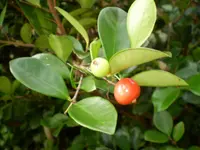
Mountain stopper, Eugenia reinwardtiana, is a tropical evergreen shrub or small tree grown for its glossy foliage and small, edible red berries. It usually has a dense, bushy form, which makes it suitable for hedges, screens, or large containers in warm climates.
This species is native to coastal rainforests and woodlands in northern Australia and parts of Southeast Asia and the Pacific. It prefers warm temperatures, good light, and well-drained soil.
Its moderate growth rate and tolerance of pruning make it manageable for home gardeners, though it dislikes cold and prolonged dryness. Understanding how to care for mountain stopper helps keep it productive and healthy over many years.

Care Difficulty
Moderate Care

Light Preference
Full Sun

Water Requirements
Moderate Water

Temperature Preference
Tropical / Frost Sensitive

Hardiness Zone
10–12

Soil Texture
Sandy, Loamy, Organic-rich

Soil pH
Acidic (5.5–6.5), Slightly acidic (6.5–7.0)

Soil Drainage
Moist but well-drained

Fertilization
Minimal (feed rarely)
Scan your plant to receive care tips personalized for your specific plant
Available on iOS and Android
Eugenia reinwardtiana prefers bright, gentle sun typical of its coastal rainforest origins.
Watering for Eugenia reinwardtiana focuses on consistent moisture without waterlogging the roots.
This subtropical shrub prefers warm, stable temperatures and is sensitive to frost.
This species prefers moderately humid air but usually tolerates typical indoor levels.
This plant grows best in loose, slightly acidic to neutral, well-drained mixes that stay evenly moist but never waterlogged.
This species is well suited to container growing when root space and stability are managed carefully.
Eugenia reinwardtiana benefits from modest, consistent feeding to support foliage and fruit, especially in containers.
Eugenia reinwardtiana responds well to light structural pruning that maintains a dense, healthy canopy.
Container-grown plants and young landscape specimens benefit from careful transplanting to maintain steady growth.
Eugenia reinwardtiana is commonly propagated from semi-hardwood cuttings or fresh seed under warm, humid conditions.
This subtropical species is frost-sensitive and needs protection in regions with cold winters.

Plant Health Check
Not sure what's wrong with your plant? Check your plant's health inside the app.
This coastal shrub often grows just behind tropical beaches in northern Australia and Southeast Asia, tolerating salty wind and sandy, nutrient-poor soils better than many other fruiting species.
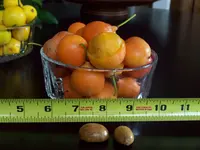
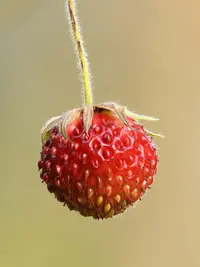
The small orange to red fruits have a mild, sweet flavor often compared to a soft berry or mild apricot, and are eaten fresh or used in jams and desserts in parts of its native range.
Its fruit is an important food source for birds and other small animals in lowland rainforests and coastal scrub, helping disperse seeds and maintain plant diversity in these habitats.

In some coastal Australian communities, this species has been planted as a low, dense hedge or shelterbelt because it combines edible fruit with a compact growth habit and good tolerance of salt-laden winds.
This species usually reaches 2–4 m tall and 1.5–3 m wide in garden conditions, forming a dense, rounded shrub or small tree. Growth is slower and size smaller in containers or exposed, windy sites.
Keep your plants happy and healthy with plant identification, disease detection, and easy care guidance.