Early framework training
During the first 3–5 years, select 3–5 well-spaced main branches and lightly shorten or remove competing shoots in late summer to build a strong, open framework that carries the heavy flower display safely.

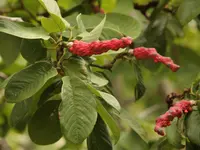
Campbell's magnolia (Magnolia campbellii) is a large, deciduous tree valued for its early spring display of large, cup-shaped flowers. The blossoms appear on bare branches, often in shades of white, pink, or rosy purple, creating a strong focal point in gardens and parks.
This species is native to the Himalayan region and nearby mountain areas, where it grows in cool, moist forests. It forms a broad crown with strong branches and needs space to reach its full size.
Magnolia campbellii prefers mild climates, sheltered sites, and evenly moist, well-drained, slightly acidic soil. Understanding how to care for Campbell's Magnolia helps gardeners avoid frost damage to buds and support healthy long-term growth.

Care Difficulty
Hard Care

Light Preference
Full Sun

Water Requirements
Regular Water

Temperature Preference
Cool Climate

Hardiness Zone
7–9

Soil Texture
Loamy, Silty, Organic-rich

Soil pH
Acidic (5.5–6.5), Slightly acidic (6.5–7.0)

Soil Drainage
Moist but well-drained

Fertilization
Minimal (feed rarely)
Scan your plant to receive care tips personalized for your specific plant
Available on iOS and Android
This large deciduous tree needs bright, cool sun exposure to flower well and grow steadily.
Magnolia campbellii needs consistently moist but not saturated soil, especially while young and establishing roots.
This magnolia prefers a cool, mild climate with protection from temperature extremes.
This species is fairly tolerant of a wide humidity range but benefits from moderate ambient moisture.
Magnolia campbellii prefers deep, moisture-retentive yet well-drained soil with high organic content.
This species is generally unsuited to long-term container growing due to its eventual large size and root system.
This magnolia benefits from modest, steady nutrition rather than heavy feeding.
Pruning Magnolia campbellii is mainly corrective, aimed at maintaining structure and health rather than tight size control.
This magnolia is usually grown in the ground; transplanting young trees carefully is more important than repeated repotting.
Magnolia campbellii is slow to establish from propagation, and most home gardeners rely on nursery-grown grafted plants.
This magnolia is moderately cold hardy but flower buds are sensitive to late frosts, especially in colder regions.

Plant Health Check
Not sure what's wrong with your plant? Check your plant's health inside the app.
Magnolia campbellii is native to montane forests of the central and eastern Himalayas, where it grows at relatively high elevations in cool, moist conditions alongside rhododendrons and other temperate broadleaf trees.
In its native and mild-climate habitats, this species often blooms in late winter, producing large flowers on bare branches before the leaves emerge, which makes the display striking but also vulnerable to late frosts.
Its showy blossoms have numerous petal-like structures called tepals, typically in shades of white to deep rose-pink, reflecting the ancient evolutionary lineage of magnolias where sepals and petals are not clearly separated.

Magnolia campbellii is considered one of the largest-flowered tree species in cultivation, with individual blossoms that can reach around 20–25 cm across under favorable conditions, making it a prominent feature in many historic gardens and arboreta.
Lack of flowers often comes from the tree being too young, frost damage to buds, heavy pruning at the wrong time, or deep shade. Nutrient-poor or overly dry soil also reduces bud formation and flowering reliability.
Keep your plants happy and healthy with plant identification, disease detection, and easy care guidance.