Acer palmatum var. dissectum Care

Acer palmatum var. dissectum

About Acer palmatum var. dissectum

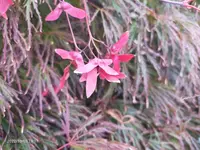
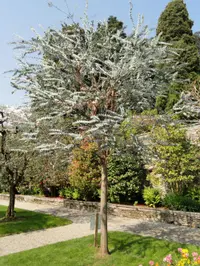
Acer palmatum var. dissectum is a finely textured form of the Japanese maple, valued for its lace-like, deeply cut leaves and graceful, cascading habit. It usually grows as a small, mounded tree or large shrub, making it suitable for compact gardens and decorative focal points.

This variety originates from Japan and surrounding regions, where it grows in woodland conditions with dappled light and consistent moisture. Its thin foliage and shallow roots mean it dislikes harsh wind, strong afternoon sun, and very dry or waterlogged soils, which influences how to care for Acer palmatum var. dissectum.

Given the right sheltered site with moisture-retentive, well-drained soil, it is a moderate-care plant that rewards attention with strong seasonal color and refined structure.


Main Plant Requirements

Care Difficulty

Moderate Care

Light Preference

Partial Shade

Water Requirements

Moderate Water

Temperature Preference

Cold Hardy

Hardiness Zone

5–8

Soil Texture

Loamy, Sandy, Organic-rich

Soil pH

Acidic (5.5–6.5), Slightly acidic (6.5–7.0)

Soil Drainage

Moist but well-drained

Fertilization

Minimal (feed rarely)

Get Personalized Care Plan

Scan your plant to receive care tips personalized for your specific plant

Available on iOS and Android

How to Care for the Acer palmatum var. dissectum

This finely cut Japanese maple prefers bright, gentle light rather than intense full sun.

  • Provide 3–5 hours of morning sun with afternoon shade; dappled light under taller trees suits Acer palmatum var. dissectum well.
  • In hot summers, protect from strong midday and late-afternoon sun to prevent leaf scorch, especially on young or recently planted trees.
  • In cooler climates it tolerates more direct sun, but monitor foliage; sparse growth and lanky stems indicate too much shade and a need for slightly brighter exposure.

This shallow-rooted tree needs consistently moist but not saturated soil, especially in its first few years.

  • Water when the top 3–5 cm of soil feels dry, applying a slow, deep soak so moisture reaches the full root zone.
  • In summer, check soil 2–3 times per week during heat or wind; in cool or rainy seasons, water far less and skip if soil still feels damp.
  • Yellowing leaves, wilting with wet soil, or soggy, sour-smelling ground suggest overwatering; crisp leaf edges and dry, cracked soil signal underwatering and poor Acer palmatum var. dissectum care.

This maple prefers cool to mild conditions with protection from extreme heat and severe cold.

  • Ideal growing temperatures are about 60–75°F (16–24°C) during the growing season, with cooler nights improving leaf color.
  • Mature trees tolerate winter lows near 0°F (−18°C) once established, but young plants benefit from mulch over roots to buffer freeze–thaw cycles.
  • In heat waves above 90°F (32°C), provide extra shade and soil moisture; hot, dry winds can scorch foliage even if air temperature is within the normal range.

This maple prefers moderate outdoor humidity but mainly reacts to prolonged dry air and heat.

  • Aim for 40–60% humidity in sheltered sites, avoiding hot reflected surfaces that dry foliage quickly.
  • Watch for browning leaf edges and crispy tips during heat or wind as signs of low humidity stress.
  • Increase local humidity by mulching the root zone 5–8 cm deep and providing light wind protection with shrubs or fencing.

This maple performs best in cool, moist, well‑aerated soil that drains freely but does not dry out quickly.

  • Use a loamy, organic‑rich structure, for example 50–60% garden loam with compost plus bark fines for added structure.
  • Ensure rapid drainage by avoiding compacted clay; incorporate coarse bark or sharp sand where water lingers after rain.
  • Keep pH slightly acidic to neutral, around 5.5–7.0, since higher pH often leads to chlorosis and weak growth.
  • For Acer palmatum var. dissectum, avoid soggy low spots; raise the planting area or create a broad, shallow mound to protect fine feeder roots.

This maple is suitable for container growing when the pot is chosen to support its shallow, spreading root system.

  • Select a wide, heavy container that resists tipping in wind and allows the root flare to sit just above the soil line.
  • Choose a potting mix that drains very quickly yet holds some moisture, such as bark‑based mix with added pumice or coarse perlite.
  • Leave 3–5 cm between soil surface and pot rim so overhead watering does not overflow and fine roots remain evenly moistened.

Light, balanced feeding supports healthy foliage color and moderate growth in Acer palmatum var. dissectum.

  • Apply a balanced slow-release fertilizer (around 10-10-10) or well-rotted compost once in early spring as new growth begins.
  • Use at half the label rate for trees in the ground; in containers, use a diluted liquid feed every 4–6 weeks in spring–mid-summer.
  • Stop feeding by late summer to avoid tender late growth and give only water during fall and winter dormancy.
  • Keep fertilizer off the trunk and fine roots, applying in a wide ring over the root zone, then water in thoroughly.

Thoughtful pruning maintains the natural cascading form of Acer palmatum var. dissectum without stressing the tree.

  • Prune in late summer or mid-winter when sap flow is lower to reduce bleeding from cuts.
  • Remove dead, diseased, damaged, or crossing branches first, using sharp, clean bypass pruners or a fine-toothed saw.
  • Thin dense interior twigs lightly to improve air flow and light penetration while preserving the layered structure.
  • Make small, clean cuts just above a bud or branch junction and avoid heavy heading cuts that spoil the weeping shape.

Transplanting or repotting must be done gently to protect the fine, fibrous roots of Acer palmatum var. dissectum.

  • Plan major transplanting or repotting for early spring before bud break, or in early fall while soil is still warm.
  • Look for slowed growth, roots circling the container, or water running off quickly as signs a container plant needs more space.
  • Repot container trees about every 3–4 years into a slightly larger pot with free-draining, slightly acidic mix and minimal root disturbance.
  • Reduce root stress by pruning only damaged roots, watering thoroughly before and after the move, and shading the tree from hot sun for several weeks.

Propagation of Acer palmatum var. dissectum is possible but slow and often used mainly by skilled growers.

  • Use grafting onto vigorous Acer palmatum rootstock in late winter as the most reliable method for maintaining cultivar traits.
  • Take semi-hardwood cuttings in midsummer, apply rooting hormone, and place in a high-humidity, bottom-warmed environment, though success rates are modest.
  • Sow fresh seed outdoors in fall or cold-stratify in the fridge for 2–3 months before spring sowing to break dormancy.
  • Air layering selected branches in late spring can produce rooted plants over several months while keeping the parent branch supplied.

Mature Acer palmatum var. dissectum is moderately cold hardy but benefits from basic winter protection in harsher climates.

  • Tolerates light to moderate frost, but young trees and container plants are more vulnerable to freeze damage.
  • Apply 5–8 cm of organic mulch over the root zone in late fall, keeping it a few cm away from the trunk.
  • Wrap the lower trunk with breathable tree wrap in very cold or windy sites to limit bark cracking and sunscald.
  • Move containers to a sheltered, unheated garage or against a protected wall, insulating pots with foam or burlap if prolonged freezes are expected.

Care Tips

Branch layering

To create a fuller, cascading form, gently pin a low flexible branch to the soil surface with a U-shaped wire peg and lightly cover it with soil, then sever and pot up the rooted section after 1–2 years once it has formed a strong independent root system.

Wind protection

Install a low, breathable windbreak such as lattice, shrub hedging, or shade cloth on the windward side to reduce leaf shredding and winter desiccation without trapping heat or causing stagnant air.

Trunk flare protection

Keep mulch and soil pulled back 5–8 cm from the trunk base so the root flare stays visible, which reduces the risk of collar rot and girdling roots as the tree matures.

Targeted root shielding

When planning hardscape like paths, patios, or edging, leave a root protection zone at least 60–90 cm from the trunk and avoid deep trenching or frequent soil compaction in that area to preserve fine feeder roots important for Acer palmatum var. dissectum care.

Summer leaf cooling

During short periods of extreme heat and low humidity, lightly syringe the foliage with clean water in early morning or early evening to cool leaves and reduce stress, avoiding midday splashing under intense sun to prevent leaf scorch spots.

Common Pests and Diseases

Verticillium wilt

This disease causes sudden wilting and branch dieback, often starting on one side of the tree, with discolored streaks sometimes visible in the sapwood. Symptoms include leaves that scorch, curl, and drop early even when soil moisture is adequate.

Solution

Prune out affected branches well below discolored wood, disinfecting tools between cuts, and dispose of all infected material away from other maples. Avoid overwatering and mechanical root damage, improve soil drainage and organic matter, and if decline continues, replace the tree with a non-susceptible species rather than trying to grow Acer palmatum var. dissectum again in the same spot.

Pseudomonas leaf spot

This disease produces small black or brown angular spots on young leaves, which may coalesce into larger blotches and cause leaf distortion or early drop. Symptoms include more severe damage after cool, wet spring weather or late frosts.

Solution

Remove and discard infected leaves from the tree and ground to reduce bacterial load, and avoid overhead watering that keeps foliage wet. Improve air circulation through careful thinning cuts, protect new growth from late frosts if possible, and in high-value specimens consider a copper-based spray in early spring according to label directions.

Phytophthora collar rot

This disease attacks the lower trunk and root collar, leading to dark, sunken bark, poor vigor, and progressive canopy dieback. Symptoms include sparse foliage, small leaves, and branches dying back from the tips over several seasons.

Solution

Expose the root collar by removing excess mulch and soil, and discard any loose, rotted bark without cutting into healthy tissue. Improve drainage, keep irrigation away from the trunk, avoid waterlogged conditions, and if decline is advanced, remove the tree and avoid replanting another Japanese maple in the same poorly drained location.

Japanese maple scale

This pest appears as tiny, hard, oyster-shell-like bumps on branches and twigs, causing twig dieback, leaf yellowing, and overall thinning of the canopy. This pest feeds on sap and can weaken dissected Japanese maples over several years if not managed.

Solution

Prune out heavily infested twigs and destroy them, then scrub remaining colonies gently with a soft brush if feasible on small plants. For larger trees, apply a horticultural oil spray during crawler emergence or in late winter to smother scales, following label directions and avoiding application during extreme heat or drought stress.

Leaf scorch

This disorder causes brown, crisp edges on leaves, especially on dissected cultivars exposed to hot sun, wind, or low soil moisture. Symptoms include entire leaves browning and dropping early on exposed branches, while shaded interior foliage remains healthier.

Solution

Provide afternoon shade, shelter from drying winds, and maintain even soil moisture with 5–8 cm of organic mulch kept clear of the trunk. Avoid high-salt fertilizers, water deeply but infrequently during hot weather, and if needed consider relocating container-grown plants to a more protected site to improve overall Acer palmatum var. dissectum care.

Interesting Facts

Naturally cascading growth

This maple typically develops a low, dome-shaped canopy with strongly weeping branches that can form layered, skirt-like structures over time, a habit much less common in the straight species Acer palmatum.

Finely dissected leaf blades

Its leaves are divided into many narrow, deeply cut lobes, increasing the surface area-to-volume ratio and giving a lace-like texture that responds dramatically in color to seasonal changes in light and temperature.

Genetically unstable seedlings

Plants grown from seed very rarely reproduce the same finely dissected foliage and weeping habit, which is why this maple is almost always propagated clonally by grafting onto a more vigorous Acer palmatum rootstock.

Botan icon

Did you know?

Historical records from Japan indicate that dissected, pendulous Japanese maples were already being selected, named, and cultivated by horticulturists in temple and courtyard gardens by at least the Edo period (1603–1868), making them part of a centuries-long tradition of ornamental maple breeding.

FAQs about Acer palmatum var. dissectum

Growth is generally slow to moderate, about 15–30 cm per year once established. Rate depends on climate, soil quality, moisture, and root space. Container-grown plants usually grow more slowly than those planted in the ground.

Grow Healthy Plants with Botan Care

Keep your plants happy and healthy with plant identification, disease detection, and easy care guidance.

Botan plant care app — identify plants on mobile

Explore More Plants