Train Early Vines
Install a sturdy trellis or wire mesh at planting time and loosely tie young stems with soft ties so the plant climbs in an organized pattern instead of tangling over nearby shrubs or fences.

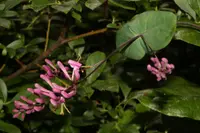
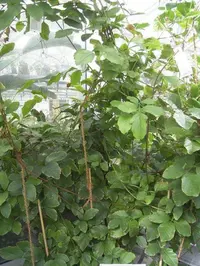
Pink honeysuckle (Lonicera hispidula) is a woody, twining vine native to the Pacific Coast of North America, especially in California and Oregon. It is semi-evergreen in mild climates and typically climbs over shrubs, fences, or trellises.
The plant produces whorls of tubular pink to rose flowers followed by clusters of bright red berries, which attract hummingbirds and other wildlife. Its foliage is medium green, sometimes with pairs of leaves fused around the stem.
This species is generally considered hardy and adaptable, tolerating a range of garden conditions once established. It prefers sun to light shade, moderately moist but well-drained soil, and benefits from support structures, which influences how to care for pink honeysuckle in home gardens.

Care Difficulty
Easy Care

Light Preference
Full Sun

Water Requirements
Moderate Water

Temperature Preference
Cold Hardy

Hardiness Zone
7–10

Soil Texture
Sandy, Loamy, Rocky

Soil pH
Acidic (5.5–6.5), Slightly acidic (6.5–7.0)

Soil Drainage
Well-drained

Fertilization
Minimal (feed rarely)
Scan your plant to receive care tips personalized for your specific plant
Available on iOS and Android
This Pacific coast vine prefers bright exposure with some protection from harsh afternoon sun.
This species prefers evenly moist but free-draining soil, especially during establishment.
This hardy North American honeysuckle tolerates a wide temperature range once established outdoors.
Humidity is not a critical factor for Lonicera hispidula, which adapts well to most outdoor conditions in its range.
Lonicera hispidula prefers moderately fertile, well-structured soil that drains freely yet holds some moisture.
This species can be grown in containers if the pot is large and stable enough to support its climbing habit.
This native vine generally needs modest feeding, especially when grown in garden soil rather than wild conditions.
Pruning Lonicera hispidula helps control size, maintain structure, and support healthy flowering.
This vine is more often transplanted in the landscape than kept long term in containers.
Lonicera hispidula is commonly propagated by cuttings or simple layering for reliable cloning of desired plants.
This species is generally cold hardy in much of its range and needs minimal winter attention in the ground.

Plant Health Check
Not sure what's wrong with your plant? Check your plant's health inside the app.
In its native Pacific coast range, this shrub is a key nectar source for Anna’s and rufous hummingbirds, which time part of their feeding activity to its late spring and summer flowering period.
Although often described as semi-evergreen or deciduous, in coastal areas with mild winters this honeysuckle can retain much of its foliage year-round, providing persistent cover and structure for wildlife.
The bright pink to red berries form in tight clusters and are mildly toxic to humans but readily eaten by native birds, which disperse the seeds through their droppings and help maintain wild populations.

This species naturally hybridizes with the related Lonicera ciliosa where their ranges overlap in the Pacific Northwest, and these hybrids can show intermediate traits in flower color, leaf shape, and growth habit, which sometimes complicates field identification for botanists.
This species is very attractive to hummingbirds, native bees, and some butterflies due to its tubular flowers and summer nectar. Planting it supports local pollinators and can increase overall pollination in a wildlife-friendly garden.
Keep your plants happy and healthy with plant identification, disease detection, and easy care guidance.