Bushveld Grape Care (Rhoicissus revoilii)

Also known as: Bitter Forest Grape, Warty Grape
Bushveld Grape

About Bushveld Grape

Bushveld grape, Rhoicissus revoilii, is a woody climbing vine from southern Africa, often found scrambling through bushveld and woodland edges. It belongs to the grape family and forms long, flexible stems that can drape or climb with support.

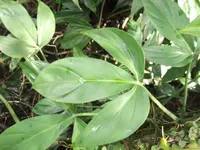
The plant is usually grown for its decorative foliage, with divided, glossy leaves that create a dense, green curtain effect. Its growth habit makes it suitable for hanging baskets, trellises, or as a cascading houseplant in bright rooms.

This species is generally considered moderate in difficulty, as it prefers stable warmth, bright indirect light, and evenly moist but well-drained soil. Understanding how to care for Bushveld Grape mainly involves providing consistent conditions and avoiding waterlogging or extreme dryness.

Main Plant Requirements

Care Difficulty

Moderate Care

Light Preference

Bright Indirect Light

Water Requirements

Moderate Water

Temperature Preference

Tropical / Frost Sensitive

Hardiness Zone

11–12

Soil Texture

Sandy, Loamy, Organic-rich

Soil pH

Acidic (5.5–6.5), Slightly acidic (6.5–7.0)

Soil Drainage

Moist but well-drained

Fertilization

Light (every 4–6 weeks)

Get Personalized Care Plan

Scan your plant to receive care tips personalized for your specific plant

Available on iOS and Android

How to Care for the Bushveld Grape

This vine prefers bright, indirect light that mimics dappled woodland sun.

  • Provide 4–6 hours of bright, filtered light daily, such as under light tree shade or behind a sheer curtain indoors for Bushveld Grape.
  • Allow gentle morning sun but protect from harsh midday and afternoon sun, which can scorch leaves and cause pale, crispy patches.
  • In winter, move plants to the brightest spot available; in low light the vines may stretch, leaves shrink, and overall growth slows.

Watering should keep the soil lightly moist but never waterlogged.

  • Before watering Rhoicissus revoilii, let the top 2–4 cm of soil dry; check by feeling the soil rather than following a fixed schedule.
  • Use a free-draining mix and ensure excess water drains away; persistent wetness, yellowing leaves, or soft stems indicate overwatering and possible root rot.
  • In spring and summer, expect more frequent watering; in cooler months, extend intervals, watching for wilting, leaf curl, or very dry soil as signs to water.

Stable, mild temperatures support healthy growth and steady foliage development.

  • Aim for 65–80°F (18–27°C) for active growth; short spikes slightly above or below this range are usually tolerated if soil is not waterlogged.
  • Protect from temperatures below 45°F (7°C); light chill can slow growth, while frost can kill young shoots and severely damage mature vines.
  • In hot spells above 86°F (30°C), increase shade and airflow, and avoid placing the plant against heat-reflective walls that can overheat foliage.

This species prefers moderate air moisture and reacts if conditions stay very dry.

  • Aim for 40–60% humidity; typical home levels are usually acceptable if watering is consistent.
  • It tolerates short dry spells, but very dry heated rooms cause leaf edges to brown and curl.
  • Increase humidity with grouped plants or a nearby humidifier rather than misting, which offers only brief benefit.

Rhoicissus revoilii grows best in a loose, airy mix that drains quickly but retains some moisture.

  • Use a peat- or coco-based potting mix amended with 20–30% perlite and 10–20% fine bark for structure and aeration.
  • Keep pH near neutral, around 6.0–7.0, to support nutrient availability and reduce stress on roots.
  • Ensure fast drainage by avoiding heavy garden clay or unamended compost that compacts and stays waterlogged.
  • If the mix feels dense after watering, lighten it with extra perlite or bark chips to protect roots from rot.

This species is well suited to container growing due to its manageable root system and climbing habit.

  • Select a wide, weighty pot to counterbalance vining growth and reduce the risk of tipping when stems lengthen.
  • Provide a trellis or support fixed firmly in the container so the plant’s climbing stems do not pull the pot over.
  • Choose a pot material that matches your climate, such as thicker terracotta outdoors for stability and slower moisture swings.

This vine benefits from light, steady feeding during active growth but does not need heavy fertilization.

  • Use a balanced liquid fertilizer (for example 10-10-10) at 1/4–1/2 strength every 4–6 weeks in spring and summer for caring for Bushveld Grape.
  • Choose a slow-release granular fertilizer in early spring if a simpler once-per-season option is preferred.
  • Avoid feeding in late fall and winter when growth slows, especially in cooler indoor conditions.
  • Always water before applying fertilizer and never on very dry soil to reduce root burn risk.

Rhoicissus revoilii responds well to light structural pruning to keep growth dense and manageable.

  • Plan main pruning for late winter or early spring before vigorous new growth starts.
  • Use clean, sharp pruning shears to remove dead, damaged, or crossing stems first.
  • Shorten overly long or leggy vines to maintain desired size and encourage branching.
  • Pinch soft tips during the growing season to thicken the plant rather than lengthen it.

Container-grown plants appreciate periodic repotting to refresh soil and manage vigorous roots.

  • Check for roots circling the pot, emerging from drainage holes, or slowed growth as signs repotting is needed every 2–3 years.
  • Repot in early spring, just before strong growth starts, using a well-drained, organic-rich potting mix.
  • Move only 1 pot size up to limit transplant shock and maintain good root-to-soil balance.
  • Loosen circling roots gently, water thoroughly after potting, and keep in bright, indirect light for 1–2 weeks to reduce stress.

This species is commonly propagated from stem cuttings for consistent, true-to-type plants.

  • Take 8–12 cm semi-ripe stem cuttings in late spring or summer, each with 2–3 nodes.
  • Remove lower leaves, optionally dip the cut end in rooting hormone, and insert into a moist, well-drained mix.
  • Maintain high humidity and warm temperatures around 70–75°F with bright, indirect light for rooting.
  • Seeds are possible but slower and less reliable; cuttings are preferred for predictable Rhoicissus revoilii care.

This plant is sensitive to strong frost and needs mild winter conditions or indoor shelter in cold climates.

  • In regions below about 30°F, grow in containers and move indoors before the first hard frost.
  • Provide a cool, bright indoor spot and keep soil slightly drier than in summer without letting it fully dry.
  • In mild climates, mulch the root zone lightly to buffer soil temperature and moisture fluctuations.
  • Avoid cold drafts on indoor plants, especially near single-glazed windows or exterior doors.

Care Tips

Smart trellis training

Provide a sturdy trellis or mesh and loosely tie new vines horizontally with soft plant ties to encourage dense side-shooting and a fuller curtain of foliage instead of long, bare stems.

Regular vine renewal

Each year, remove 1–3 of the oldest, woodiest stems back to their base to stimulate fresh, flexible growth and prevent the plant from becoming a heavy, tangled mass.

Lightweight container choice

Use a wide, relatively shallow but heavy-bottomed pot so the plant’s climbing habit does not topple the container as vines elongate and foliage mass increases.

Targeted pest scouting

Inspect the undersides of leaves and the tender tips of new shoots every 1–2 weeks with a hand lens, focusing on sheltered nodes where spider mites and scale often settle on this species, and treat at first signs rather than after an outbreak.

Seasonal growth checks

At the start and end of the main growing season, gently unwind and re-position vines, removing weak or crossing stems, so that caring for Bushveld Grape stays manageable and the plant keeps an orderly, well-aerated framework.

Common Pests and Diseases

Spider mites

This pest thrives on Rhoicissus foliage in warm, dry indoor air and feeds on leaf sap, causing fine stippling, dulling, and webbing on leaves and stems.

Solution

Rinse foliage thoroughly with a strong but gentle stream of lukewarm water, then treat both leaf surfaces with insecticidal soap or horticultural oil every 7–10 days until no new damage appears, and increase humidity plus regular leaf washing to prevent reinfestation.

Scale insects

These insects attach along stems and leaf undersides as small bumps, sucking sap and producing sticky honeydew that can lead to sooty mold on Bushveld grape leaves.

Solution

Manually remove visible scale with a cotton swab dipped in isopropyl alcohol, prune heavily infested stems, and follow up with 2–3 applications of horticultural oil at 7–14 day intervals while improving light and airflow to support plant recovery.

Mealybugs

This pest appears as white, cottony clusters in stem joints and on roots, weakening vines and causing yellowing leaves and stunted growth if not controlled.

Solution

Isolate the plant, wipe off visible clusters with alcohol-dampened cotton, then treat above-ground and, if repotting, root zones with insecticidal soap or systemic insect granules labeled for container vines, repeating treatments until no new insects or cottony deposits are seen.

Powdery mildew

This disease shows as white, powdery patches on upper leaf surfaces, often in lower light and stagnant air, leading to distorted or prematurely dropping leaves.

Solution

Remove and discard affected leaves, increase light and airflow around the vine, avoid wetting foliage, and apply a sulfur-based or potassium bicarbonate fungicide labeled for ornamental vines at the first sign of infection, repeating per label directions.

Leaf spot

Symptoms include small brown or tan spots with darker edges that may merge, often starting on older leaves stressed by low light or irregular watering.

Solution

Trim and discard heavily spotted foliage, water at the soil level to keep leaves dry, improve air movement, and if spotting continues, use a copper-based fungicide according to label instructions while monitoring for overwatering or crowding that favors disease spread.

Interesting Facts

Climbing forest understory

This species is a slender, scrambling vine native to the understory of East African woodlands and forest margins, where it climbs through shrubs and small trees rather than forming massive woody lianas.

Distinctive three-lobed leaves

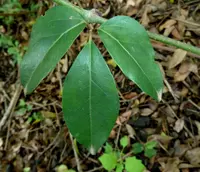
The foliage typically shows shallowly 3-lobed, somewhat ivy-like leaf blades with a leathery texture, an adaptation that helps reduce water loss in its often seasonally dry habitats.

Berry-forming grape relative

As a member of the grape family (Vitaceae), it produces small, spherical berries in clusters, providing food for local wildlife, though they are not used as an edible crop like true grapes.

FAQs about Bushveld Grape

This species is a scrambling, tendril-forming vine. It naturally climbs over supports, shrubs, or small trees, but can also trail from containers. Without support, stems sprawl and form a loose mound rather than a tight ground cover.

Grow Healthy Plants with Botan Care

Keep your plants happy and healthy with plant identification, disease detection, and easy care guidance.

Botan plant care app — identify plants on mobile

Explore More Plants