tree marigold Care (Tithonia diversifolia)

Also known as: Mexican sunflower
tree marigold

About tree marigold

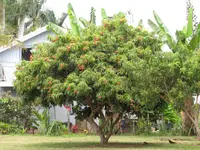
Tree marigold (Tithonia diversifolia) is a fast-growing, shrubby perennial known for its tall stems and large, bright yellow daisy-like flowers. It often forms dense, bushy clumps that can look almost like a small, informal hedge.

This species is native to Central America and Mexico but is now naturalized in many tropical and subtropical regions around the world. In warm climates it can flower over a long season and attract bees, butterflies, and other pollinators.

It responds well to full sun, moderate moisture, and well-drained soil, which makes it relatively straightforward to care for tree marigold in suitable climates, though it may become invasive in some regions.

Main Plant Requirements

Care Difficulty

Easy Care

Light Preference

Full Sun

Water Requirements

Moderate Water

Temperature Preference

Tropical / Frost Sensitive

Hardiness Zone

9–11

Soil Texture

Sandy, Loamy, Organic-rich

Soil pH

Acidic (5.5–6.5), Slightly acidic (6.5–7.0)

Soil Drainage

Well-drained

Fertilization

Minimal (feed rarely)

Get Personalized Care Plan

Scan your plant to receive care tips personalized for your specific plant

Available on iOS and Android

How to Care for the tree marigold

Tithonia diversifolia thrives in strong, direct sun for vigorous growth and flowering.

  • Provide 6–8 hours of direct sun daily; full sun all day is ideal in mild to warm climates.
  • In hotter areas, give tree marigold morning sun and light afternoon shade to reduce leaf scorch and moisture stress.
  • In autumn and winter, ensure plants are not shaded by buildings or trees, since low light reduces flowering and causes tall, weak, stretched stems.

This fast-growing shrub prefers moderately moist, well-drained soil rather than constant wetness.

  • Allow the top 3–5 cm of soil to dry before deep watering, so roots receive moisture without staying waterlogged.
  • In hot, dry periods, increase watering frequency if leaves wilt or curl, but avoid puddling or sour-smelling, soggy soil, which signals overwatering.
  • During cooler months or rainy seasons, reduce watering and rely more on natural rainfall, especially on established Tithonia diversifolia plants.

This species favors warm conditions and responds poorly to frost and prolonged cold.

  • Aim for active growth in 70–85°F (21–29°C), where stems, leaves, and flowers develop quickly.
  • Protect plants whenever temperatures drop near 32°F (0°C); light frost can burn foliage and repeated freezes may kill top growth.
  • In hot spells above 95°F (35°C), flowering can slow and leaves may scorch, so mulch the root zone and ensure consistent soil moisture.

This species tolerates a wide humidity range and usually does not need special humidity management outdoors.

This fast-growing shrub performs best in coarse, well-drained soil that does not stay waterlogged.

  • Use a loamy or sandy substrate enriched with compost to support rapid growth while staying free-draining.
  • Aim for slightly acidic to neutral pH, around 6.0–7.0, which suits Tithonia diversifolia root uptake.
  • Improve drainage and aeration by blending coarse sand or perlite at 20–30% of the mix volume.
  • Avoid heavy clay or compacted ground where water puddles, as this promotes root rot and weak stems.

This species can be grown in large containers outdoors, but only when the pot setup accounts for its tall, vigorous growth.

  • Choose a wide, heavy container to prevent tipping as stems become tall and top-heavy in wind.
  • Fill the pot with a coarse, fast-draining mix so rainfall and irrigation do not accumulate around the root zone.
  • Position the container where it cannot be easily knocked over, such as against a wall or inside a low support frame.

Tithonia diversifolia grows fast and responds well to moderate, balanced nutrition during its active season.

  • Use a balanced NPK fertilizer (such as 10-10-10) or well-rotted compost as the primary nutrient source.
  • Feed every 4–6 weeks in spring and summer, focusing on periods of strong vegetative growth and flowering.
  • Apply fertilizers at half the label strength to avoid excessive, weak growth and nutrient burn.
  • Reduce or stop feeding in late fall and winter, especially in cooler climates or when growth slows.

Pruning Tithonia diversifolia helps manage size, encourage branching, and extend flowering.

  • Do main shaping cuts in late winter or early spring before vigorous new growth starts.
  • Remove dead, diseased, or storm-damaged stems promptly using clean, sharp bypass pruners.
  • Thin out crowded or crossing branches to open the canopy and improve light penetration and air flow.
  • Head back tall, leggy shoots by one-third to encourage bushier growth and more flowering stems.

Tree marigold is usually grown in the ground, so focus on careful transplanting rather than frequent repotting.

  • Transplant young plants in spring after frost risk passes, when soil is workable and warming.
  • Look for roots circling the pot, quick drying of the soil, or slowed growth as signs a container plant needs a larger space.
  • Move up 1–2 pot sizes or into a prepared garden bed with well-drained soil, watering thoroughly after planting.
  • Gently loosen circling roots, keep as much root ball intact as possible, and provide shade and consistent moisture for 3–7 days to reduce stress.

Tithonia diversifolia is commonly propagated from cuttings and also from seeds in warm conditions.

  • Take 10–20 cm semi-hardwood stem cuttings in late spring or summer and remove lower leaves.
  • Insert cuttings into moist, well-drained medium, keeping them warm (70–80°F) and in bright, indirect light.
  • Optional rooting hormone on cut ends can improve rooting uniformity and speed.
  • Sow fresh seeds in warm soil in spring, keeping the surface lightly moist until germination.

Tithonia diversifolia is frost-sensitive and needs protection or replanting in colder climates.

  • In USDA zones 9–11, plants may overwinter in the ground with minimal care aside from good drainage.
  • In cooler zones, grow as an annual or lift container plants indoors to a bright, frost-free space.
  • Before first frost, cut back tall stems and apply a 5–8 cm mulch over the root zone in mild-winter areas.

Care Tips

Cut-and-drop mulching

After pruning, chop leafy stems into short pieces and use them as a surface mulch around the root zone to recycle nutrients, suppress weeds, and keep soil moisture more stable.


Wind-resistant staking

Install sturdy stakes or a low wire fence on the windward side in exposed sites, then loosely tie main stems so tall growth is supported without cutting into the tissue.

Sequential renewal pruning

In late winter or early spring, remove 20–30% of the oldest, woodiest stems at the base each year to keep the shrub vigorous, control height, and encourage stronger flowering shoots.

Soil-building hedgerows

Plant in a loose row along field or garden edges and prune several times a year, using the trimmings as green manure in nearby beds to improve soil structure and organic matter while growing tree marigold as a functional barrier.

Targeted pest scouting

Inspect the undersides of leaves and young shoots weekly during warm, humid periods so any outbreaks of aphids, whiteflies, or spider mites are caught early and managed with a strong water spray or targeted low-toxicity treatments before they spread.

Common Pests and Diseases

Aphids

This pest commonly colonizes young shoots and flower buds, sucking sap and causing curling, distortion, and sticky honeydew that can lead to sooty mold on tree marigold foliage.

Solution

Prune off heavily infested shoot tips, then wash remaining stems and leaves with a strong stream of water every few days; if needed, apply insecticidal soap or a light horticultural oil, making sure to coat the undersides of leaves and repeat until colonies are controlled.

Leaf beetles

These insects feed on the succulent foliage and sometimes flowers, chewing irregular holes that can skeletonize leaves on young or stressed plants.

Solution

Hand-pick adults and larvae into soapy water, reduce nearby weedy hosts, and if damage is severe, use a neem oil or spinosad spray targeted to the foliage in late afternoon to limit impact on pollinators.

Spider mites

This pest becomes a problem in hot, dry sites, causing fine stippling, dulling of foliage color, and fine webbing on the undersides of leaves.

Solution

Increase humidity around plants with occasional overhead rinsing, spray the foliage with a firm stream of water to dislodge mites, and use insecticidal soap or horticultural oil on the undersides of leaves at 5–7 day intervals until new growth appears clean; this is a key aspect of practical Tithonia diversifolia plant care in dry climates.

Powdery mildew

This disease appears as white, powdery patches on leaves and stems, which can cause yellowing and premature leaf drop under crowded or shaded conditions.

Solution

Improve air circulation by spacing and selective pruning, avoid frequent overhead watering in the evening, remove heavily infected leaves, and apply a sulfur or potassium bicarbonate fungicide to young foliage if the disease repeats seasonally.

Leaf spot

Symptoms include small brown or dark spots on leaves that may merge into larger blotches, often developing under prolonged warm, wet conditions or poor airflow around dense stands.

Solution

Collect and discard fallen infected leaves, avoid wetting foliage when irrigating, thin or prune to open the canopy, and if the problem recurs, use a copper-based fungicide on new growth at the start of humid periods to reduce spread.

Interesting Facts

Nitrogen-efficient biomass

This species produces large amounts of leafy biomass with relatively low carbon-to-nitrogen ratio, so its pruned leaves decompose quickly and are widely used as a green manure to improve soil fertility in tropical farming systems.

Phosphorus scavenging roots

Research has shown that its root system can access relatively unavailable phosphorus in soils, making it useful in agroforestry as a nutrient pump that brings phosphorus from deeper layers back to the surface through leaf litter.

Nectar-rich pollinator magnet

The large yellow flower heads provide abundant nectar and pollen over an extended blooming season, supporting bees, butterflies, and other pollinators in tropical and subtropical landscapes.

Botan icon

Did you know?

In some tropical regions this fast-growing shrub is managed as a contour hedge on sloping land, where its dense root system and frequent pruning help reduce soil erosion while simultaneously supplying cut foliage as high-quality mulch or fodder.

FAQs about tree marigold

In warm regions this species can spread vigorously by seed and stem pieces, sometimes behaving invasively along roadsides and disturbed soils. In home gardens, control spread by deadheading, removing volunteer seedlings, and avoiding planting near natural areas when regulations restrict it.

Grow Healthy Plants with Botan Care

Keep your plants happy and healthy with plant identification, disease detection, and easy care guidance.

Botan plant care app — identify plants on mobile

Explore More Plants