Support Taller Stems
In windy or exposed sites, place low hoop supports or short stakes early in the season so stems can lean on them, which reduces lodging and breakage when plants reach full height and set heavy flower and seed clusters.

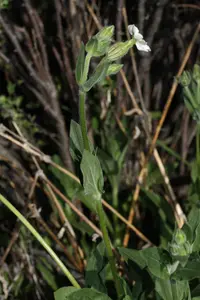
White campion, Silene latifolia, is a short-lived perennial or biennial wildflower often found in meadows, field margins, and roadsides. It is common across Europe and has naturalized in many parts of North America.
The plant forms upright stems with soft, slightly hairy leaves and showy white, five-petaled flowers held in inflated, bladder-like calyces. Flowers typically open in the evening and are pollinated by night-flying insects.
White campion tolerates poor soils and disturbed ground, which makes it relatively easy to establish in informal wildlife or meadow-style plantings. Those who want to care for White Campion should provide sun, moderate moisture, and well-drained soil.

Care Difficulty
Easy Care

Light Preference
Full Sun

Water Requirements
Moderate Water

Temperature Preference
Cold Hardy

Hardiness Zone
3–9

Soil Texture
Sandy, Loamy, Rocky

Soil pH
Slightly acidic (6.5–7.0), Neutral (7.0)

Soil Drainage
Well-drained

Fertilization
Minimal (feed rarely)
Scan your plant to receive care tips personalized for your specific plant
Available on iOS and Android
Silene latifolia prefers bright conditions with moderate direct sun and some daily shade.
Silene latifolia prefers moderately dry, well-drained soil rather than constant moisture.
This species is a hardy perennial adapted to temperate outdoor climates.
Humidity is not a major factor for Silene latifolia, which tolerates typical outdoor air in temperate climates.
Silene latifolia prefers light, well-drained mineral soils that do not stay wet for long.
This species can be grown in containers if the potting setup prevents prolonged root wetness.
Silene latifolia is a low-feeding wildflower that only needs modest nutrition in garden settings.
Pruning Silene latifolia helps extend flowering and keeps plants compact in borders or naturalized areas.
Silene latifolia is usually grown in the ground, so focus on careful transplanting rather than frequent repotting.
Silene latifolia plant care often includes renewing populations from seed or divisions in garden settings.
This species is generally cold hardy across much of the US and needs only simple winter care outdoors.

Plant Health Check
Not sure what's wrong with your plant? Check your plant's health inside the app.
This species is dioecious, meaning individual plants produce either only male or only female flowers, which makes natural populations strongly dependent on insect pollinators for successful seed production.
Its white, strongly scented flowers open in the evening and are primarily pollinated by nocturnal moths such as Hadena bicruris, which both pollinate the plant and lay eggs whose caterpillars can later feed on its seeds.
Silene latifolia has distinct X and Y sex chromosomes and is widely used as a model organism for studying the evolution of plant sex chromosomes and the genetics of separate sexes in flowering plants.

Silene latifolia is native to Europe and western Asia but has become a common naturalized weed in North America, where it often hybridizes with the closely related red campion (Silene dioica), forming fertile hybrids known as Silene × hampeana in areas where the two species overlap.
Lack of flowering often comes from too much shade, overly rich nitrogen fertilizer, or heavy, waterlogged soil. Ensure good sun exposure, lean well-drained soil, and avoid cutting back young growth just before the normal flowering season.
Keep your plants happy and healthy with plant identification, disease detection, and easy care guidance.