Self-seeding management
Mark where plants grow in spring and leave small bare patches of soil nearby so seed can fall and germinate, then thin crowded seedlings early to a spacing of 15–20 cm for sturdier growth and easier maintenance.

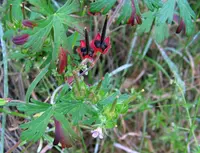
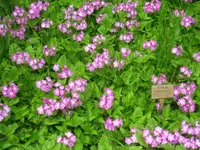
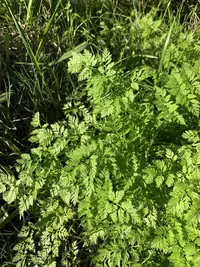
Carolina crane's-bill (Geranium carolinianum) is a small annual herb in the geranium family, often found in lawns, meadows, and disturbed ground. It forms low, branching clumps with finely divided, lobed leaves and small pale pink to whitish flowers.
In nature it occurs widely across North America, especially in open, sunny to lightly shaded sites with well-drained soils. Its ability to self-seed and tolerate poor, dry ground makes it easy to establish but sometimes weedy in gardens. Those who want to learn how to care for Carolina crane's-bill benefit from understanding its preference for sun, moderate moisture, and lean, not overly rich soil.

Care Difficulty
Easy Care

Light Preference
Full Sun

Water Requirements
Low Water

Temperature Preference
Cold Hardy

Hardiness Zone
3–8

Soil Texture
Sandy, Loamy, Rocky

Soil pH
Slightly acidic (6.5–7.0), Neutral (7.0)

Soil Drainage
Well-drained

Fertilization
Minimal (feed rarely)
Scan your plant to receive care tips personalized for your specific plant
Available on iOS and Android
This sun-loving annual prefers open, bright conditions for compact, healthy growth.
This species prefers slightly dry, well-drained conditions rather than consistently moist soil.
This hardy annual tolerates a wide temperature range but grows best in moderate conditions.
This species has flexible humidity needs and usually thrives in 30–60% indoor or outdoor air moisture.
Geranium carolinianum prefers light, well‑drained mineral soils that do not stay wet for long.
This species can be grown in containers if drainage and root space are managed carefully.
This adaptable native usually needs little feeding, especially in reasonably fertile soil.
Geranium carolinianum benefits from light, targeted pruning to keep plants compact and flowering well.
This annual or short-lived native is more often transplanted outdoors than repotted long-term in containers.
Propagation is most commonly done from seeds, which germinate readily under simple outdoor conditions.
This species is quite cold hardy and usually needs minimal winter care in its native range.

Plant Health Check
Not sure what's wrong with your plant? Check your plant's health inside the app.
This species is a short-lived annual geranium native to much of eastern and central North America, where it commonly colonizes disturbed, dry, or rocky soils such as roadsides, waste ground, and open woodlands.
Its narrow, beaked fruits resemble a crane’s bill, with a spring-loaded mechanism that helps fling the tiny seeds away from the parent plant when the fruit dries and splits.
Seedlings often form low, reddish-green basal rosettes in autumn or late winter, allowing the plant to photosynthesize in cool conditions and then bolt quickly to flower in spring before surrounding vegetation shades it.

Carolina crane's-bill is frequently used by ecologists and botanists as an indicator of early successional or recently disturbed habitats, because it is one of the first broadleaf wildflowers to appear and complete its life cycle before longer-lived perennials dominate the site.
This species germinates and establishes quite quickly, often reaching flowering size within a single season. Growth is fastest in cool, moist spring weather and slows or declines in hot, dry conditions or very poor, compacted soil.
Keep your plants happy and healthy with plant identification, disease detection, and easy care guidance.