


Host Root Management
Plant near established warm-season grasses or forbs but avoid planting directly into the dense crown so the delicate roots can still form the partial parasitic attachments they need without being outcompeted.

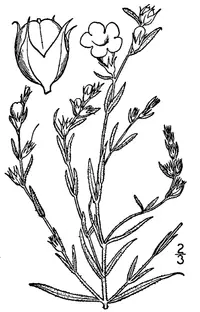
Prairie false foxglove (Agalinis heterophylla) is a small annual wildflower native to open prairies and sandy fields in North America. It typically grows upright with slender stems and fine, narrow leaves.
The plant bears delicate, tubular pink to purple flowers that attract bees and other pollinators late in the season. It is partially parasitic, drawing some nutrients from the roots of nearby grasses, which makes it less predictable in garden settings.
Because of this semi-parasitic habit and preference for natural prairie conditions, it can be challenging to establish in typical garden beds. Those who want to learn how to care for prairie false foxglove should focus on sunny, open sites with well-drained, low-fertility soil.

Care Difficulty
Moderate Care

Light Preference
Full Sun

Water Requirements
Moderate Water

Temperature Preference
Warm Climate

Hardiness Zone
5–9

Soil Texture
Sandy, Loamy

Soil pH
Acidic (5.5–6.5), Slightly acidic (6.5–7.0)

Soil Drainage
Well-drained

Fertilization
Minimal (feed rarely)
Scan your plant to receive care tips personalized for your specific plant
Available on iOS and Android
This annual prairie species thrives in open, sunny sites but tolerates light shade in hot regions.
This shallow-rooted annual prefers evenly moist, well-drained soil and does not tolerate standing water.
This warm-season annual grows best in moderate heat and is sensitive to hard frost.
This species grows best in relatively dry to moderately humid air and usually does not need special humidity control outdoors.
Soil for Agalinis heterophylla should be lean, well-drained, and slightly acidic to neutral.
This species is only moderately suitable for containers and performs more naturally in the ground.
This annual wildflower typically needs little or no fertilizer, especially in natural or restored prairie soils.
Pruning needs for Agalinis heterophylla are minimal and focus on clean-up rather than shaping.
This species is usually grown in the ground, so focus on careful transplanting of young plants rather than frequent repotting.
Propagation of prairie false foxglove is done almost entirely from seed rather than from cuttings or division.
Agalinis heterophylla is an annual that completes its life cycle in one season, so it needs almost no winter care.

Plant Health Check
Not sure what's wrong with your plant? Check your plant's health inside the app.
This species is hemiparasitic, meaning its roots tap into neighboring grasses and forbs to steal water and minerals while still performing its own photosynthesis.
It typically flowers in late summer to early fall on prairies and open sites, providing nectar for pollinators when many other native wildflowers have already finished blooming.
It is a true annual that completes its entire life cycle in a single growing season, relying on a persistent soil seed bank to reappear in suitable prairie and meadow habitats year after year.
This species is an annual wildflower. Each plant completes its life cycle in a single growing season, then dies after setting seed. Ongoing presence in a site depends on successful reseeding and suitable habitat conditions each year.
Keep your plants happy and healthy with plant identification, disease detection, and easy care guidance.

-200x133.webp)