Divide clumps
Lift and divide crowded clumps every 3–4 years in early autumn, replanting only the healthiest outer sections at the same depth to maintain strong flowering and reduce disease buildup in the center of the clump.

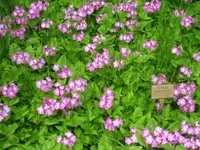
Siebold's primrose, Primula sieboldii, is a hardy, clump-forming perennial grown mainly for its delicate spring flowers. It belongs to the primrose family and typically grows in low mounds with slender stems topped by flat or slightly cupped flower clusters.
Flowers come in shades of pink, lavender, or white, often with fringed or notched petals, above soft, scalloped leaves that die back after flowering. In nature it occurs in moist woodlands and riverbanks in Japan and parts of East Asia.
It prefers cool conditions, partial shade, and consistently moist, humus-rich soil, which influences how to care for Siebold's primrose successfully in gardens.

Care Difficulty
Moderate Care

Light Preference
Partial Shade

Water Requirements
Keep Soil Moist

Temperature Preference
Cold Hardy

Hardiness Zone
4–8

Soil Texture
Loamy, Silty, Organic-rich

Soil pH
Acidic (5.5–6.5), Slightly acidic (6.5–7.0)

Soil Drainage
Moist but well-drained

Fertilization
Light (every 4–6 weeks)
Scan your plant to receive care tips personalized for your specific plant
Available on iOS and Android
This woodland perennial prefers cool, gentle light similar to bright forest edges.
This plant prefers evenly moist soil but reacts quickly to both drought and waterlogging.
This species thrives in cool to mild conditions and dislikes extreme heat.
This species prefers consistently cool, moist air but not an overly wet environment.
Primula sieboldii grows best in loose, moisture-retentive yet free-draining soil.
This species is suitable for cool, outdoor container growing when moisture is managed carefully.
Moderate feeding supports steady growth and flowering in Siebold's primrose without creating soft, weak foliage.
Targeted pruning keeps Primula sieboldii tidy and channels energy into new growth and flowers.
Transplanting and occasional repotting help this woodland perennial maintain a healthy root system and stable clumps.
Propagation of this species is commonly done to refresh aging clumps and increase stock.
This hardy perennial usually overwinters well in-ground in temperate climates with modest protection.

Plant Health Check
Not sure what's wrong with your plant? Check your plant's health inside the app.
Wild populations show stable color forms ranging from pure white to deep magenta, and these color variants are genetically fixed rather than only influenced by soil or light conditions.
In its native woodlands of Japan, Korea, and parts of China, this species completes most of its growth and flowering before trees fully leaf out, then retreats to underground buds to survive summer heat.
Since at least the Edo period in Japan, gardeners have selected and named hundreds of cultivars for petal shape, color patterns, and leaf form, treating the plant as a classic subject for horticultural exhibitions.

In parts of Japan, long-cultivated garden forms have declined so much in the wild that conservation programs now treat some local Primula sieboldii lines almost like heritage crops, preserving both regional genetics and traditional cultivar names.
Lack of flowering usually comes from plants being too dry in spring, overcrowded clumps, or heavy shade. Divide congested crowns every 3–4 years, keep soil evenly moist in spring, and avoid strong fertilizer during dormancy.
Keep your plants happy and healthy with plant identification, disease detection, and easy care guidance.