Myrtle spurge Care (Euphorbia myrsinites)

Also known as: Donkey Tail, Blue Spurge
Myrtle spurge

About Myrtle spurge

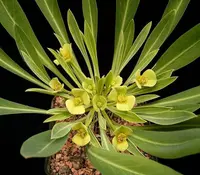
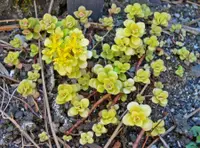
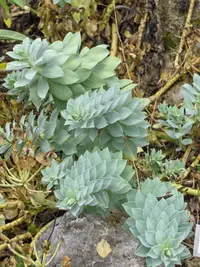
Myrtle spurge, Euphorbia myrsinites, is a low, trailing succulent perennial grown mainly for its blue-green, spiral-arranged leaves and chartreuse spring flowers. It forms dense, ground-hugging mounds that spread outward from a central crown, giving a structured, architectural look in rock gardens and dry borders.

This species is native to rocky, dry slopes in southeastern Europe and Asia Minor, so it copes well with poor, stony soils and limited water. Once established, it is drought tolerant and prefers full sun and sharply drained soil.

These traits make it relatively easy to grow but also potentially invasive in favorable climates. Gardeners who want to care for Myrtle spurge should handle it carefully, as its milky sap can irritate skin and eyes.

Main Plant Requirements

Care Difficulty

Easy Care

Light Preference

Full Sun

Water Requirements

Low Water

Temperature Preference

Cold Hardy

Hardiness Zone

4–8

Soil Texture

Sandy, Loamy, Rocky

Soil pH

Slightly acidic (6.5–7.0), Slightly alkaline (7.0–7.5)

Soil Drainage

Well-drained

Fertilization

Minimal (feed rarely)

Get Personalized Care Plan

Scan your plant to receive care tips personalized for your specific plant

Available on iOS and Android

How to Care for the Myrtle spurge

This sun-loving succulent thrives in bright, open exposures with minimal shade.

  • Provide 6–8 hours of direct sun daily; full sun all day is ideal in cool to mild climates for strong, compact growth.
  • In hotter regions, give Myrtle spurge full morning sun with light afternoon shade to reduce scorching of leaves and excessive moisture loss.
  • If stems stretch or foliage turns dull green, the site is too shaded; relocate to a brighter position, especially from late winter to early summer.

This drought-tolerant species prefers infrequent, deep watering and very fast-draining soil.

  • Allow the top 5–8 cm of soil to dry completely before watering; in most dry climates this may mean watering only every 10–21 days after establishment.
  • Use sharply drained, sandy or gravelly soil and raised beds or slopes so water never pools around roots, which reduces the risk of root rot.
  • Reduce watering further in cool or wet seasons; prune back soft, yellowing, or mushy stems as a sign of overwatering, and watch for shriveling as a sign of underwatering.

This hardy Mediterranean perennial tolerates a wide temperature range but prefers cool to warm conditions.

  • Optimal growth occurs around 55–75°F (13–24°C), especially in spring and early summer when days are bright and nights are cool.
  • Established plants tolerate cold down to about 0°F (−18°C) with good drainage, but young plants benefit from protection from hard frost and winter wet.
  • Heat tolerance is good up to about 90–95°F (32–35°C) if soil is very free-draining; provide slight afternoon shade and avoid reflected heat from walls or paving.

Humidity is not a significant factor for Euphorbia myrsinites, which prefers dry, airy conditions similar to its native habitats.

This species needs very fast-draining, mineral-based soil to prevent root rot and maintain healthy growth.

  • Use sandy or gritty soil with low organic content, similar to a cactus or succulent mix.
  • Aim for slightly alkaline to neutral pH, around 7.0–8.0, which suits its Mediterranean origin.
  • Blend coarse sand or fine gravel with a commercial succulent mix to boost drainage and aeration.
  • Avoid heavy clay, compacted substrates, or moisture-retentive peat mixes that keep roots wet for long periods.

This species is suitable for container growing, especially in shallow, wide pots that accommodate its spreading habit.

  • Choose a low, heavy container to counterbalance its trailing stems and reduce tipping in windy spots.
  • Select unglazed clay if faster drying is needed, or thicker ceramic if slowing moisture loss in hot climates is important.
  • Elevate the pot on feet or grid risers so gravity can pull water fully through the drainage holes after rain or irrigation.

This drought-tolerant succulent needs only light feeding to maintain compact, healthy growth.

  • Use a balanced, low-nitrogen granular or slow-release fertilizer formulated for cacti and succulents.
  • Feed once in spring, and again in mid-summer if growth is weak, avoiding late-season applications.
  • Apply at 1/2–1/4 the label strength to prevent soft, leggy growth in Myrtle spurge.
  • Never fertilize dry soil; water lightly first, then apply fertilizer to damp soil.

Thoughtful pruning keeps Euphorbia myrsinites dense, tidy, and flowering well.

  • Cut back spent flower stems in late spring or early summer to encourage fresh shoots.
  • Remove dead, damaged, or crossing stems anytime using clean, sharp hand pruners.
  • Shorten overly long, sprawling stems to maintain a compact, mounding shape.
  • Wear gloves and eye protection to avoid contact with the irritating milky sap when cutting.

This species is usually grown in the ground and needs infrequent transplanting once established.

  • Transplant in early spring or early fall, when temperatures are mild and soil is workable.
  • Move plants only if growth declines, clumps outgrow their space, or drainage is poor.
  • Lift with a generous root ball, disturb roots as little as possible, and replant at the same depth.
  • Water lightly after transplanting, then allow soil to dry between waterings to limit root stress and rot.

Euphorbia myrsinites is commonly propagated by seed and stem cuttings under suitable conditions.

  • Collect ripe seeds and sow in well-drained, sandy mix in spring, keeping slightly moist until germination.
  • Take non-flowering stem cuttings in late spring or early summer, wearing gloves for safety.
  • Let cut ends dry and callus for 1–2 days, then insert into barely moist, gritty substrate.
  • Provide bright, indirect light and warm temperatures around 65–75°F to support rooting and early growth.

This hardy perennial usually requires minimal winter care in most temperate climates.

  • Plants tolerate frost and short freezes, but benefit from sharply drained soil in winter.
  • In colder zones or exposed sites, add a light gravel mulch around the crown to keep roots drier.
  • Container-grown plants in very cold areas can be moved to a cold, bright, frost-free spot.

Care Tips

Glove-safe handling

Always wear gloves and long sleeves when cutting or moving stems, and rinse off any exposed skin promptly if the milky sap touches it, as the latex can cause irritation or allergic reactions.

Controlled spreading

Regularly remove unwanted creeping stems at the base before they root into nearby gravel or beds, and dispose of seed heads before they fully mature to limit self-seeding into paths and neighboring plantings.

Slope stabilization

Use the plant on sunny slopes or raised edges where its trailing stems can help cover bare soil and reduce erosion, spacing plants 25–35 cm apart to form an overlapping mat without crowding.

Rock garden placement

Tuck young plants into crevices between rocks or along retaining walls so the stems can cascade over the edge, which improves drainage around the crown and shows off the spiral foliage structure.

Safe division timing

If dividing established clumps, do this in cool, dry weather, keep roots shaded during the process, and replant divisions promptly while avoiding contact with the sap, which supports successful establishment when growing Myrtle spurge.

Common Pests and Diseases

Sap-sucking aphids

These insects cluster on young shoots and flower stems, sucking sap and sometimes leaving sticky honeydew that can attract sooty mold. Symptoms include distorted new growth and reduced flowering.

Solution

Dislodge colonies with a firm stream of water and pinch off heavily infested shoot tips. If needed, apply an insecticidal soap or a light horticultural oil, treating in the cool part of the day and repeating weekly until populations drop.

Leaf and stem mealybugs

These insects appear as white, cottony clusters in leaf axils and along stems, where they feed on sap and weaken plants. Symptoms include stunted growth, yellowing, and sticky honeydew deposits.

Solution

Isolate infested plants and dab visible mealybugs with cotton swabs dipped in isopropyl alcohol, then rinse the plant gently. For larger populations, use repeated applications of insecticidal soap, making sure spray reaches into crevices among the spiraled leaves common in Euphorbia myrsinites care.

Spider mites

These pests thrive in hot, dry conditions and can cause fine stippling, bronzing, and eventual leaf drop, often with delicate webbing between leaves and stems. This pest can be more noticeable on plants grown in very sheltered or reflective, heat-trapping sites.

Solution

Increase humidity around the plant slightly by occasional hosing, then rinse foliage thoroughly to remove mites and webbing. For persistent infestations, use insecticidal soap or a miticide labeled for ornamental succulents, repeating applications and monitoring regularly during hot, dry weather.

Crown and stem canker

This disease causes sunken, discolored lesions at the base of stems or along shoots, which can girdle the tissue and lead to dieback, especially in poorly drained sites. Symptoms include wilted or collapsing stems starting from the crown area.

Solution

Cut out affected stems well below the diseased area using clean tools and discard the debris, then improve drainage and avoid overhead watering. In heavy soils or repeatedly affected sites, consider raising the planting area or using a gritty, fast-draining medium, and avoid injuring stems near the soil line.

Powdery mildew

This disease appears as a white to gray, powdery coating on leaves and sometimes stems, more likely in humid, shaded, or overcrowded plantings. Symptoms include dull, mottled foliage and reduced vigor, though severe damage is uncommon in very sunny, dry sites.

Solution

Prune to improve air circulation and remove heavily infected shoots, disposing of them in the trash. If needed, apply a sulfur or potassium bicarbonate-based fungicide labeled for ornamentals, and reduce shade and crowding to lower humidity around the plant.```

Interesting Facts

Coiled trailing stems

This species forms long, spiraling stems with closely packed, blue-gray leaves arranged in a Fibonacci-like spiral, creating a distinctive geometric rosette pattern along each shoot.

Spring acid-yellow bracts

Its showy “flowers” are actually colorful bracts that turn bright yellow to yellow-green in spring, surrounding tiny true flowers that produce copious nectar for early-season pollinators.

Irritant milky latex

The plant contains a white latex sap that is both toxic if ingested and strongly irritating to skin and eyes, a typical feature of Euphorbia used as a defense against herbivores.

Botan icon

Did you know?

In several regions, especially parts of the western United States, this species is listed as a noxious or invasive weed because it spreads aggressively from seed and rhizome-like root fragments, allowing it to outcompete many native plants in dry, open habitats.

FAQs about Myrtle spurge

This species self-seeds heavily and spreads by trailing stems, often forming dense mats that outcompete nearby plants. In several US states it is listed as invasive, so check local regulations and control unwanted seedlings promptly.

Grow Healthy Plants with Botan Care

Keep your plants happy and healthy with plant identification, disease detection, and easy care guidance.

Botan plant care app — identify plants on mobile

Explore More Plants