yellow birch Care (Betula alleghaniensis)

Also known as: Gray birch, Silver birch, Swamp birch
yellow birch

About yellow birch

Yellow birch, Betula alleghaniensis, is a long-lived deciduous tree native to cool, moist forests of eastern North America. It is valued for its golden peeling bark and fine-textured foliage.

This species typically forms a tall, straight trunk with a rounded to irregular crown and provides strong autumn color in shades of yellow. The fragrant wood and twigs have a mild wintergreen scent.

Yellow birch prefers cool summers, consistent moisture, and deep, well-drained, slightly acidic soil, so it can be challenging in hot or dry sites. Gardeners who learn how to care for yellow birch usually focus on matching its natural, woodland conditions as closely as possible.

Main Plant Requirements

Care Difficulty

Moderate Care

Light Preference

Full Sun

Water Requirements

Regular Water

Temperature Preference

Cold Hardy

Hardiness Zone

3–7

Soil Texture

Loamy, Silty, Organic-rich

Soil pH

Strongly acidic (4.5–5.5), Acidic (5.5–6.5)

Soil Drainage

Moist but well-drained

Fertilization

Minimal (feed rarely)

Get Personalized Care Plan

Scan your plant to receive care tips personalized for your specific plant

Available on iOS and Android

How to Care for the yellow birch

This species prefers cool, bright conditions with protection from intense afternoon sun.

  • Provide 4–6 hours of sun daily, ideally morning sun with light shade after midday, especially for young yellow birch trees.
  • Allow partial shade in hotter regions; dappled or filtered light under taller trees mimics its natural forest-edge habitat.
  • Watch foliage for stress: scorched, brown-edged leaves suggest too much direct afternoon sun, while sparse, elongated shoots indicate insufficient light.

This tree prefers consistently moist, cool soil without prolonged saturation.

  • Aim for soil that stays evenly moist to 10–15 cm depth; the surface may dry slightly between rains or waterings but deeper soil should not fully dry.
  • Increase water during hot, dry periods, using slow, deep soaking rather than frequent light sprinkling to support Betula alleghaniensis roots.
  • Improve drainage with organic matter and monitor for stress: yellowing leaves and dieback often signal waterlogging, while crisp, curling leaves indicate drought.

This species is adapted to cool-temperate climates with cold winters and mild summers.

  • Optimal growing temperatures in the growing season are around 60–75°F (16–24°C), with best performance in areas that avoid prolonged summer heat above 85°F (29°C).
  • The tree tolerates winter cold to about -30°F (-34°C) when fully dormant, which suits many northern and upland climates.
  • New leaves are vulnerable to late spring frosts; in exposed sites, cold snaps below 28°F (-2°C) after budbreak can damage young growth and reduce vigor.

This species prefers cool, moderately humid air but adapts to a fairly wide range outdoors.

  • Aim for 40–60% humidity; brief drops lower are tolerated if soil moisture is consistent.
  • Dry air may cause browning at leaf edges and faster leaf drop, especially in heat or wind.
  • Use windbreaks, organic mulch over the root zone, or nearby understory planting to reduce evaporative stress on yellow birch foliage.

Betula alleghaniensis grows best in moist, cool, well-aerated soil with steady drainage.

  • Use a deep, loamy profile rich in organic matter, combining native soil with 30–40% composted leaf mold or well-rotted bark fines.
  • Maintain evenly moist but not waterlogged conditions; avoid sites where water stands for more than a few hours after rain.
  • Target a slightly acidic pH around 5.0–6.5; incorporate acidifying materials like pine needles or peat moss if native soil is neutral to alkaline.
  • Improve aeration and drainage on heavier soils by blending in coarse sand and fine gravel, and avoid compacted or heavily trafficked root zones.

This tree is generally unsuited to long-term container growing and performs best planted in the ground.

This native tree usually grows well in average garden soil, so fertilizing yellow birch is modest and targeted rather than routine.

  • Use a light application of balanced slow-release fertilizer or compost in early spring only if growth is weak or leaves look pale.
  • Apply once per year during the growing season, keeping granules off the trunk and watering in thoroughly.
  • Avoid high-nitrogen products and use at 1/2 label strength to reduce salt stress on fine feeder roots.
  • Skip feeding in late summer and winter to allow wood to harden and the tree to remain fully dormant.

Pruning Betula alleghaniensis is mainly corrective, aiming to maintain a stable structure and remove problem wood.

  • Schedule main pruning during late winter while the tree is fully dormant, before sap flow increases in spring.
  • Remove dead, broken, crossing, or inward-growing branches first, using clean, sharp bypass pruners or a pruning saw.
  • Thin congested interior shoots lightly to improve air flow and light, which supports healthier bark and foliage.
  • Avoid heavy crown reduction; instead, make small cuts back to branch collars to preserve the tree’s natural form.

This species is rarely kept long-term in containers; care focuses on correct transplanting of young trees into the landscape.

  • Transplant in early spring or early fall when soil is moist and temperatures are mild, reducing transplant shock.
  • Look for circling roots, a pot-bound root ball, or stalled growth as signs container plants need a larger site.
  • Dig a wide planting hole no deeper than the root ball, loosening outer roots gently without breaking major roots.
  • Water thoroughly after planting, apply a 5–8 cm mulch ring kept off the trunk, and maintain even soil moisture.

Propagation of Betula alleghaniensis is usually done from seed by nurseries and can be slow for home growers.

  • Collect ripe seed in late summer to early fall and store cool and dry until sowing.
  • Provide cold stratification at about 34–41°F for 6–8 weeks to break seed dormancy.
  • Sow on the surface of a well-drained, sterile mix, as birch seed needs light for best germination.
  • Keep the medium evenly moist and cool, with good air flow, since seedlings are sensitive to drying and damping-off.

This cold-hardy birch generally needs minimal winter care once established in the ground.

  • Young trees benefit from a 5–8 cm mulch layer over the root zone to reduce freeze–thaw heaving.
  • Use breathable trunk guards on saplings in snowy climates to limit sunscald and rodent damage.
  • Container-grown plants, if any, should be moved to an unheated but sheltered space where roots stay above about 20°F.

Care Tips

Protect Shallow Roots

Lay a 5–8 cm ring of leaf mulch or shredded bark over the root zone each fall, keeping it a few cm away from the trunk, to buffer soil temperature and moisture without smothering the roots.

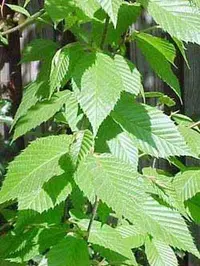
Encourage Straight Leader

In the first 5–7 years, select one strong central leader and prune out or lightly shorten competing upright shoots in late winter to develop a stable, storm‑resistant crown.

Manage Root Competition

Avoid planting aggressive lawn grasses or thirsty shrubs within the drip line, and instead use a thin mulch and low-root-competition groundcovers to reduce stress on the birch’s fine feeder roots.

Monitor Bronze Birch Borer

From late spring through summer, inspect the upper trunk and major branches for thinning foliage, dieback, and small D-shaped exit holes, and consult a certified arborist early if symptoms appear, as timely intervention is critical when growing yellow birch in borer-prone areas.

Use Snow As Insulation

In cold regions, allow undisturbed snow to remain over the root zone in winter, since the snowpack acts as natural insulation that reduces freeze–thaw damage to the shallow root system.

Common Pests and Diseases

Bronze birch borer

This pest is a metallic wood-boring beetle whose larvae tunnel under the bark, causing dieback of upper branches and eventual tree decline. Symptoms include sparse foliage, yellowing leaves, and D-shaped exit holes on the trunk and branches.

Solution

Reduce stress by keeping the tree well-watered during dry periods, mulching the root zone, and avoiding trunk injury. Prune out and destroy infested branches as soon as dieback appears and, for high-value trees, consider a certified arborist to apply systemic insecticides or trunk injections timed to adult emergence.

Birch leafminer

These insects are small sawfly larvae that feed inside birch leaves, creating pale, blotchy mines between the leaf surfaces. Symptoms include browning and crisping of mined areas, which can make the canopy look scorched.

Solution

Rake and dispose of fallen leaves to reduce overwintering larvae and monitor new growth in spring for early signs of mining. For repeated or heavy infestations, use targeted systemic or contact insect treatments labeled for leafminers, applied at budbreak or just after adult activity begins.

Birch leaf spot

This disease is usually caused by Marssonina or Septoria fungi, leading to small dark spots that can merge into larger blotches on leaves. Symptoms include premature yellowing and early leaf drop, especially in humid or wet seasons.

Solution

Collect and destroy fallen leaves to reduce fungal inoculum and improve air circulation around the tree by pruning congested branches. During seasons with predictable wet weather, a copper- or chlorothalonil-based fungicide program started at leaf-out and repeated as labeled can help protect susceptible trees, especially younger ones when growing yellow birch in ornamental landscapes.

Nectria canker

This disease is caused by Nectria fungi that infect through wounds, forming sunken, discolored cankers on stems and branches. Symptoms include branch dieback beyond the canker and sometimes small orange to reddish fungal fruiting bodies on the bark surface.

Solution

Prune out affected branches several inches below visible cankers during dry weather, disinfecting tools between cuts with 70% alcohol or a 10% bleach solution. Prevent new infections by avoiding mechanical damage, protecting the trunk from mower and string trimmer injury, and maintaining overall tree vigor with proper watering and mulching.

Cytospora canker

This disease is a fungal canker that attacks stressed birch, causing localized dead patches of bark, sunken lesions, and progressive branch dieback. Symptoms include discolored bark, resin or sap exudation, and thin, sparse foliage above the affected area.

Solution

Remove and destroy infected branches and stems during dry weather, cutting back into healthy wood and sterilizing pruning tools between cuts. Improve tree health by relieving drought stress, avoiding overfertilization with high-nitrogen products, and maintaining an even mulch layer to support root health and reduce further vulnerability.

Interesting Facts

Wintergreen bark scent

When scratched or peeled, the yellowish bark releases a mild wintergreen aroma due to naturally occurring methyl salicylate, a trait that helps distinguish it from other birch species in the field.

Gap specialist tree

Yellow birch often establishes in small canopy openings created by fallen trees, using the increased light and exposed organic matter on rotting logs or stumps as a nursery site for seedlings.

Cool, moist habitat preference

This species is naturally concentrated in cool, moist forests of the northeastern US and eastern Canada, where it commonly associates with sugar maple and forms an important component of northern hardwood forest communities.

Botan icon

Did you know?

Yellow birch is one of the longest-lived birch species in North America, with well-documented individuals surpassing 300 years in age under favorable forest conditions.

FAQs about yellow birch

This species is generally slow to medium growing, often adding about 30–45 cm per year under good conditions. Growth is slower in compacted, dry, or hot sites and faster in cool, moist, well-aerated soils.

Grow Healthy Plants with Botan Care

Keep your plants happy and healthy with plant identification, disease detection, and easy care guidance.

Botan plant care app — identify plants on mobile

Explore More Plants