Divide Established Clumps
Every 4–6 years, lift and divide overcrowded rhizomes in early spring or early fall to rejuvenate flowering and create additional plantings from vigorous outer sections.

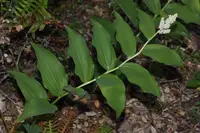
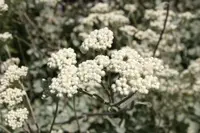
Feathery false lily of the valley, Maianthemum racemosum, is a woodland perennial from North America, valued for its graceful, arching stems and airy white flower plumes. It forms clumps over time, with broad, ribbed leaves arranged along the stems and fluffy flower clusters that later develop into speckled red berries.
In nature it grows in moist, shaded forests and along stream banks, where soils are rich in organic matter. It suits gardeners looking to care for feathery false lily of the valley in cool, shaded beds, as it prefers consistent moisture, humus-rich soil, and protection from hot, direct sun.

Care Difficulty
Moderate Care

Light Preference
Partial Shade

Water Requirements
Regular Water

Temperature Preference
Cold Hardy

Hardiness Zone
3–8

Soil Texture
Loamy, Silty, Organic-rich

Soil pH
Acidic (5.5–6.5), Slightly acidic (6.5–7.0)

Soil Drainage
Moist but well-drained

Fertilization
Minimal (feed rarely)
Scan your plant to receive care tips personalized for your specific plant
Available on iOS and Android
This woodland perennial prefers dappled light that mimics a bright forest edge.
This species favors steadily moist, cool soil without becoming waterlogged.
This woodland plant is adapted to cool to moderate climates with cold winters.
Maianthemum racemosum prefers moderately moist air but usually copes well with typical home and garden humidity.
This woodland perennial grows best in moist, loose, organic-rich soil that stays evenly damp but not waterlogged.
This species can be grown in containers if the pot is set up to mimic a cool, moist woodland root zone.
Maianthemum racemosum is a woodland perennial that needs only modest feeding when grown in average, humus-rich soil.
Maianthemum racemosum requires only minimal pruning to maintain health and neat appearance.
This species is usually grown in the ground, so care focuses on dividing and transplanting clumps rather than routine repotting.
Maianthemum racemosum is most reliably propagated by division of rhizomes, with seed used mainly for long-term projects.
This woodland perennial is cold hardy in much of North America and usually needs only simple winter preparation in the ground.

Plant Health Check
Not sure what's wrong with your plant? Check your plant's health inside the app.
This species was long placed in the genus Smilacina and is still widely known as false Solomon’s seal or Solomon’s plume, reflecting its arching stems and plume-like flower clusters that distinguish it from true Solomon’s seal (Polygonatum).
Its creamy, plume-shaped flower clusters are scented and produce nectar that attracts a broad range of pollinators, from small solitary bees to hoverflies, which increases the chances of successful pollination in shaded forest habitats.
The plant’s speckled green berries ripen to translucent red and are eaten by birds such as thrushes, which disperse the seeds through their droppings, helping the species colonize suitable forest edges and clearings.

Genetic and morphological studies led taxonomists to move this species from the old genus Smilacina into Maianthemum, reshaping the understanding of relationships within the asparagus family (Asparagaceae) and illustrating how molecular data can overturn long-standing botanical classifications.
This species spreads gradually by rhizomes, forming clumps that expand over several years. It is usually not invasive in garden conditions but can fill shaded beds if undisturbed. Division manages spread and maintains vigor.
Keep your plants happy and healthy with plant identification, disease detection, and easy care guidance.