black hickory Care (Carya texana)

Also known as: buckley hickory
black hickory

About black hickory

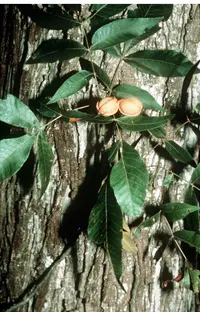
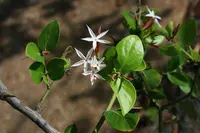
Black hickory (Carya texana) is a long-lived, deciduous tree native to the south-central United States, especially dry uplands and rocky sites. It typically forms a tall, narrow crown with dark, rough bark and compound leaves that turn yellow in autumn.

This species produces hard-shelled nuts that wildlife use as a food source, while its strong wood has traditional timber value. It is slow to moderate in growth and develops a deep root system, which makes moving established trees difficult.

Black hickory prefers full sun, well-drained, slightly acidic soils, and tolerates drought once established. These traits influence how to care for black hickory, making it better suited to long-term landscape or restoration settings than to small gardens or containers.

Main Plant Requirements

Care Difficulty

Moderate Care

Light Preference

Full Sun

Water Requirements

Moderate Water

Temperature Preference

Cold Hardy

Hardiness Zone

6–9

Soil Texture

Sandy, Loamy, Clay

Soil pH

Acidic (5.5–6.5), Slightly acidic (6.5–7.0)

Soil Drainage

Well-drained

Fertilization

Minimal (feed rarely)

Get Personalized Care Plan

Scan your plant to receive care tips personalized for your specific plant

Available on iOS and Android

How to Care for the black hickory

This sun-loving North American hickory thrives in open, bright sites with long daily light exposure.

  • Provide full sun for 6–8+ hours per day; black hickory tolerates light afternoon shade in hotter regions but grows best in unobstructed sun.
  • Young trees cope with partial shade (3–5 hours direct sun) but will develop narrower crowns and slower growth than in full sun.
  • In summer, avoid dense competition from taller trees that cast heavy shade, and in winter ensure southern exposure to maximize low-angle sunlight.

This deep-rooted tree prefers evenly moist, well-drained soil and resists brief dry periods once established.

  • For in-ground Carya texana, allow the top 5–8 cm of soil to dry between deep soakings; focus on slow, thorough watering rather than frequent shallow applications.
  • During the first 2–3 growing seasons, increase watering during hot, rainless spells if new leaves wilt or curl, but reduce inputs in cool or rainy periods.
  • Ensure soil drains freely; signs of overwatering include yellowing leaves and dieback on young shoots, while crisp leaf edges and early leaf drop indicate drought stress.

This hardy deciduous tree is adapted to continental climates with hot summers and cold winters.

  • Active growth is strongest at 70–90°F (21–32°C), with good tolerance up to about 95°F (35°C) if soil moisture is adequate and roots are mulched.
  • Dormant trees withstand winter lows near -10°F (-23°C), though young saplings benefit from protection from harsh wind and rapid freeze–thaw cycles.
  • Late-spring frosts below 28°F (-2°C) can damage emerging leaves and flowers, so avoid planting in low frost pockets where cold air settles.

Carya texana is a drought-adapted tree that grows well in 30–60% humidity and rarely needs special humidity management outdoors.

  • Black hickory tolerates dry air very well, including hot, low-humidity summer conditions.
  • Humidity stress outdoors usually appears as drought-like symptoms: leaf scorch, early leaf drop, and twig dieback combined with dry soil.
  • If prolonged very dry, windy conditions occur, mulching the root zone 5–8 cm deep helps buffer soil moisture more effectively than trying to raise air humidity.

Carya texana prefers deep, well-drained mineral soils with a slightly acidic reaction and stable moisture.

  • Use a loamy or sandy-loam soil with moderate organic matter; avoid heavy clay that stays wet or extremely shallow, stony ground.
  • Aim for pH 6.0–7.0; on higher pH sites, incorporate composted leaf mold or pine bark fines into the top 20–30 cm.
  • Ensure excess water can drain away; on slow-draining sites, plant on a slight mound or berm to keep the root collar above saturated soil.
  • Improve aeration by mixing in 20–30% coarse sand or small gravel in compacted soils, avoiding peat-heavy mixes that can collapse and restrict roots.

This species is poorly suited to long-term container growing and is best kept in pots only as a short-term seedling or nursery tree.

  • Choose a deep, heavy container that will not tip as the taproot and trunk elongate quickly.
  • Use a coarse, bark-based tree nursery mix to prevent the dense root system from becoming waterlogged in a small volume of soil.
  • Position the container where wind exposure is reduced, since the developing crown can act as a sail and stress the root–soil interface.

This native tree usually needs minimal feeding when grown in decent soil, but light fertilization can support young black hickory establishment.

  • Use a balanced slow-release NPK fertilizer or well-rotted compost for young trees in early spring.
  • Apply once in spring and, if growth is weak, once in midsummer, staying outside the drip line.
  • Use at 1/2 strength of label rate for landscape trees to avoid excess salt and rank growth.
  • Avoid fertilizing in late summer or fall so new growth hardens before winter dormancy.

Pruning Carya texana is mainly structural and corrective, especially in the first years.

  • Carry out pruning in late winter while the tree is dormant and branch structure is visible.
  • Remove dead, diseased, rubbing, or storm-damaged branches with clean, sharp bypass pruners or a pruning saw.
  • Thin crowded interior branches slightly to improve light and air flow while maintaining the natural form.
  • Avoid heavy crown reduction; instead, guide a strong central leader and well-spaced scaffold branches.

This hickory is rarely kept long-term in containers and is best transplanted when still young.

  • Shift container seedlings only when roots circle the pot or growth slows, usually every 1–2 years early on.
  • Transplant field-grown trees in late fall or very early spring, while dormant and soil is workable.
  • Dig a wide planting hole, loosen circling roots gently, and keep the root flare level with the soil surface.
  • Water deeply after planting, apply 5–8 cm of mulch, and keep soil evenly moist to limit transplant shock.

Carya texana is most often propagated from seed, and vegetative methods are technically demanding.

  • Collect ripe nuts in fall, then cold stratify at about 34–41°F for 90–120 days to break dormancy.
  • Sow stratified seeds in deep containers or nursery beds with well-drained soil in early spring.
  • Protect young seedlings from rodents and heavy shade, and maintain consistent but not waterlogged moisture.
  • Grafting onto compatible rootstocks is used in professional settings to preserve specific genetic lines.

Established black hickory trees are cold hardy in much of their native range and usually need minimal winter care.

  • Mulch around the root zone with 5–8 cm of bark or leaf mold, keeping mulch a few cm from the trunk.
  • For young or container plants in colder zones, shield roots from freeze–thaw cycles with extra mulch or insulation.
  • Move container-grown specimens into an unheated garage or sheltered spot where soil does not freeze solid.

Care Tips

Taproot protection

Install a wide, undeveloped root zone by keeping turf, tilling, and heavy foot traffic at least 1.5–2× the expected canopy radius away from young trees so the deep taproot and lateral roots can establish without compaction damage.

Early structure training

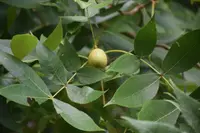
In the first 5–7 years, select a single, straight central leader and remove narrow, V-shaped competing stems with clean cuts during dormancy to build a strong trunk that resists storm and ice damage later in life.

Mulch for nut yield

Maintain a 5–10 cm deep ring of coarse organic mulch out to the drip line, kept 5–8 cm away from the trunk, to stabilize soil moisture and temperature and support more consistent nut production over time.

Windward staking strategy

On very exposed sites, place 2–3 stakes just outside the root ball and secure the trunk with flexible ties only on the windward side, then remove all staking after 1–2 growing seasons so the tree develops natural trunk strength.

Wildlife and nut management

If wildlife pressure is high, use trunk guards and temporary fencing around the root zone, and plan for regular collection or leaving a defined area for wildlife for easier management when growing black hickory for both shade and nuts.

Common Pests and Diseases

Hickory shuckworm

This pest tunnels into developing nuts, causing premature nut drop and poor kernel development. Symptoms include small entry holes in the shuck and nuts falling early with damaged interiors.

Solution

Collect and destroy fallen nuts and shucks through the season to break the life cycle. In home landscapes, prioritize sanitation and consider using pheromone traps or timing a labeled insecticide spray just after adult moth flight, following local extension guidance on Carya texana care instructions.

Hickory bark beetles

These insects bore into twigs and trunks, often attacking stressed trees and leading to twig dieback, roughened bark, and small round exit holes. Heavy infestations can cause crown thinning and branch death.

Solution

Reduce tree stress by watering deeply during prolonged drought and avoiding trunk injury. Prune and remove heavily infested branches, discard them off-site, and maintain tree vigor so natural predators and the tree’s own defenses can limit beetle populations.

Hickory leaf-stem gall aphid

This pest causes irregular, swollen galls along leaf midribs and petioles, which may distort foliage but rarely kill the tree. Severe infestations can reduce photosynthesis and cause early leaf drop.

Solution

Rake and destroy fallen galled leaves in autumn to reduce overwintering populations. For young or heavily affected trees, a strong water spray to dislodge aphids, combined with conserving natural predators like lady beetles, usually keeps damage at acceptable levels.

Hickory anthracnose

This disease causes irregular brown to tan spots on leaves that may coalesce, leading to blighting and early defoliation in wet seasons. Symptoms include scattered dead patches on foliage and occasional small twig lesions.

Solution

Prune to improve air circulation within the canopy and avoid overhead irrigation that leaves foliage wet for long periods. Rake and dispose of infected leaves in fall, and in severe, repeated cases consider a labeled copper or chlorothalonil fungicide applied at bud break and repeated per product directions during wet springs.

Hickory nut curculio

This insect lays eggs in young nuts, where larvae feed and cause nuts to drop prematurely. Symptoms include small puncture marks on immature nuts and early nut fall with internal larval tunneling.

Solution

Collect and destroy dropped infested nuts throughout summer to remove developing larvae. Where pressure is high, coordinate nut sanitation with properly timed trunk or canopy sprays targeted to adult activity, guided by local extension recommendations and the specific product label.

Interesting Facts

Western Gulf specialist

Black hickory is native mainly to the western part of the eastern United States, especially the Cross Timbers and western Gulf Coastal Plain, where it often dominates dry, rocky uplands and sandy ridges that many other hickories do not tolerate well.

Hybridization with neighbors

This species is known to hybridize naturally with closely related hickories such as Carya texana × Carya tomentosa, which makes field identification challenging and contributes to genetic mixing within local hickory populations.

Distinctive nut structure

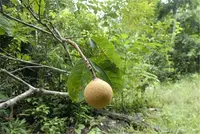
Its nuts have a thick, hard shell and a relatively small, often bitter kernel compared with cultivated hickories and pecan, and the husk typically splits to the base in 4 segments but may cling more tightly than in many other hickory species.

Botan icon

Did you know?

Black hickory wood is extremely dense and strong, and although it is not a primary commercial timber species like shagbark hickory or pecan, it has been locally valued for tool handles, fuelwood, and charcoal because of its high heat value and resistance to shock.

FAQs about black hickory

This species grows slowly to moderately, usually about 20–30 cm per year once established. Growth is slower on dry, nutrient-poor sites and somewhat faster on deep, well-drained soils with consistent moisture and minimal root disturbance.

Grow Healthy Plants with Botan Care

Keep your plants happy and healthy with plant identification, disease detection, and easy care guidance.

Botan plant care app — identify plants on mobile

Explore More Plants