nutmeg hickory Care (Carya myristiciformis)

nutmeg hickory

About nutmeg hickory

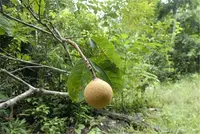
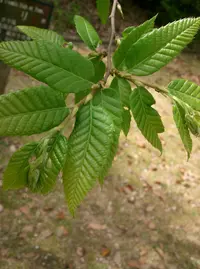
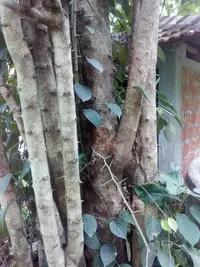
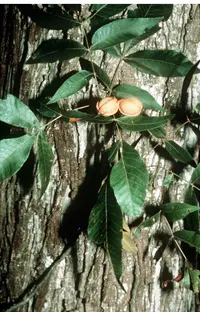
Nutmeg hickory, Carya myristiciformis, is a long-lived deciduous tree native to the southeastern United States. It usually grows in rich bottomland forests and moist river terraces. The tree develops a tall, straight trunk with a rounded crown and pinnate leaves that turn clear yellow in autumn. Its hard-shelled nuts resemble nutmeg in cross-section, which gives the species its common name.

This species grows slowly and can be challenging to transplant, so it suits long-term landscapes rather than quick screening. Gardeners who want to care for nutmeg hickory should provide deep, fertile, well-drained soil with consistent moisture and full sun exposure.

Main Plant Requirements

Care Difficulty

Moderate Care

Light Preference

Full Sun

Water Requirements

Moderate Water

Temperature Preference

Cold Hardy

Hardiness Zone

6–9

Soil Texture

Sandy, Loamy, Clay

Soil pH

Acidic (5.5–6.5), Slightly acidic (6.5–7.0)

Soil Drainage

Moist but well-drained

Fertilization

Minimal (feed rarely)

Get Personalized Care Plan

Scan your plant to receive care tips personalized for your specific plant

Available on iOS and Android

How to Care for the nutmeg hickory

This deciduous hickory thrives in full sun but tolerates some light shade, especially in hotter regions.

  • Provide 6–8 hours of direct sun daily; young nutmeg hickory trees benefit from morning sun with light afternoon shade in hotter climates.
  • Allow partial shade (2–4 hours of direct sun) in summer to reduce leaf scorch, especially on exposed, windy sites.
  • In dense shade, expect slower growth and thinner crowns; gradual thinning of nearby trees over several seasons helps increase light without stressing roots.

This deep-rooted tree prefers evenly moist but well-drained soil, especially during establishment.

  • During the first 2–3 years, water when the top 5–8 cm of soil feels dry, applying a slow, deep soak to reach the developing taproot.
  • In mature trees, rely mostly on rainfall but supplement during droughts longer than 2–3 weeks, watching for dull, curling leaves as early drought stress signs.
  • Avoid waterlogged sites; persistent puddling, sour smell, or yellowing leaves with twig dieback suggest poor drainage or overwatering, calling for improved runoff.

This species is adapted to warm-temperate climates with cold winters and hot summers.

  • Optimal growing-season temperatures are about 70–90°F (21–32°C), supporting steady shoot and nut development.
  • Dormant trees tolerate winter lows near -10°F (-23°C) once established, but young saplings are more vulnerable and benefit from mulch to buffer soil temperature.
  • Heat above 95°F (35°C) combined with drought can cause leaf scorch; maintain soil moisture and a 5–8 cm mulch layer to moderate root-zone temperatures.

This species is adapted to temperate outdoor conditions and does not have specialized humidity requirements.

Carya myristiciformis needs deep, structured soil that stays evenly moist yet drains freely.

  • Use a loamy soil with a mix of mineral particles and organic matter to support its extensive root system.
  • Ensure drainage is moderate to rapid; avoid sites where water stands for more than 24 hours after rain.
  • Aim for slightly acidic to neutral pH, roughly 6.0–7.0, adjusting with sulfur or lime only if tests show extremes.
  • Improve aeration and drainage by incorporating coarse sand and compost into heavy clay, avoiding compacted or heavily trafficked spots.

This large, long-lived tree is not suitable for long-term container growing.

This slow-growing native tree usually needs little feeding once established in the ground.

  • For young nutmeg hickory in poor soils, use a balanced slow-release NPK granule (such as 10-10-10) in early spring.
  • Apply a light dose in a wide ring beyond the drip line, keeping granules off the trunk and main roots.
  • Avoid summer and fall applications to prevent tender growth before frost; do not feed during winter dormancy.
  • On richer sites, rely on leaf litter or a thin layer of compost instead of additional fertilizer.

Pruning Carya myristiciformis focuses on structural safety rather than shaping.

  • Carry out pruning in late winter while the tree is fully dormant and leafless.
  • Remove dead, diseased, or storm-damaged branches first, cutting back to healthy wood or the branch collar.
  • Thin crossing or crowded branches in the canopy to improve light penetration and air movement.
  • Use clean, sharp bypass pruners or a pruning saw and avoid large unnecessary cuts that stress the tree.

This species is rarely container-grown and is best transplanted young due to its strong taproot.

  • Transplant bare-root or container seedlings in late fall or very early spring while dormant.
  • Choose a permanent site with deep, well-drained soil so the long taproot can develop without disturbance.
  • Move when roots just reach the container bottom; circling roots and stalled growth indicate urgent transplanting.
  • Water deeply after planting, mulch 5–8 cm around the root zone, and keep soil evenly moist to reduce stress.

Propagation of Carya myristiciformis is mainly done from seed and is slow and specialized.

  • Collect fully mature nuts in fall, discarding any that float in water tests.
  • Provide 90–120 days of cold, moist stratification at about 34–41°F to break seed dormancy.
  • Sow stratified seeds in deep containers or nursery beds, allowing room for the developing taproot.
  • Maintain evenly moist, well-drained soil and protect young seedlings from rodents and heavy weed competition.

Established trees are cold hardy in suitable climates and usually need minimal winter care.

  • Young trees benefit from 5–8 cm of organic mulch over the root zone, kept slightly back from the trunk.
  • In very exposed sites, use a breathable trunk wrap on young stems to limit sunscald and rodent damage.
  • Container-grown specimens, if any, should be moved to a sheltered, unheated but frost-free space for winter.

Care Tips

Early leader training

In the first 3–5 years, select a single strong central leader and remove competing upright shoots during late winter to develop a stable trunk and reduce future storm damage.

Wind and ice management

In regions with strong winds or periodic ice, avoid heavy crown thinning and instead maintain a balanced, moderately open canopy to reduce limb breakage while keeping structural strength.

Root zone protection

Keep turfgrass and heavy foot traffic away from the root zone by maintaining a wide mulch ring (ideally to the drip line) to reduce soil compaction and protect the shallow feeder roots critical for nutrient uptake.

Nut production planning

For reliable nut set, plant at least 2 genetically different nutmeg hickories within effective pollen distance (20–40 m) and avoid removing nearby wild hickories that may serve as compatible pollen sources.

Wildlife and debris strategy

Plan planting sites away from driveways and rooflines because the large nuts and husks drop in late season; this reduces cleanup needs and makes caring for nutmeg hickory more practical in residential landscapes.

Common Pests and Diseases

Hickory shuckworm

This pest is the larva of a small moth that tunnels into developing nuts, causing premature nut drop and poor kernel development. Symptoms include tiny entry holes in the shuck and lightweight, empty, or shriveled nuts.

Solution

Collect and destroy infested nuts on the ground to reduce the next generation, and rake leaf litter in fall to remove overwintering pupae. In larger plantings, monitor for early nut damage and use regionally recommended timing for targeted insecticide sprays if crop loss is significant.

Hickory bark beetles

These insects bore into the bark and inner wood, creating galleries that can weaken or kill branches, especially in drought-stressed or otherwise weakened trees. Symptoms include fading foliage in the upper crown, small exit holes, and fine boring dust on the bark.

Solution

Promote tree vigor through proper watering during dry periods and avoid mechanical injury to the trunk to reduce susceptibility. Remove and dispose of severely infested branches or dead trees to limit beetle breeding sites; preventive trunk sprays are sometimes used in forestry or orchard settings when local extension services recommend them.

Hickory anthracnose

This disease is a fungal leaf spot and blotch problem that causes irregular brown lesions, leaf distortion, and premature leaf drop, especially in wet, humid weather. Symptoms include scattered tan to dark-brown spots that can merge into larger dead areas on leaves.

Solution

Rake and remove fallen leaves to reduce fungal spores, and maintain good spacing and pruning to improve air movement through the canopy. In high-value trees with repeated severe defoliation, a fungicide program timed to spring leaf emergence may be used following local extension guidance as part of broader Carya myristiciformis care.

Bunch disease

This disease causes abnormal dense clusters of small, stunted leaves and twigs, often called witches’ brooms, and can reduce nut production and overall vigor. Symptoms include shortened internodes, rosettes of leaves at branch tips, and slow decline of affected limbs over time.

Solution

Prune out affected twigs and branches several inches below visible symptoms and destroy the removed material to limit spread within the tree. Maintain overall tree health through proper watering and fertilization so unaffected parts of the canopy can compensate for lost growth.

Hickory leaf-stem gall phylloxera

These insects are tiny, aphid-like pests that trigger the tree to form galls on leaves and petioles, which appear as raised, blister-like swellings. Symptoms include distorted foliage with green to brown galls; heavy infestations mostly affect appearance rather than long-term tree health.

Solution

Prune and discard heavily galled twigs during dormancy to reduce overwintering stages. For trees that suffer repeated severe infestations, apply a horticultural oil or other locally recommended product just as buds swell in spring to target the insects before galls form.

Interesting Facts

Southern floodplain specialist

Nutmeg hickory is naturally restricted to moist bottomland forests and river terraces of the southeastern United States, often growing with species like sweetgum and overcup oak in seasonally flooded sites.

Distinctive nutmeg scent

The common name comes from the subtle nutmeg-like aroma of the freshly cut inner bark and wood, a trait that helps botanists distinguish it from closely related hickory species in the field.

Unusually thin husk

Compared with most hickories, its fruits have a relatively thin husk around the nut, and the shell inside is hard but smooth, which is a key diagnostic feature used in Carya myristiciformis plant care and identification guides.

Botan icon

Did you know?

Nutmeg hickory is one of the rarest native hickories in North America, with a scattered and localized natural range, and in several states it is considered uncommon or of conservation concern due to habitat loss in bottomland hardwood forests.

FAQs about nutmeg hickory

This species grows slowly to moderately, usually about 20–30 cm per year in good conditions. Growth is faster on deep, moist, well-drained soils and noticeably slower on compacted, dry, or nutrient-poor sites.

Grow Healthy Plants with Botan Care

Keep your plants happy and healthy with plant identification, disease detection, and easy care guidance.


Botan plant care app — identify plants on mobile

Explore More Plants