Barrier-style training
Install a low, sturdy wire or wooden barrier and weave new shoots through it while still flexible, which helps form a dense, hedge-like screen and keeps the thorny branches away from paths and play areas.

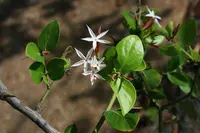
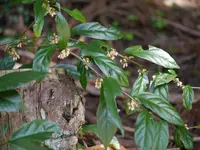
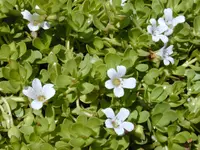
Arabian num-num (Carissa spinarum) is a dense, spiny shrub known for its glossy green leaves, fragrant white star-shaped flowers, and small reddish to purple fruits. It naturally occurs in dry, subtropical and tropical regions of Africa, the Arabian Peninsula, and parts of Asia, often in scrub or woodland edges.
The plant is tough and drought-tolerant once established, which makes it relatively forgiving for growers in warm climates. Its strong thorns and slow to moderate growth can require some planning in placement and pruning. It generally prefers bright light, well-drained soil, and moderate watering, and these traits guide how to care for Arabian num-num in gardens or larger containers.

Care Difficulty
Easy Care

Light Preference
Full Sun

Water Requirements
Low Water

Temperature Preference
Warm Climate

Hardiness Zone
9–11

Soil Texture
Sandy, Loamy, Rocky

Soil pH
Slightly acidic (6.5–7.0), Slightly alkaline (7.0–7.5)

Soil Drainage
Well-drained

Fertilization
Minimal (feed rarely)
Scan your plant to receive care tips personalized for your specific plant
Available on iOS and Android
This sun-tolerant shrub thrives in bright, warm positions with some protection from extreme heat.
This drought-tolerant shrub prefers deep, infrequent watering once established.
This species prefers warm, frost-free conditions but tolerates a fairly wide temperature range once established.
Carissa spinarum handles a wide humidity range and rarely needs special humidity management indoors.
Carissa spinarum prefers sharply drained, sandy to loamy soil that dries moderately between waterings.
This species is well suited to container growing for patios, balconies, and small gardens.
Carissa spinarum grows in poor soils but benefits from light feeding in containers or lean garden sites.
Pruning Carissa spinarum helps control size, encourage dense branching, and remove unsafe thorny growth.
This species is more often grown in the ground, but container plants and young hedges sometimes need moving.
Carissa spinarum is commonly propagated from semi-hardwood cuttings or seeds under warm conditions.
Mature plants are fairly drought-tolerant but can be damaged by hard freezes, especially in exposed sites.

Plant Health Check
Not sure what's wrong with your plant? Check your plant's health inside the app.
This species forms dense, thorny thickets whose fruits are eaten and dispersed by many bird species, helping it colonize dry and disturbed habitats across Africa, the Arabian Peninsula, and parts of Asia.
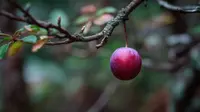
The small purple to almost black berries are edible and sometimes eaten locally, but the taste is often described as resinous or slightly bitter rather than sweet, unlike some related Carissa species.
Its small, leathery leaves and deep root system allow it to survive in semi-arid scrub, rocky hillsides, and degraded lands where many other shrubs fail to persist.

Carissa spinarum is often used as a living fence or boundary hedge in rural areas because its stiff, forked thorns form a long-lasting, almost impenetrable barrier that deters both livestock and people.
Lack of blooms often comes from insufficient light, heavy pruning at the wrong time, or nutrient imbalance. Allow strong sun, avoid cutting new wood heavily, and use a balanced fertilizer without excessive nitrogen to encourage flowering.
Keep your plants happy and healthy with plant identification, disease detection, and easy care guidance.