Bird-safe siting
Plant away from children’s play areas and edible beds, and inform household members that the berries are ornamental only, since they are mildly toxic if eaten.

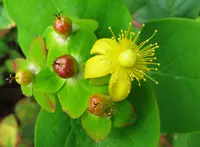
Sweet-amber (Hypericum androsaemum) is a compact, deciduous shrub grown mainly for its glossy leaves, yellow flowers, and colorful berries. It typically forms a neat, rounded mound that fits well in borders or informal hedges.
This species is native to parts of Europe and western Asia, often found in woodland edges and scrubby slopes. Its ability to tolerate partial shade and variable soils makes it adaptable in many gardens.
Once established, it is generally low-maintenance, which makes it easier to care for sweet-amber than many flowering shrubs. It prefers moderately moist, well-drained soil and benefits from regular light pruning to keep a tidy shape.

Care Difficulty
Easy Care

Light Preference
Partial Sun

Water Requirements
Moderate Water

Temperature Preference
Cold Hardy

Hardiness Zone
5–9

Soil Texture
Sandy, Loamy, Clay

Soil pH
Acidic (5.5–6.5), Slightly acidic (6.5–7.0)

Soil Drainage
Moist but well-drained

Fertilization
Minimal (feed rarely)
Scan your plant to receive care tips personalized for your specific plant
Available on iOS and Android
Hypericum androsaemum prefers bright conditions with some protection from intense midday sun.
This shrub prefers evenly moist but not saturated soil, with brief dry periods tolerated once established.
This hardy shrub manages a wide temperature range but grows best within moderate conditions.
This shrub manages well in typical outdoor humidity and usually needs no special adjustment.
Hypericum androsaemum prefers moderately moist, well-drained, fertile soil to support healthy root growth and berry production.
This species is suitable for container growing, especially on patios or small gardens.
Hypericum androsaemum benefits from moderate feeding but does not need heavy fertilization for healthy growth.
Pruning Hypericum androsaemum keeps the shrub compact, encourages flowering wood, and maintains plant health.
This shrub is more often grown in the ground, so care usually focuses on transplanting rather than frequent repotting.
Hypericum androsaemum is commonly propagated by semi-ripe cuttings, seeds, or division of established clumps.
This species is generally cold hardy in many temperate regions and often needs only modest winter care.

Plant Health Check
Not sure what's wrong with your plant? Check your plant's health inside the app.
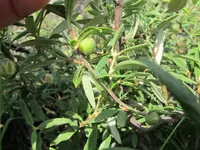
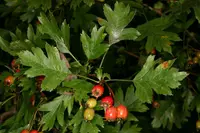
The fruits change color as they mature, progressing from pale green to yellow, then red, and finally almost black when fully ripe, which helps signal different stages of ripeness to birds and other dispersers.
This species naturally occurs in woodland edges, hedgerows, and damp, shaded sites, showing a stronger tolerance to low light and moist soils than many other ornamental Hypericum species.
The fleshy berries are a food source for birds, which digest the pulp but pass the seeds, helping spread the plant across suitable habitats and along hedgerows and riverbanks.
In several parts of Europe, this species has escaped from cultivation and naturalized so successfully in damp, shaded habitats that it is considered locally invasive, forming dense thickets that can compete with native woodland-floor plants.
This species self-seeds and can form thickets if conditions suit it, but it is usually manageable in home gardens. Regular pruning and removing unwanted seedlings keep it in check and prevent unwanted spread near natural areas.
Keep your plants happy and healthy with plant identification, disease detection, and easy care guidance.