African corkwood tree Care (Musanga cecropioides)

Also known as: Umbrella tree
African corkwood tree

About African corkwood tree

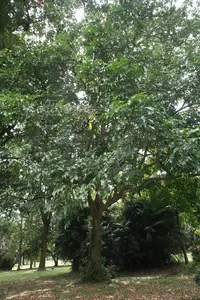
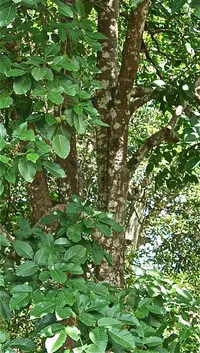
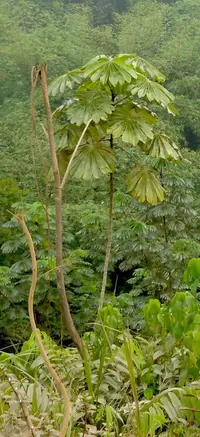
The African corkwood tree, Musanga cecropioides, is a fast-growing tropical tree native to humid forests of West and Central Africa. It often forms an umbrella-shaped crown with large, palmate leaves on a relatively slender trunk.

This species is adapted to bright, open forest edges and disturbed sites, so it tends to establish quickly where light is abundant and soil stays moist. The wood is very light and soft, which makes branches prone to breakage in strong winds.

Its rapid growth and need for consistent warmth and moisture can make it challenging outside tropical climates. Anyone looking into how to care for African corkwood tree should consider its preference for high humidity, evenly moist but well-drained soil, and protection from cold.

Main Plant Requirements

Care Difficulty

Hard Care

Light Preference

Partial Shade

Water Requirements

Keep Soil Moist

Temperature Preference

Tropical / Frost Sensitive

Hardiness Zone

11–12

Soil Texture

Loamy, Silty, Organic-rich

Soil pH

Acidic (5.5–6.5), Slightly acidic (6.5–7.0)

Soil Drainage

Moist but well-drained

Fertilization

Minimal (feed rarely)

Get Personalized Care Plan

Scan your plant to receive care tips personalized for your specific plant

Available on iOS and Android

How to Care for the African corkwood tree

This fast-growing tropical tree needs bright, warm conditions with protection from harsh direct sun.

  • Provide 4–6 hours of bright, filtered light daily, such as high bright shade or dappled sun under taller trees, which mimics African corkwood tree forest-edge habitat.
  • Allow gentle morning sun but shield from strong midday and afternoon sun, which can scorch tender leaves and cause pale, crispy patches along edges and tips.
  • In dry or very hot seasons, increase shading or use shade cloth to prevent leaf burn; in overcast or rainy seasons, prioritize open, unobstructed exposure to maximize light intensity.

This species prefers consistently moist, well-drained soil that never fully dries out or becomes waterlogged.

  • Aim for soil that stays slightly damp below the surface; let only the top 2–3 cm dry before the next deep soak, especially during active growth in warm, wet seasons.
  • Use rich, organic soil with good structure so water drains within 1–2 minutes; standing water, sour smell, or blackened roots indicate overwatering and poor aeration.
  • Watch foliage for cues: drooping, dull leaves and dry soil suggest underwatering, while yellowing lower leaves and soft new growth point to excess moisture for Musanga cecropioides.

This lowland tropical tree thrives in warm, frost-free climates with minimal temperature fluctuation.

  • Maintain an ideal range of 70–86°F (21–30°C) for vigorous growth; prolonged exposure below 60°F (16°C) slows metabolism and increases stress risk.
  • Protect from cold; brief drops to 50°F (10°C) may be tolerated, but frost near 32°F (0°C) can kill young shoots and severely damage mature tissue.
  • In hot periods above 90°F (32°C), growth can stall; provide extra shade, airflow, and soil moisture to limit heat stress, especially for young, shallow-rooted plants.

This species prefers consistently humid air and reacts quickly to dry indoor conditions.

  • Aim for 60–80% humidity; it will tolerate brief dips near 50% but not prolonged dry air from heating or air-conditioning.
  • Crisp leaf edges, drooping new growth, and stalled leaf expansion signal humidity stress in African corkwood tree.
  • Increase humidity by grouping plants, using a room humidifier, or placing the pot on a wide pebble tray with water below the pot base.

Musanga cecropioides needs moist, airy, organic-rich soil that never becomes waterlogged or compacted.

  • Use a loose mix such as 50% peat- or coir-based potting soil, 30% compost, and 20% perlite or coarse bark for structure and aeration.
  • Ensure fast drainage yet high moisture retention by avoiding heavy clay and by adding coarse particles that create air spaces around roots.
  • Target slightly acidic to neutral pH around 6.0–7.0, which supports nutrient availability and healthy root function.
  • Avoid dense, sticky, or poorly drained soil that stays soggy for more than 1–2 days, as this encourages root rot and weak growth.

This fast-growing tree is challenging long term in containers but can be managed in a large, stable pot for a limited period.

  • Choose a wide, heavy container that resists tipping because the canopy becomes tall and top-heavy quickly.
  • Select a pot material like thick terracotta or concrete to add weight and slightly increase evaporation, helping prevent chronic sogginess.
  • Use a deep container that allows a strong vertical root run so the plant anchors firmly and is less prone to wind rock on patios or balconies.

Musanga cecropioides responds well to light, consistent nutrition during active growth but is sensitive to overfeeding.

  • Use a balanced NPK fertilizer or slow-release granules at half strength at the start of the rainy or spring–summer growing season.
  • Supplement with a thin layer of well-rotted compost over the root zone once per year to improve soil structure and micronutrients.
  • Feed container or nursery plants every 4–6 weeks in the growing season, skipping applications if growth is already vigorous.
  • Stop feeding in late fall and winter, when growth slows, to avoid weak, frost-tender shoots on an African corkwood tree.

Pruning Musanga cecropioides focuses on safety, structure, and size control rather than frequent shaping.

  • Carry out main pruning in late dry season or late winter before strong new growth starts, avoiding very wet periods.
  • Remove dead, diseased, crossing, or storm-damaged branches using clean, sharp loppers or a pruning saw.
  • Thin congested inner branches to improve light penetration and airflow, which supports stronger, more stable framework growth.
  • Shorten or remove poorly placed leaders to manage height and crown spread, maintaining a single dominant trunk where possible.

Musanga cecropioides is usually field-grown, so transplanting young trees at the right stage is more important than frequent repotting.

  • Look for circling roots at drain holes, rootbound soil, or stalled height gain as signs a container plant needs a larger space.
  • Plan transplanting for the early rainy season or mild spring, allowing new roots to establish before heat or drought stress.
  • Move up only 1–2 pot sizes or into a pre-dug garden hole, keeping the root ball intact and at the same soil level.
  • Water thoroughly before and after moving, shade the canopy for 1–2 weeks, and maintain even moisture to limit transplant shock.

Musanga cecropioides is most commonly propagated from seed under warm, humid conditions.

  • Collect fresh, ripe seed and sow it promptly, as viability declines in storage.
  • Sow on the surface of a sterile, well-drained mix, keep at 75–85°F, and maintain high humidity with gentle airflow.
  • Provide bright, indirect light and keep the substrate evenly moist, not waterlogged, to support uniform germination.
  • For semi-hardwood cuttings, use rooting hormone, bottom heat, and a coarse, airy medium, as strike rates can be modest.

This tropical African corkwood tree has low cold tolerance and needs careful winter management outside frost-free climates.

  • Avoid planting in regions with regular frost; sustained temperatures below 40°F can damage foliage and young wood.
  • Mulch the root zone with 5–8 cm of organic material, keeping mulch slightly away from the trunk base.
  • For container trees, shift pots indoors or into a heated greenhouse before the first cold spell, ensuring bright, filtered light.
  • Reduce watering in cool conditions, allowing the top layer of soil to dry slightly while preventing complete root desiccation.

Care Tips

Early structural pruning

In the first 2–3 years, remove steep, competing leaders and favor 3–5 well-spaced scaffold branches to build a stable canopy that resists breakage in wind and heavy rain.

Wind and storm management

In exposed sites, install 2–3 flexible stakes and use wide, soft ties to anchor the trunk for the first 1–2 years, checking each season to loosen or remove ties as the trunk thickens.

Surface root control

Because this species forms aggressive surface roots, establish a permanent grass- or mulch-free zone 60–100 cm around the trunk to prevent roots from lifting paving or competing with other plantings.

Leaf litter recycling

Collect the large, soft leaves regularly and compost them or use them as a thin mulch layer away from the trunk, which returns nutrients and reduces green waste while caring for African corkwood tree in a landscape setting.

Canopy light management

Once the canopy closes, thin out a small number of crowded inner branches every 1–2 years to improve air flow and filtered light under the tree, which helps understory plants and reduces fungal pressure on the foliage.

Common Pests and Diseases

Sap-sucking aphids

These insects cluster on the soft new growth and undersides of leaves, feeding on sap and causing curling, distortion, and sticky honeydew that encourages sooty mold. Symptoms include stunted shoots and a general decline in vigor in young trees or nursery stock.

Solution

Prune and discard heavily infested shoot tips, then wash remaining foliage with a strong but controlled jet of water to remove aphids and honeydew. For ongoing Musanga cecropioides care in containers or nursery beds, apply insecticidal soap or a light horticultural oil to the undersides of leaves every 7–10 days until new growth emerges clean, and limit high-nitrogen fertilization that promotes very soft, aphid-prone tissue.

Bark-boring beetles

These insects attack stressed or wounded trunks and branches, boring galleries under the bark that disrupt sap flow and may cause branch dieback or structural weakness. Symptoms include small round exit holes, frass (fine sawdust), and localized wilting above the damaged area.

Solution

Cut out and destroy heavily infested branches to remove larvae and prevent spread, and avoid leaving fresh pruning wounds or logging debris that attract beetles near stands of African corkwood. Improve plant vigor through adequate watering and soil fertility, then, where allowed, use targeted trunk or branch treatments with systemic insecticides applied by a licensed professional if boring activity continues.

Leaf spot complex

This disease is typically caused by various fungi that thrive in warm, humid canopies, producing brown to dark spots with possible yellow halos on the large leaves. Symptoms include premature yellowing and drop of older leaves, especially in dense, shaded plantings or nursery environments.

Solution

Remove and discard heavily spotted fallen leaves to reduce the local source of spores, and thin nearby vegetation to improve light penetration and air movement around the canopy. Avoid wetting foliage during irrigation, water at the soil level in the morning, and, for high-value specimens, use a broad-spectrum foliar fungicide labeled for ornamental trees at the first sign of new spotting, following label intervals closely.

Powdery mildew

This disease appears as a white to gray powdery coating on the upper surfaces of the broad leaves, often starting on shaded or crowded sections of the canopy. Symptoms include dull, distorted foliage and slower growth in seedlings and young trees kept in propagation houses or dense nursery beds.

Solution

Increase spacing between plants, prune lightly to open the canopy, and improve airflow in greenhouses or shade structures to reduce humidity on leaf surfaces. At early stages, remove and discard the most affected leaves, then apply sulfur, potassium bicarbonate, or another labeled powdery mildew fungicide in repeated low-dose sprays, focusing on new growth and shaded interior foliage.

Interesting Facts

Pioneer forest builder

This species rapidly colonizes cleared or disturbed rainforest areas in tropical Africa, creating light, humid conditions that help shade-tolerant tree seedlings establish beneath its canopy.

Hollow-stemmed trunk

The tree develops a soft, spongy wood and often hollow stems, which make it structurally light but also short-lived compared with many other rainforest trees.

Ant and insect hotspot

Its large, palmate leaves and hollow branches frequently host ants and other insects, which use the tree as shelter and may help deter some herbivores from feeding on it.

Botan icon

Did you know?

The enormous, umbrella-like leaves of this species can exceed 60–90 cm across, and traditional communities in parts of West and Central Africa use them as natural wraps, temporary umbrellas, and impromptu plates due to their size and water-shedding surface.

FAQs about African corkwood tree

This species is very fast-growing in warm, moist conditions, often adding 1–3 m per year outdoors in the tropics. Growth slows in pots or cooler climates, where limited root space and lower humidity reduce vigor.

Grow Healthy Plants with Botan Care

Keep your plants happy and healthy with plant identification, disease detection, and easy care guidance.

Botan plant care app — identify plants on mobile

Explore More Plants