Select host trees
Establish the fungus on mature but not terminally decayed oak or sweet chestnut with sound structural wood, since it fruits best on living or recently cut hosts rather than heavily rotted stumps.

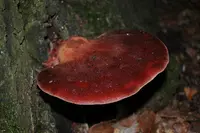
Beefsteak polypore, Fistulina hepatica, is a fungus that forms thick, fleshy brackets on living or dead oak and chestnut trees. The caps are reddish, often resembling raw meat, and may exude a juice that looks like blood.
This species is native to Europe but also appears in parts of North America and other temperate regions, usually in woodlands and old park trees. It is considered edible when young, which makes how to care for Beefsteak Polypore of interest to foragers and specialty growers.
It prefers moist, shaded to semi-shaded conditions and stable, decaying wood as a long-term substrate. Once established, it tends to fruit repeatedly from the same host, but initial colonization can be slow and somewhat unpredictable.

Care Difficulty
Moderate Care

Light Preference
Partial Shade

Water Requirements
Keep Soil Moist

Temperature Preference
Cool Climate

Hardiness Zone
5–9

Soil Texture
Loamy, Silty, Organic-rich

Soil pH
Acidic (5.5–6.5), Slightly acidic (6.5–7.0)

Soil Drainage
Moist but well-drained

Fertilization
Minimal (feed rarely)
Scan your plant to receive care tips personalized for your specific plant
Available on iOS and Android
This wood-decaying fungus prefers moderate light conditions similar to a lightly shaded forest edge.
This species develops best in consistently moist but not waterlogged wood or soil around host trees.
This fungus favors cool to mild conditions typical of temperate woodlands.
This wood-decaying fungus does not have specific humidity requirements in outdoor cultivation, so targeted humidity management is unnecessary.
This fungus fruits best on or near wood in moist, organic-rich substrates rather than traditional potting soil.
This species is only moderately suitable for container growing when using log or sawdust-based cultivation methods rather than standard pots with potting mix.
Fistulina hepatica relies mainly on nutrients from its host tree or decaying wood, so additional fertilization is usually minimal.
Pruning focuses on managing the host tree and removing old fruiting bodies rather than reshaping Fistulina hepatica itself.
This fungus is usually grown on outdoor logs or trees, so management centers on moving or renewing colonized wood rather than classic repotting.
Propagation of Fistulina hepatica for home cultivation is specialized and usually done with commercial spawn rather than casual methods.
This temperate fungus is naturally cold hardy and generally needs little winter care when grown on outdoor logs or trees.

Plant Health Check
Not sure what's wrong with your plant? Check your plant's health inside the app.
The fruiting body has a marbled, fibrous structure and reddish coloration that closely resemble raw beef, which is why it is commonly called beefsteak fungus.
This species is a brown-rot fungus that primarily decays the heartwood of oak and sweet chestnut, selectively breaking down cellulose while leaving modified lignin, which can cause a characteristic brown, cubical rot.
The flesh contains notable levels of oxalic acid, the same organic acid found in rhubarb and sorrel, which gives young specimens a distinct sour taste and can contribute to irritation in sensitive individuals if eaten in large amounts.

Mature specimens often exude blood-red droplets from their surface in damp conditions, a process known as guttation, which has historically reinforced comparisons to raw meat and made the species a striking subject in field mycology guides.
Yes, the young fruiting bodies are edible and valued as a wild mushroom, with a tangy, slightly acidic flavor and beef-like texture. Older specimens become tough, sour, and are generally not recommended for eating.
Keep your plants happy and healthy with plant identification, disease detection, and easy care guidance.